




Victorian Ship Diorama
These nineteenth-century victorian ship diorama examples capture maritime history in layered folk art, bringing detailed sailing vessels directly into the home.
Victorian Ship Diorama
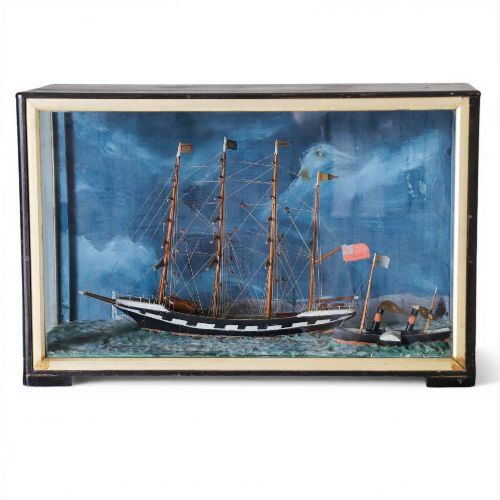
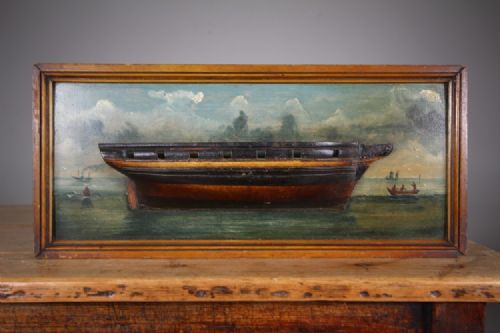
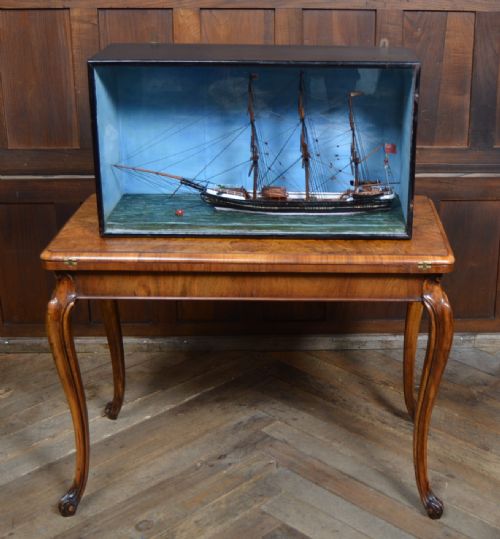
A victorian ship diorama represents sailing vessels, clippers, and racing ships set within deep wooden display cases or shadow boxes. These pieces portray famous vessels, named ships like the Glynllifon or Queen Anne, and anonymous craft riding painted seas.
Most pieces date from the nineteenth century, including specific years like eighteen-sixty and nineteen-hundred. They appear as wall art or cased displays created by maritime folk artists across English and Cornish coastal regions.
The objects combine carved wooden hulls with canvas sails, thread rigging, and plaster waves. Makers constructed these layered scenes to create a convincing three-dimensional illusion of ships under full sail or passing close at sea.
Construction and materials
Makers built these scenes using carved wood for ship hulls, paired with fabric and canvas for sails. Detailed thread provides the rigging, while oil paint on board or canvas forms the background skies and seas.
Plaster and sculpted materials create textured waves beneath the hulls, giving the water a realistic three-dimensional depth inside the wooden cases. Straw work occasionally appears in specialised decorative elements.
Makers housed these fragile models inside deep wooden glass-fronted boxes to protect the delicate rigging and painted surfaces from dust and damage.
Victorian Ship Diorama Retail Price Guide 2026
Typical asking prices for victorian ship diorama among the pieces listed under this phrase on Sellingantiques today, from the lower quarter to the upper quarter. They describe what is for sale here now, not the wider market.
Some nineteenth-century makers used actual straw work to give their miniature ship hulls an unexpected shimmering texture.
Assessing quality and execution
Quality rests upon the proportion and anatomical accuracy of the model ship itself, alongside the sophistication of the painted backdrop. Finer examples display meticulous rigging and convincing wave modelling rather than rudimentary carving.
The depth and construction of the wooden case influence the overall impact, with larger cased displays offering greater visual complexity. Named vessels and documented regional origins add historical weight to individual pieces.
The Victorian Ship Diorama Glossary
- Maritime Diorama
- A three-dimensional display depicting a ship at sea, enclosed within a glazed wooden box. These pieces combine flat painted backgrounds with physical model elements in the foreground.
- Shadow Box
- A deep, glass-fronted frame designed to house three-dimensional objects and folk art scenes. This enclosure protects delicate materials like thread rigging and canvas sails.
- Folk Art
- Objects created by self-taught or traditional craftsmen outside the academic mainstream. In maritime pieces, this style shows in direct, expressive carving and inventive use of household materials.
- Barque
- A sailing vessel with three or more masts, having the fore- and main-masts square-rigged and the mizzen-mast fore-and-aft rigged. Makers frequently depicted these sturdy merchant ships in nineteenth-century models.
Victorian Ship Diorama: Frequently Asked Questions
How do I hang a cased diorama?
These pieces require secure wall fixings capable of supporting the weight of wood, glass, and internal models. Ensure the display location avoids direct sunlight to protect the painted backgrounds and fabric elements.
Professional picture hangers or heavy-duty brackets provide the necessary stability for deep shadow boxes.
What materials make up the sea?
Makers used plaster, carved wood, and sculpted composition materials to create the rolling waves and turbulent water. They then applied oil paint over these surfaces to render the colours of the sea.
Canvas and paper were also layered and painted to give a convincing illusion of depth behind the wooden hulls.
How can I date a piece?
Dating relies on the construction techniques of the wooden case, the style of the painted backdrop, and materials like early canvas and thread. Named ships can sometimes be cross-referenced with nineteenth-century shipping records.
Stylistic markers within the maritime folk art tradition help distinguish mid-nineteenth-century examples from later work around nineteen-hundred.