


Folk Art Ship Diorama
A folk art ship diorama brings the maritime world indoors through handmade vessels captured in bottles or shadow boxes.
Folk Art Ship Diorama
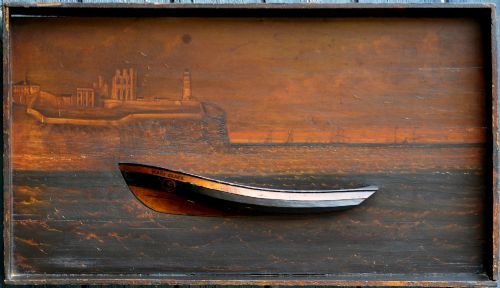
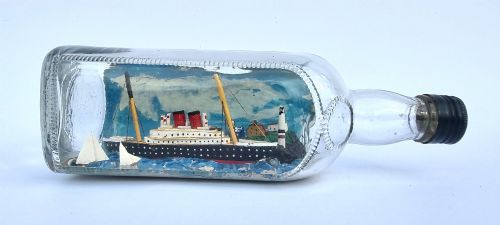
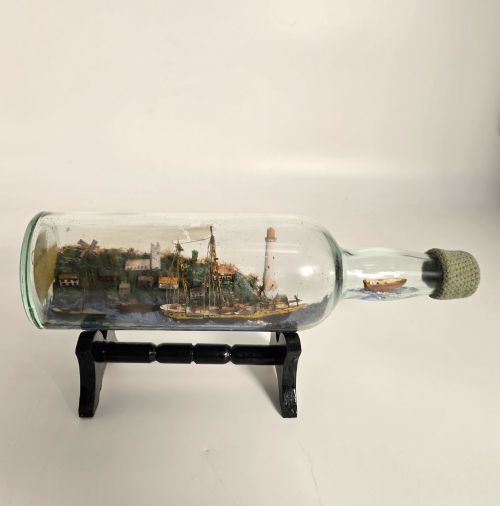
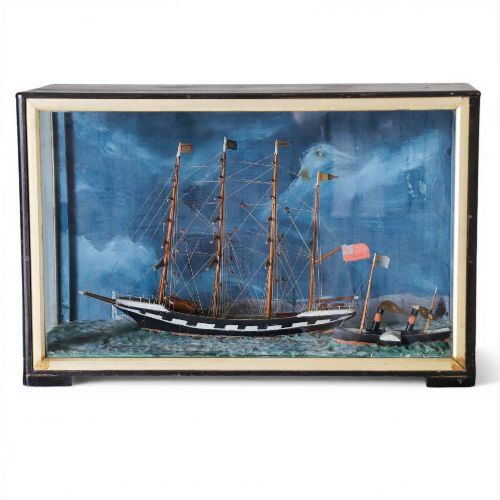
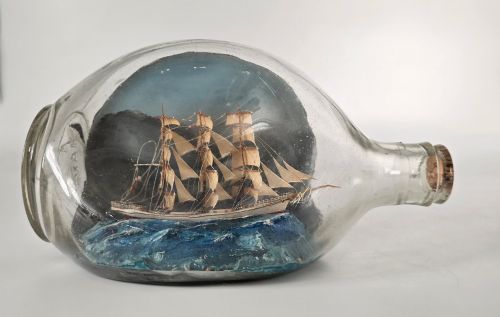
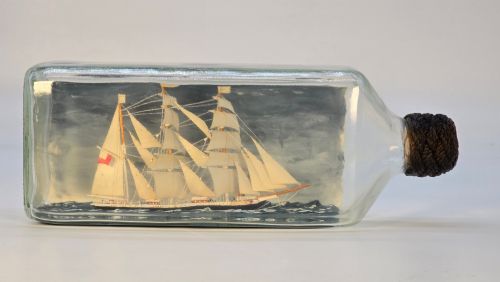
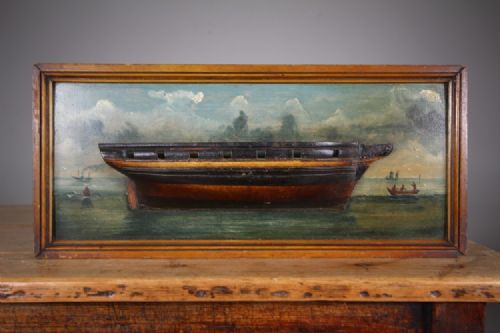
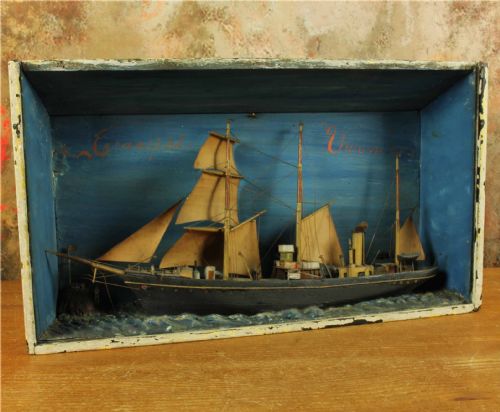
A folk art ship diorama captures sailing vessels and steam ships within enclosed wooden boxes, glass cases or bottles. These pieces range from naive wooden models to detailed shadow box displays and ships built inside glass containers.
The versions most common on this page date from the nineteenth century up to the nineteen-thirties, reflecting Victorian maritime interests and later twentieth-century folk traditions. Objects include single clippers, racing vessels, barques and steam ships, often mounted on wooden plinths or framed as wall art.
Makers ranged from sailors passing time at sea to local craftsmen working in coastal regions such as Cornwall or regions of France. Their work preserves specific named vessels like the Glynllifon and the Queen Anne alongside anonymous craft.
Materials and construction
Construction relies primarily on wood, carved and shaped to form hulls and masts, augmented by canvas, fabric and painted surfaces to create the sea and sky. Putty, plaster and cork frequently secure the components within their glazed or bottled environments.
Makers engineered collapsible masts to pass models through narrow bottle necks before erecting them inside. Shadow boxes and cased dioramas utilised layered painted backgrounds, canvas sails and occasionally straw work to add depth and texture to the seascape.
Makers occasionally utilised straw work to catch the light on miniature rigging.
Evaluating quality and execution
Quality rests on the ambition of the composition and the dexterity of the maker, distinguishing simple bottle ornaments from complex multi-vessel races. The inclusion of named ships, detailed rigging and painted Turneresque seascapes elevates the visual impact.
Condition depends on the stability of internal elements within their glass or wooden enclosures, as well as the preservation of original paint and canvas. Pieces retaining their original wooden plinths or shadow box frames hold greater coherence.
The Folk Art Ship Diorama Glossary
- Diorama
- A three-dimensional scene depicting figures or models in a natural setting. In this context, it refers to ship models set within glazed boxes or frames.
- Shadow Box Diorama
- A deep picture frame enclosing a scene with a sense of perspective. These wall-hung displays use painted backgrounds and layered materials.
- Barque
- A sailing ship with three or more masts having the fore- and mainmasts square-rigged and the mizzenmast fore-and-aft rigged. This vessel type appears frequently in marine dioramas.
- Clipper
- A very fast nineteenth-century sailing ship with three masts and a square rig. These vessels are a favoured subject for makers depicting full sail action.
- Scratch-built
- A model built from raw materials rather than from a commercial kit. These pieces reflect the individual maker's direct observations and resourcefulness.
Folk Art Ship Diorama: Frequently Asked Questions
How do you get a ship inside a bottle?
Makers constructed the hulls to fit through the bottleneck and engineered hinged or collapsible masts folded flat during insertion.
Once inside, threads attached to the masts pulled them upright and secured the rigging into place using sealed ports.
Where were these dioramas made?
Many originated in coastal towns and ports where sailors and local craftsmen had direct access to maritime subjects and materials.
Examples span English and French workshops, created both by professional artisans and by seafarers during long voyages.
How should I display a shadow box diorama?
These pieces require wall hanging away from direct sunlight to protect painted canvases and delicate fabric components from fading.
Maintaining stable indoor humidity prevents shrinkage in the wooden frames and protects the internal plaster or putty.
How do I date an antique ship diorama?
Dating relies on the vessel type, clothing or flags depicted, and the construction materials used in the box or bottle.
Nineteenth-century pieces often feature traditional clipper or barque rigging, whereas later examples from the nineteen-twenties and thirties include steam ships.