


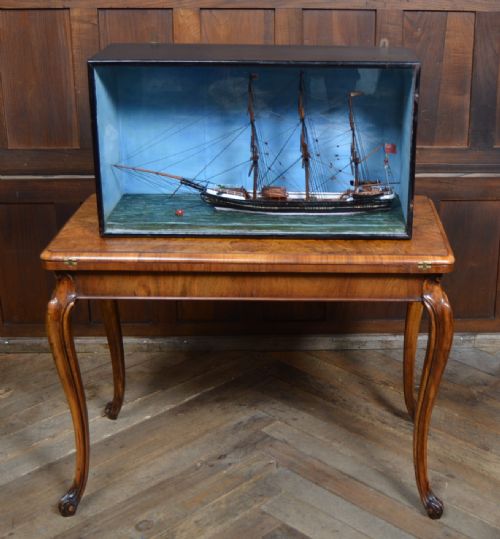


Maritime Model in Glass
A maritime model in glass captures sailing vessels within bottles or glazed cases, offering miniature nautical scenes created by makers seeking to preserve maritime craft.
Maritime Model in Glass
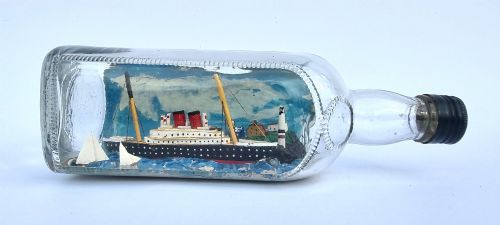
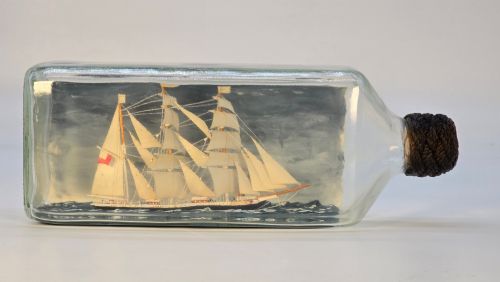
A maritime model in glass encompasses miniature sailing ships and steam vessels housed inside glass bottles or protected within cased dioramas. You encounter examples ranging from early nineteenth century creations to later mid-century pieces.
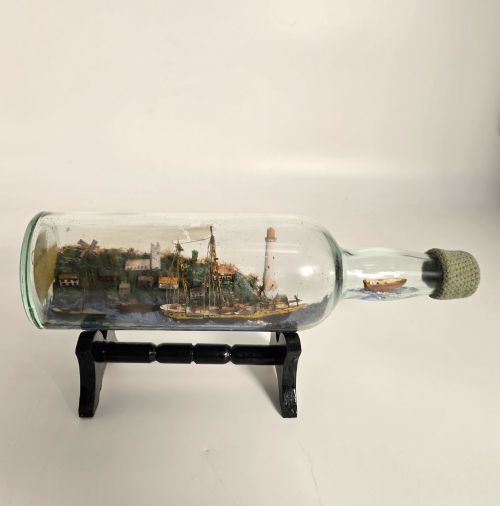
The objects take several distinct forms, including traditional ships built inside bottles on wooden plinths and shadow box dioramas displaying racing vessels. These pieces emerge from maritime folk art traditions across the nineteenth and twentieth centuries.
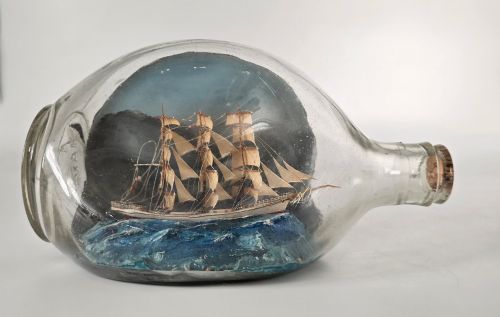
Makers construct these models to depict specific vessel types, such as clippers in full sail, two-masted schooners, and steam ships. English and Welsh folk art examples frequently appear alongside cased scale models.
How they were made
Makers utilise wood to shape the hull and masts of the vessels, often employing thread for rigging and paint for surface detailing. Plaster, putty, and cork frequently form the base and landscape within the glass enclosure.
Constructing a ship in a bottle requires hinged masts that fold flat to pass through the narrow neck before being pulled upright with threads. Cased dioramas assemble the components within a wooden frame behind glass, securing the maritime scene firmly.
Listings feature periods spanning from the early nineteenth century through to the 1960s, constructed from wood, glass, cork, and thread.
What varies in quality
The level of detail in the rigging and the proportion of the hull determine the visual success of the piece. Skilful assembly hides the mechanisms used to pass the vessel through the bottle neck.
The materials used for the surrounding sea and the condition of the wooden plinth or glass case influence the overall character. Earlier pieces demonstrate traditional folk art methods that distinguish them from later works.
The Maritime Model in Glass Glossary
- Diorama
- A three-dimensional scene depicting figures or objects in a natural setting. In this context, it refers to cased models displaying ships at sea.
- Clipper
- A very fast nineteenth century sailing ship with multiple masts and square sails. These vessels are frequently represented in glass cases and bottle models.
- Folk art
- Art made by self-taught individuals using traditional community methods. Maritime folk art encompasses these handmade ship models and dioramas.
- Schooner
- A sailing vessel with two or more masts and fore-and-aft sails. These feature in various scale models and bottled scenes.
- Plinth
- A heavy base supporting a statue, vase, or model. Many bottled ship models are mounted upon wooden plinths for display.
Maritime Model in Glass: Frequently Asked Questions
How do ships fit inside bottles?
Makers build the hull and fold the hinged masts flat to pass the entire vessel through the narrow neck of the bottle.
Once inside, they pull strings attached to the masts to raise them upright and secure the rigging.
What is a shadow box diorama?
A shadow box diorama is a cased three-dimensional display that protects miniature maritime scenes behind glass.
These frames allow makers to construct detailed sea environments with multiple vessels and painted backgrounds.
How do I date these models?
Dating relies on the style of the vessel, the materials used for the case or bottle, and any written inscriptions.
Early nineteenth century pieces often show simpler folk art construction compared to later twentieth century examples.
Where were these models made?
Many of these pieces originate from British folk art traditions, with specific examples noted from England and Wales.
Sailors and coastal residents typically created them during times ashore using readily available workshop materials.
How should I display them?
Keep bottled models and cased dioramas away from direct sunlight to protect the paint, thread, and wood components.
Place them on stable surfaces where the wooden plinths or frames receive adequate support.