


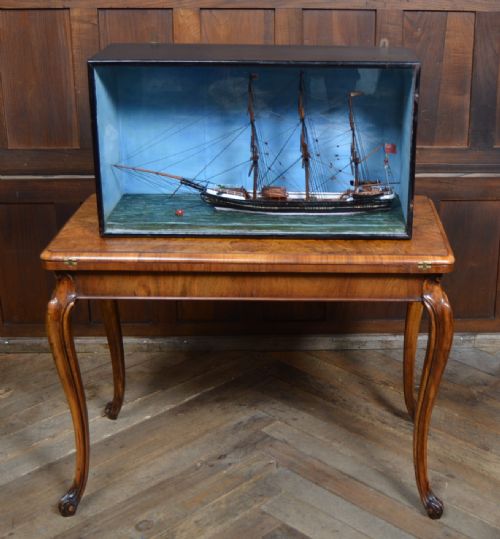

Nautical Diorama in Glass
A nautical diorama in glass captures the romance of the sea inside a sealed bottle or wooden case, offering a miniature maritime world to display at home.
Nautical Diorama in Glass
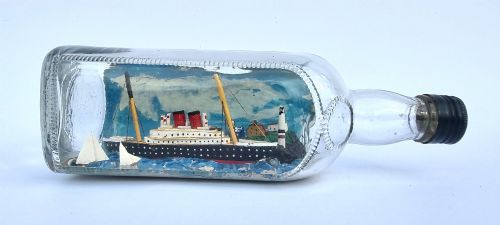
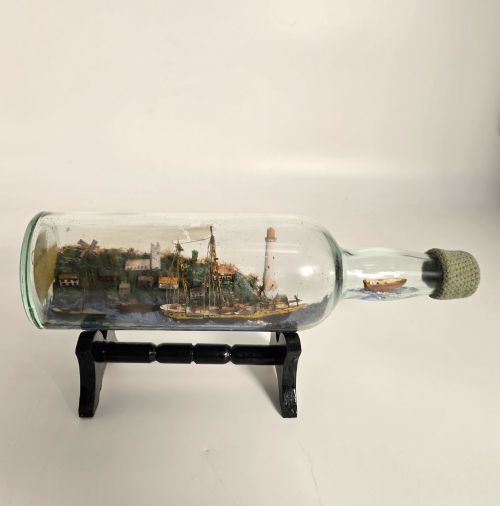
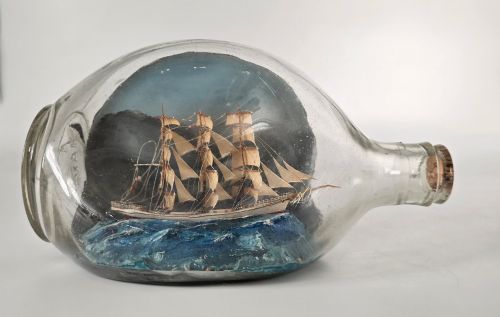
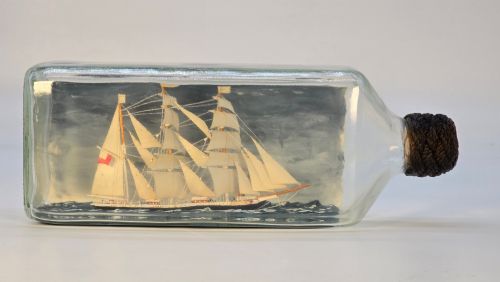
A nautical diorama in glass presents miniature sailing vessels and steam ships frozen in mid-voyage, encased within glass bottles or shadow boxes to protect the delicate work inside. These pieces span the nineteenth century through the nineteen-thirties, emerging from maritime folk art traditions where sailors and coastal makers built elaborate scenes by hand.
Objects range from simple nineteenth century folk art to detailed Victorian clipper models, uniting maritime history with intricate craft. Collectors value them for their tactile charm and the clever engineering required to pass masts and rigging through a narrow glass neck.
How they were made
Makers constructed these models using wood, cork, thread, and rope, shaping hulls and rigging with collapsible masts that folded flat to pass through a bottle neck. Once inside, pull-strings raised the masts into position, and putty or plaster secured the miniature vessel to the base.
Painted backgrounds and layered plaster or paint created the illusion of deep water and churning waves beneath the ship. Glass bottles or wooden cases then sealed the entire scene away from dust, preserving the cork and thread components over generations.
Listings span the nineteenth century, the Victorian era, nineteen-twenty, nineteen-thirty, and nineteen-sixty, utilising wood, glass, paint, plaster, putty, cork, thread, and rope.
What varies in quality
The fineness of the rigging and the realism of the painted water set superior examples apart from simpler work. Finer pieces demonstrate meticulous proportion in the miniature vessel and careful concealment of the putty used to anchor the hull.
The clarity and age of the glass housing also influence the character of the piece, as does the presence of an original wooden plinth or detailed inscriptions naming the ship and date.
The Nautical Diorama in Glass Glossary
- Diorama
- A three-dimensional miniature scene displaying figures or models within a framed or enclosed space. In maritime folk art, this typically portrays a ship underway at sea.
- Shadow box
- A deep, glass-fronted wooden case designed to hang on a wall or stand on a surface, holding a flat-backed diorama. It protects the contents while offering a clear view from the front.
- Clipper
- A very fast nineteenth-century merchant sailing ship with multiple masts and a large sail area. These vessels inspired many of the detailed models seen in maritime folk art.
- Plinth
- A heavy wooden base or block that supports a model or bottle diorama. It often elevates the display and provides stability for round-bottomed glass vessels.
Nautical Diorama in Glass: Frequently Asked Questions
How did they fit ships inside bottles?
Makers built the ship with hinged masts and rigging threaded through fine cords, allowing the entire superstructure to fold flat against the hull. This narrow profile slipped easily through the neck of the glass bottle.
Once inside, the maker pulled hidden strings to raise the masts upright and lock them into place, securing the vessel to a sea bed made of putty or plaster.
Are these pieces English?
Many examples originating from the nineteenth and early twentieth centuries bear English attribution, reflecting the nation's strong maritime heritage and seafaring population. Makers ranged from professional model makers to sailors passing time at sea or in port.
Folk art traditions varied by region, but English workshops produced a significant share of the cased clipper models and bottled ships found in collections today.
How should I display a cased diorama?
These pieces require a stable surface away from direct sunlight and damp conditions to protect the delicate wooden components, thread rigging, and paper or paint elements. Shadow boxes suit wall mounting where wall studs can bear the weight.
Bottle dioramas sit best on sturdy sideboards or mantelpieces supported by their original wooden plinths, keeping them secure from knocks.
How do I date a glass diorama?
Dating relies on the style of the vessel, the construction of the wooden case or bottle, and any written inscriptions or dates left by the maker. Victorian clippers and steam ships correspond to specific technological eras.
Materials such as old hand-blown glass, original corks, and aged cotton threads also provide strong indicators of nineteenth or early twentieth-century manufacture.