





Cased Ship Model
A cased ship model brings the tactile history of the sea indoors, protecting intricate maritime craft behind glass.
Cased Ship Model
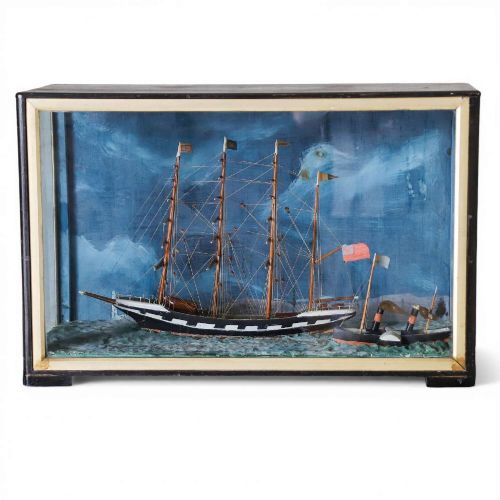
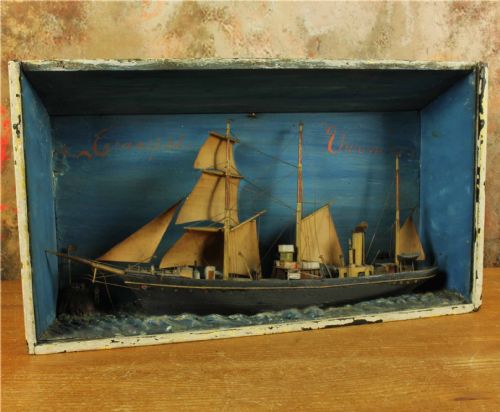
When you search for a cased ship model, you encounter a range of maritime displays that preserve sailing vessels, steamers, and racing ships within glazed enclosures. These pieces capture historical vessels such as the Glynllifon or named ships like The Hippolyta in three-dimensional miniature, often accompanied by painted seascapes.
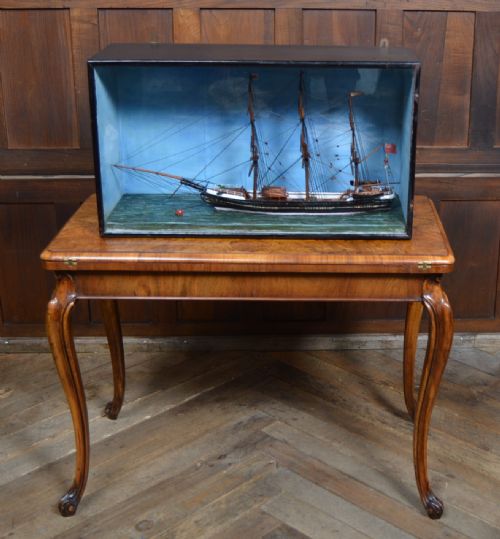
The most common forms on this page include shadow box dioramas, half-hull waterline models, and fully rigged scale models housed in wooden and glass frames. Dating primarily from the nineteenth century through the early decades of the twentieth century, these objects combine naval architecture with folk art traditions.
How they were made
Makers constructed these models using wood, canvas, fabric, and thread to build hulls, masts, and rigging, frequently mounting the vessels against painted plaster or canvas backdrops. The inclusion of painted Turneresque seascapes or meticulous straw work adds depth and texture to the enclosed maritime scenes.
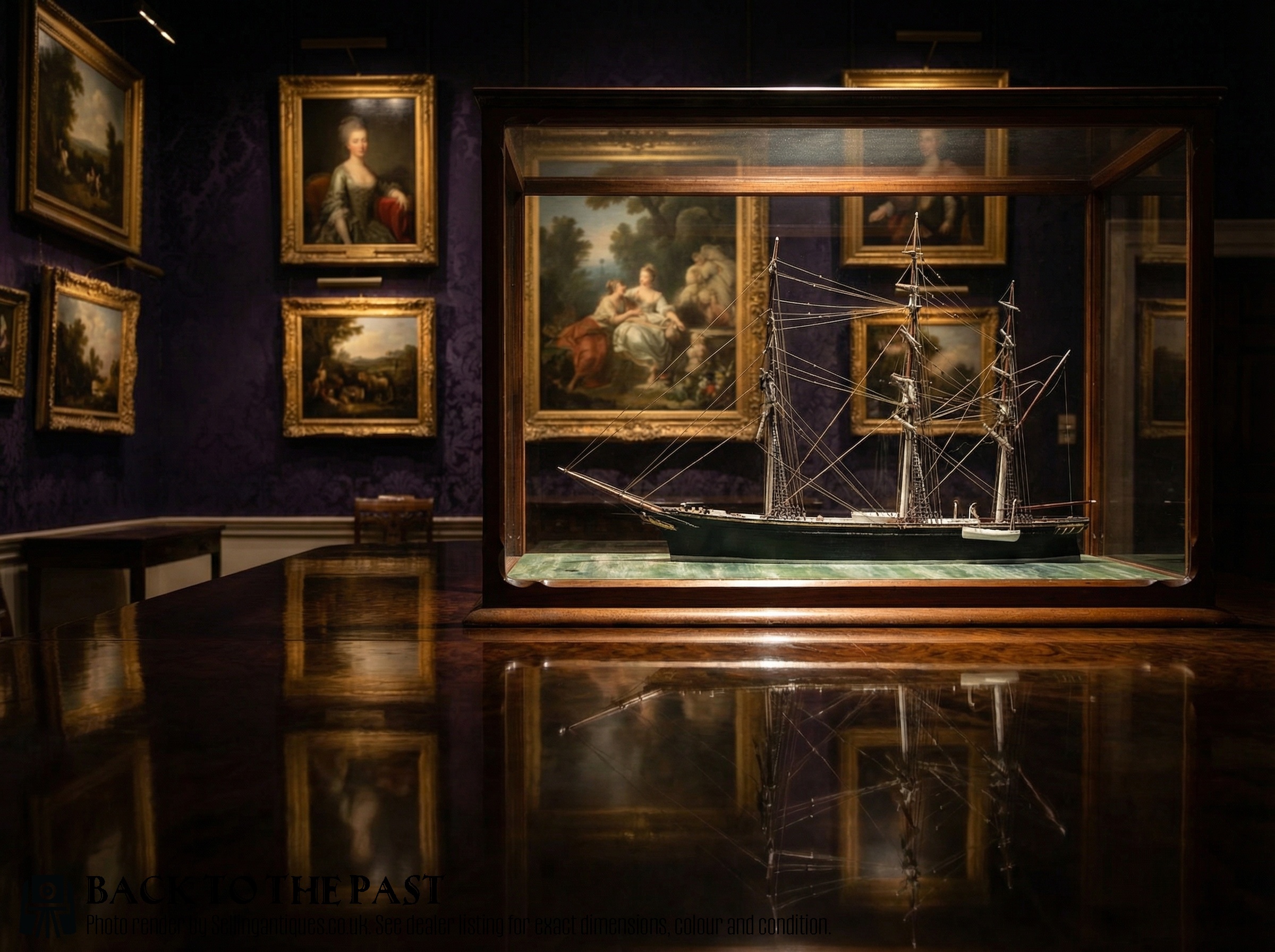
Protective glazing secures the delicate components from dust and damage, framing the maritime folk art and scale models within tight wooden boxes designed for wall hanging or tabletop display.
Cased Ship Model Retail Price Guide 2026
Typical asking prices for cased ship model among the pieces listed under this phrase on Sellingantiques today, from the lower quarter to the upper quarter. They describe what is for sale here now, not the wider market.
Makers occasionally incorporated humble straw work into maritime scenes to render shimmering wakes and coastal light.
What varies in quality
The sophistication of the rigging and the accuracy of the scale model separate standard commercial items from finer maritime folk art. Hand-carved wooden hulls and detailed thread work show greater patience than simpler constructions.
The integration of the painted backdrop with the physical model dictates visual success. When the painted sea matches the posture of the vessel, the diorama achieves a cohesive artistic weight.
The Cased Ship Model Glossary
- Diorama
- A three-dimensional scene featuring models set against a painted background. These enclosures use depth to create realistic maritime perspectives.
- Waterline model
- A scale representation of a ship showing only the hull down to the water line. This style suits shallow shadow box frames.
- Barque
- A sailing vessel with three or more masts having square sails on the fore and mainmasts and fore-and-aft sails on the mizzenmast. This rig appears frequently in nineteenth-century maritime pieces.
- Turneresque
- Pertaining to the dramatic, atmospheric style of painting associated with J.M.W. Turner. Such backdrops use expressive light and weather to animate the enclosed ships.
- Scratch built
- Constructed entirely from raw materials rather than from a commercial kit. This method underscores the maker's personal skill and ingenuity.
Cased Ship Model: Frequently Asked Questions
What is a cased ship model?
A cased ship model is a miniature representation of a vessel preserved inside a glass-fronted frame or box. These pieces protect delicate rigging and paper or fabric components from environmental damage.
They range from folk art shadow boxes depicting racing vessels to precise scale models of named historical cargo ships and sailing ketches.
How do I date a ship diorama?
Dating relies on the construction materials, the style of the wooden case, and the type of vessel depicted. Nineteenth-century examples often feature folk art backdrops and simpler hand-carved hulls.
Twentieth-century pieces tend towards specific scale models or named commercial steamers reflecting later maritime technology.
Where should I display a shadow box model?
Shadow box dioramas require stable wall space away from direct sunlight and damp conditions to protect the interior canvas, paint, and thread. Proper placement prevents warping of the wooden frames and degradation of the glass seals.
Because many examples were built for interior display, they anchor a room with distinct nautical character when hung at eye level.
What is the difference between a waterline model and a full hull model?
A waterline model depicts the ship as it sits in the water, showing only the upper decks and hull above the surface. These sit flat against a painted background inside a shallow box.
Full hull models show the entire vessel including the underside, requiring deeper cases to accommodate the three-dimensional form.