

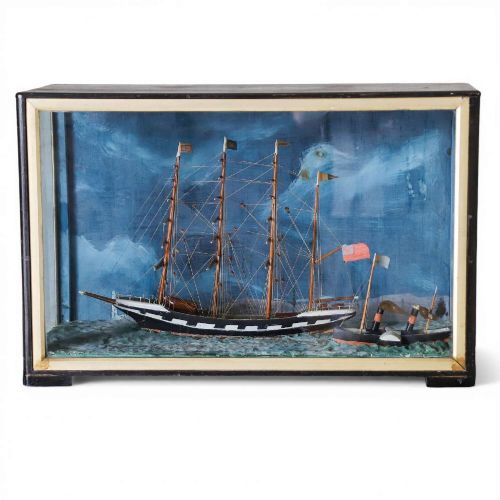
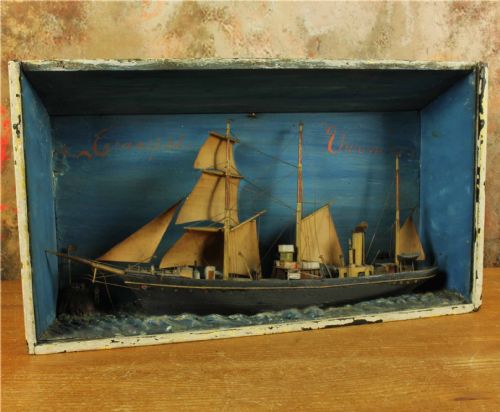


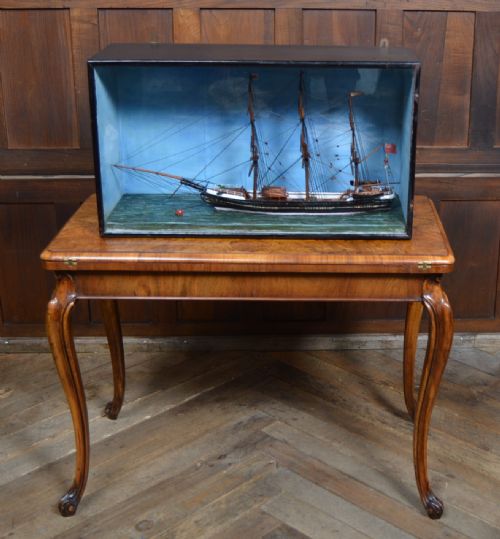


Maritime Display Case
These maritime display case items combine model ships and detailed dioramas under glass, offering a direct window into naval history.
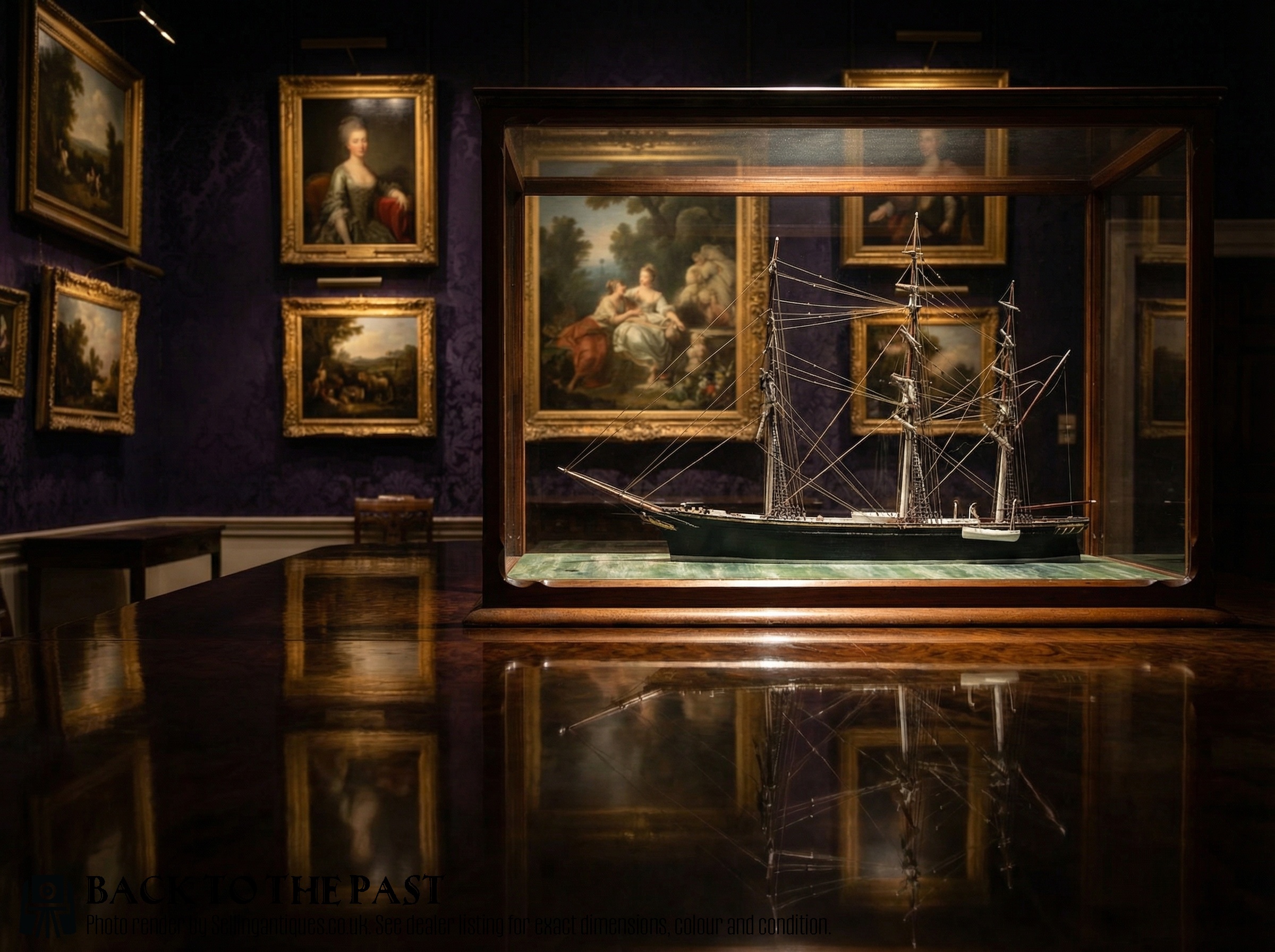
Maritime Display Case
A maritime display case presents scale models, shadow box dioramas, and model ships preserved safely behind glass. Buyers searching this phrase typically encounter nineteenth-century pieces alongside Edwardian and later twentieth-century examples.
The forms range from wall art shadow boxes to freestanding brass and glass cases. Many feature sailing vessels, racing ships, or specific named vessels like the Glynllifon and The Hippolyta.
Origins span English and French workshops, encompassing both refined scale models and vernacular maritime folk art creations. Each piece captures a distinct nautical subject within a protective enclosure.
Materials and construction methods
Makers constructed these pieces using wood and oak for the primary frames and backing boxes. Glass panels protect the interior scenes from dust and damage while allowing clear viewing from multiple angles.
Internal details often incorporate painted turneresque seascapes, plaster work, canvas, and fabric elements to simulate water and sky. Specialised techniques include intricate straw work and scratch-built rigging.
Hardware elements frequently utilise brass for hinges, locks, and structural framing. Admiralty pattern designs ensure robust construction suited to marine environments.
Maritime Display Case Retail Price Guide 2026
Typical asking prices for maritime display case among the pieces listed under this phrase on Sellingantiques today, from the lower quarter to the upper quarter. They describe what is for sale here now, not the wider market.
Some nineteenth-century makers used actual straw to meticulously weave intricate ship hulls and rigging.
What separates the finest examples
The precision of the scale model work and the complexity of the rigging determine the upper tier of quality. Scratch-built vessels with accurate historical details command attention over simpler decorative items.
The execution of the painted backdrop and the integration of the diorama elements create depth and realism. Superior examples blend the painted sea seamlessly with the physical model of the ship.
The quality of the housing, from heavy oak frames to secure brass and glass enclosures with functioning locks, marks the distinction between standard production and superior craftsmanship.
The Maritime Display Case Glossary
- Shadow Box Diorama
- A shallow display container featuring a three-dimensional scene built up from the back panel. It uses perspective and painted backgrounds to create an illusion of deep space.
- Barque
- A sailing vessel with three or more masts having the fore- and mainmasts square-rigged and the mizzenmast fore-and-aft rigged. This rig provided a balance of speed and manageable crew numbers.
- Scratch Built
- A model constructed entirely from raw materials and components rather than assembled from a commercial kit. This method demonstrates the maker's individual skill and patience.
- Admiralty Pattern
- A standardised design specification used for equipment commissioned or approved by the British Admiralty. It denotes sturdy, functional construction built to rigorous official standards.
- Turneresque
- A style of painting influenced by J.M.W. Turner, characterised by atmospheric light and expressive treatment of water and sky. It often appears in the background seascapes of nineteenth-century dioramas.
Maritime Display Case: Frequently Asked Questions
What is a maritime display case?
A maritime display case is a protective glass enclosure housing a model ship or a three-dimensional diorama of a nautical scene.
These pieces preserve fragile rigging and painted elements while displaying naval subjects for interior decoration and study.
How were old model ships made?
Makers built these models from wood, canvas, and fabric, often employing scratch-building techniques to replicate real vessels.
Background scenes were painted on wood or plaster, sometimes incorporating textured materials like straw work to depict the sea.
Where were shadow box dioramas placed?
These pieces served as wall art or tabletop displays in homes, offices, and maritime establishments.
The glass casing protected the delicate models from sea air, dust, and handling in domestic spaces.
How do I date a maritime diorama?
Dating relies on the style of the vessel, the construction materials of the frame, and any documented history of the ship.
Nineteenth-century examples often feature folk art elements, while Edwardian and later pieces may use standardised brass framing.