




Victorian Ship Model
These victorian ship model pieces capture maritime craft in wood, canvas, and glass, offering a direct link to nineteenth-century seafaring life.
Victorian Ship Model
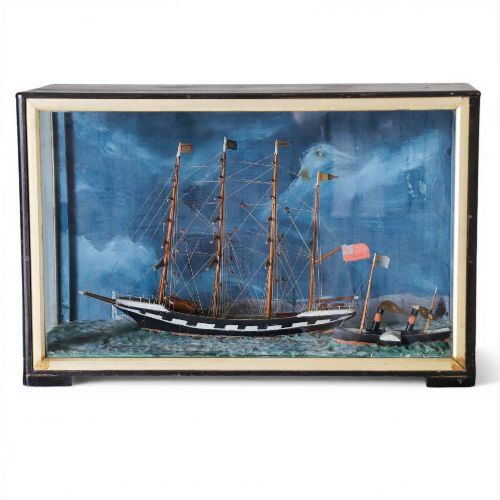
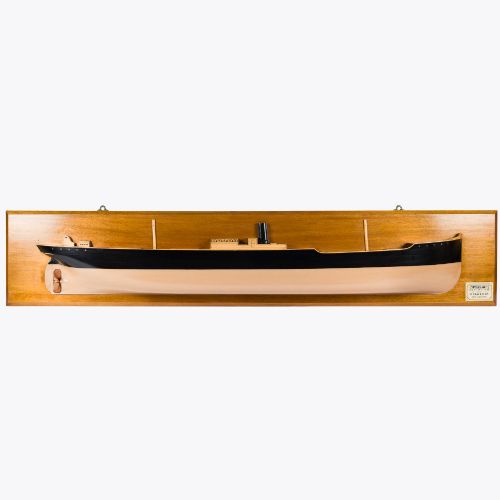
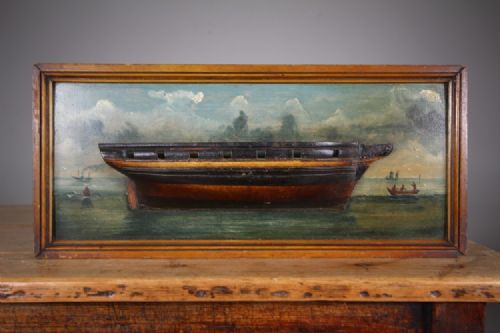
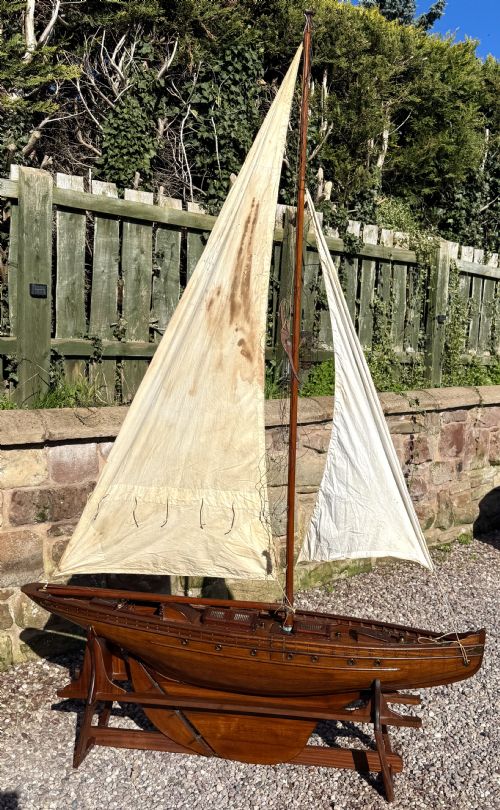
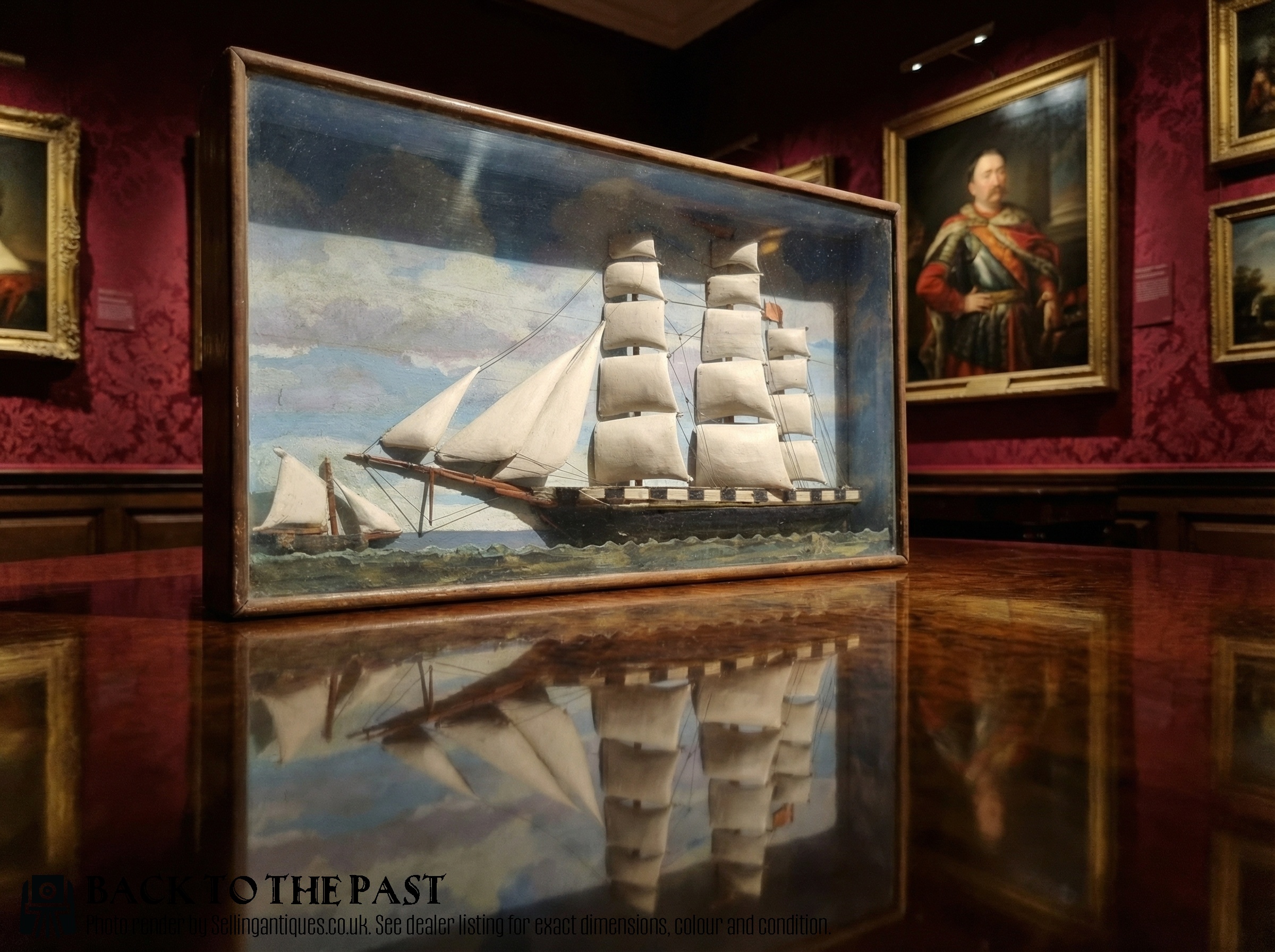
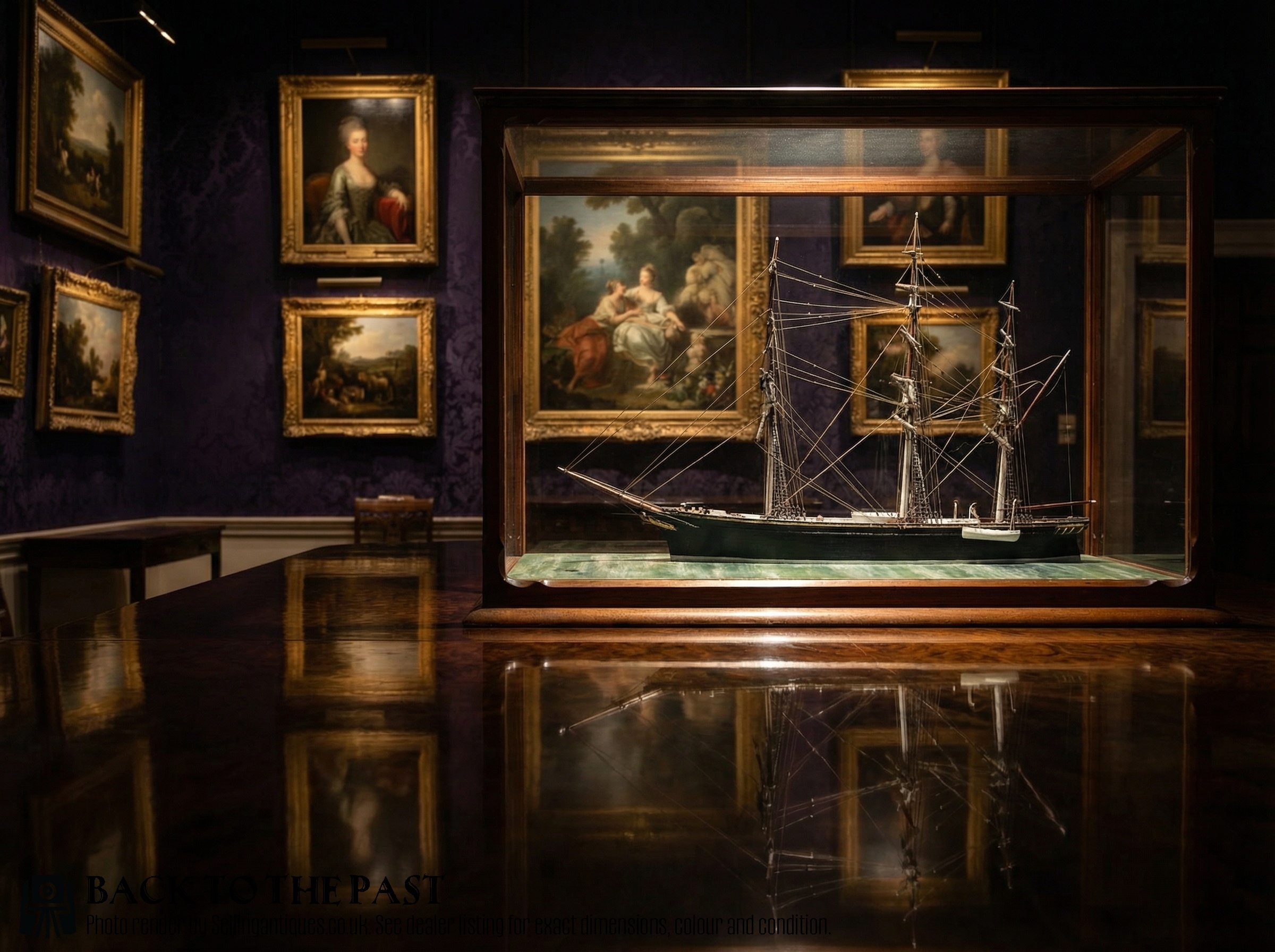
A victorian ship model encompasses cased dioramas, shadow boxes, half hull models, and free-standing vessels created during the nineteenth century. These objects represent sailing ships, clippers, barques, and steam barges recorded by maritime folk art traditions.
Buyers will most frequently encounter cased maritime dioramas and half hull models on this page. These pieces often feature painted backgrounds or plaster waves to suggest vessels racing at sea or under full sail.
How they were made
Makers utilised carved wood, pine, mahogany, and sycamore for hulls and structures, supplemented by canvas and painted surfaces for sails and seas. Cases frequently incorporated glass to protect delicate riggings and detailed deck work.
Makers integrated brass fixtures, plaster elements, and straw work alongside traditional timber construction. Folk art examples often relied on naive shaping and accessible local materials rather than rigid naval architecture.
The listings include materials such as pine, mahogany, brass, glass, plaster, copper, and canvas across various maritime forms.
What varies in quality
The sophistication of the maritime context dictates much of the quality, separating simple decorative items from complex dioramas with painted seascapes and detailed rigging. Skilled makers achieved a convincing sense of movement in water and wind.
The preservation of original glass cases, painted backdrops, and delicate rigging elements influences the standing of a piece. Materials such as carved sycamore on marble bases distinguish ambitious studio work from naive folk art.
W Grey & Co·Liverpool Ship Building Co
The Victorian Ship Model Glossary
- Diorama
- A three-dimensional scene enclosed in a glass case, typically depicting a ship at sea with painted backgrounds and sculpted waves. These displays protected intricate rigging from dust.
- Half Hull Model
- A sectional model attached to a board, used by shipbuilders to design and record hull contours. They focus entirely on the symmetrical lines of the vessel.
- Maritime Folk Art
- Objects created by sailors or self-taught makers using available materials such as wood, copper, and canvas. These pieces reflect personal nautical experience rather than formal naval standards.
- Scratch Built
- A model constructed entirely from raw materials without commercial kits or prefabricated parts. Makers shaped every component by hand.
Victorian Ship Model: Frequently Asked Questions
What is a diorama?
A diorama encloses a model ship within a glazed wooden case, often featuring a painted canvas backdrop and sculpted plaster waves to create a sense of motion.
These cased displays protected delicate rigging and paper components from dust and damage in domestic settings.
How were half hull models used?
Shipbuilders utilised half hull models to plan vessel proportions and test hydrodynamic shapes before commissioning full-sized construction.
Mounted on boards, they served as practical design tools in shipyards and later as decorative records.
Where were these models made?
Makers produced these pieces across maritime regions, including English, Welsh, and Cornish coastal communities influenced by local shipping industries.
Sailors, folk artists, and commercial model makers all contributed to the diverse range of surviving vessels.
How should I display a cased model?
Cased models require stable indoor environments away from direct sunlight to protect painted canvas, wood, and historic glass.
Display surfaces must support the substantial weight of large wooden cases and marble or timber mounting bases.