


Antique Ship in Case
An antique ship in case brings the movement and detail of maritime history indoors behind protective glass.
Antique Ship in Case
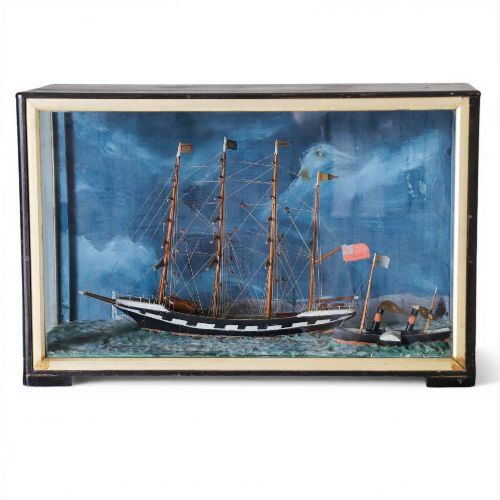
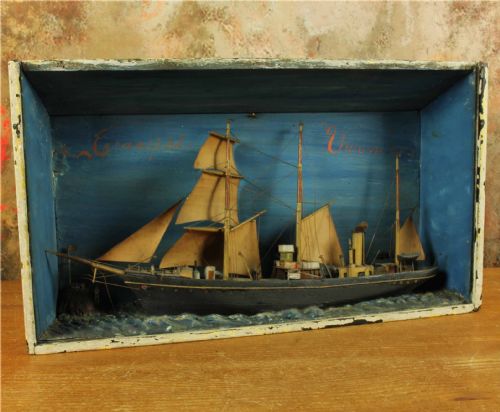
An antique ship in case presents maritime subjects preserved behind glass frames or displays, capturing sea-going vessels in miniature form. These items span periods from the eighteenth century through the mid-twentieth century, encompassing both folk art interpretations and detailed scale models.
The most common versions met on this page are cased shadow box dioramas and enclosed model ships. These pieces often depict specific vessels, racing scenes, or coastal journeys set against painted canvas or plaster backdrops.
Makers utilised wood, brass, and paint alongside glass to construct these marine scenes. Alongside traditional dioramas, related horological pieces such as rocking ship automata longcase clocks appear within the selection.
How they were made
Makers constructed these models using carved wood for hulls and rigging, often supplemented by painted canvas seascapes to create depth inside the enclosure. Materials like mahogany and brass frequently formed the structural frames and display cases.
Artisans applied layered paint and plaster details to simulate waves, skies, and coastal environments. Specialised variations incorporated straw work or delicate textile sails to add texture to the enclosed vessels.
Listings feature eighteenth, nineteenth, and twentieth-century pieces incorporating glass, wood, brass, and painted canvas.
What varies in quality
The sophistication of the painted backdrop and the intricacy of the vessel's rigging set standard examples apart from exceptional works. Original ebonised or glazed housings preserve the integrity of the interior scene better than later replacements.
The precision in scale modelling and the survival of original painted finishes dictate the overall execution. Greater visual depth in the seascape indicates a more accomplished hand.
Richard Biggs·John Sly·H Hughes
The Antique Ship in Case Glossary
- Diorama
- A three-dimensional scene enclosed in a case. These displays use painted backdrops and carved elements to portray maritime events.
- Automaton
- A mechanical device that moves. In these pieces, automated rocking ships simulate motion on longcase clock dials.
- Barocyclonometer
- A specialised meteorological instrument used at sea. These devices measure atmospheric pressure changes related to tropical storms.
- Fusee
- A conical pulley mechanism used in clocks. This part ensures even power distribution from the mainspring to the gear train.
- Ketch
- A two-masted sailing vessel. The smaller mizzenmast is stepped forward of the rudder post on this rig.
Antique Ship in Case: Frequently Asked Questions
How do I display an antique ship diorama?
Place the cased model away from direct sunlight and fluctuating radiator heat to protect the internal paintwork and wooden elements. Secure the enclosure on a stable surface where the glass front can be viewed safely.
Keep the exterior mahogany or ebonised frames dusted with a dry cloth. Avoid using liquid cleaners near the glass joints to prevent moisture entering the sealed display.
What periods do these cased models date from?
The pieces span from the eighteenth century through the Victorian era and into the early twentieth century. Many examples originate from the nineteenth century.
Stylistic shifts appear between Georgian folk art creations and later Edwardian scale models. Examining the case construction and materials helps identify the manufacturing period.
Are the ships inside carved from wood?
Most vessel hulls and primary spars are carved from wood, occasionally featuring specialised details like straw work or painted canvas sails. Background elements utilise plaster and paint.
Makers matched these wooden models with brass fittings and glass fronted enclosures. Each component reflects the maritime trades of its respective era.
How do rocking ship clocks work?
Rocking ship longcase clocks connect a mechanical linkage from the clock pendulum to a painted metal ship dial. This linkage makes the vessel sway back and forth as the clock ticks.
These automata mechanisms were integrated into eighteenth and nineteenth century clock faces. They combined timekeeping with moving maritime folk art.