
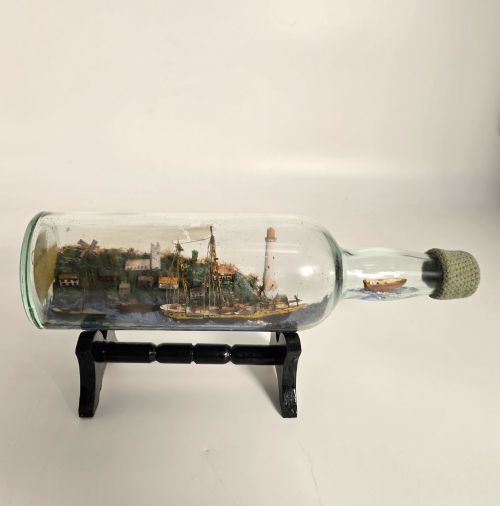
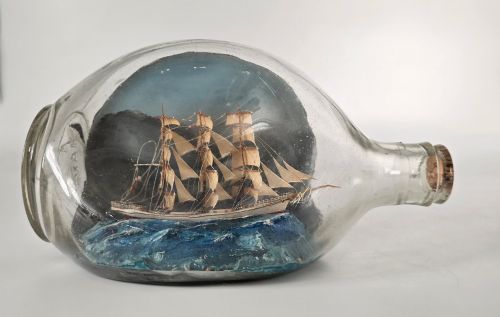
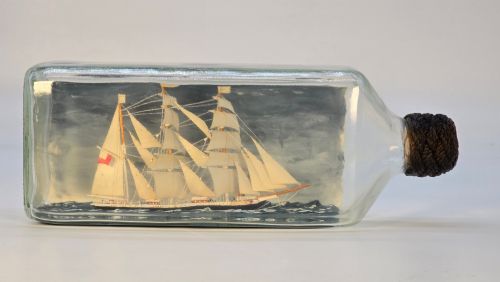
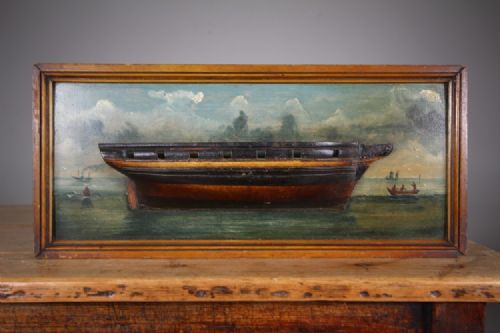
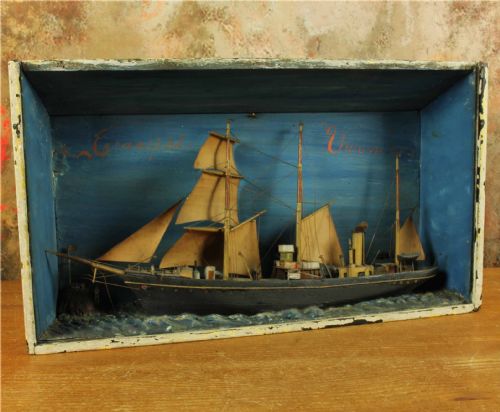


Antique Ship Diorama
An antique ship diorama captures a three-dimensional maritime scene behind glass, offering a tangible piece of folk art history for your wall or shelf.
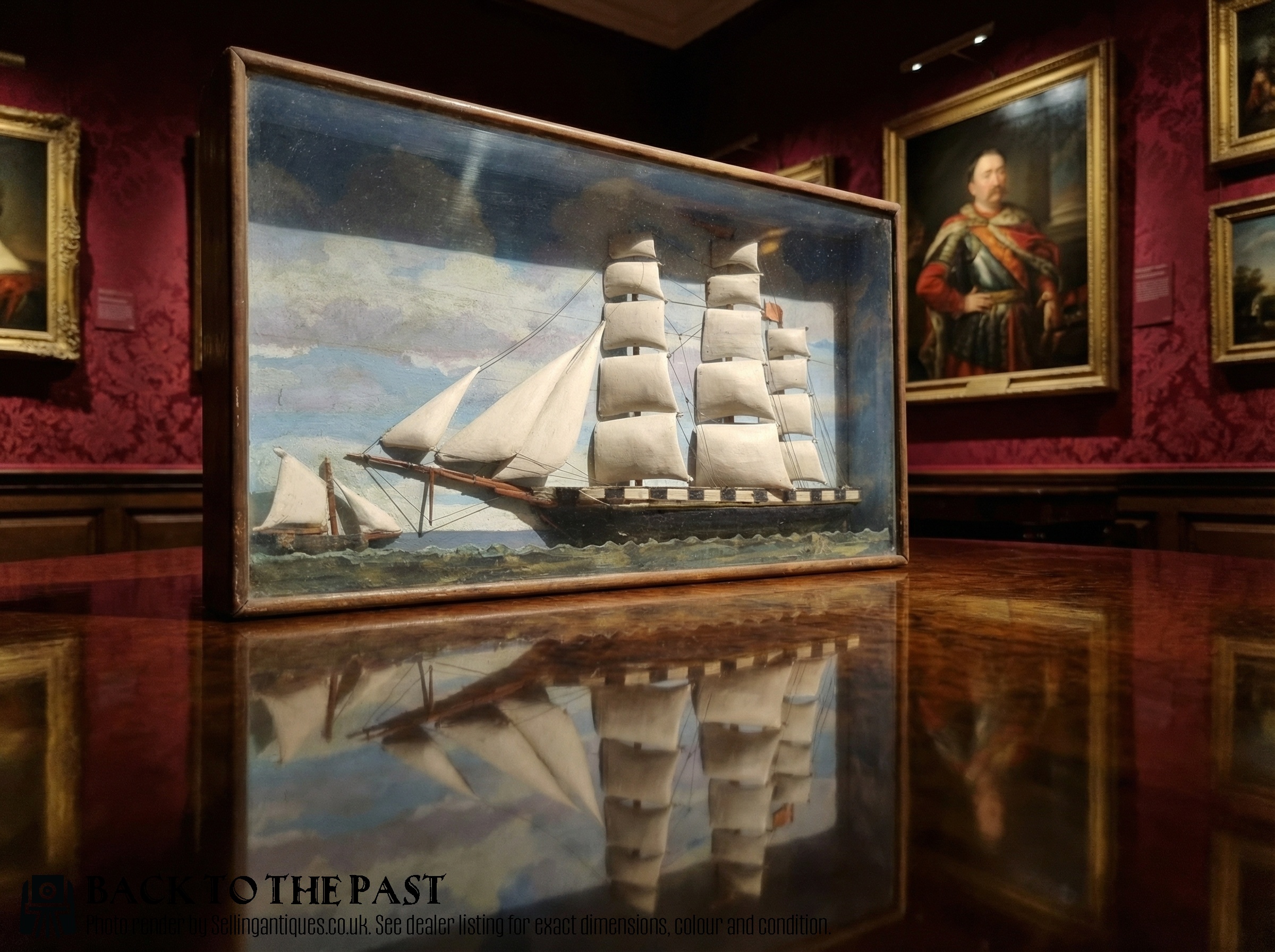
What an antique ship diorama is
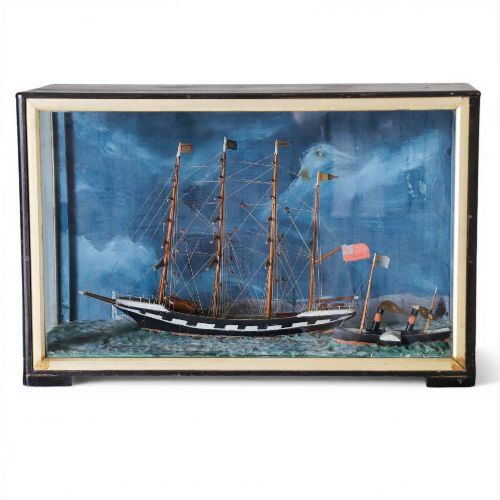
An antique ship diorama presents a sailing vessel set within a shallow glazed case, creating a convincing illusion of depth upon the sea. These maritime objects capture specific vessels, races, or generic sailing ships through the medium of nineteenth-century folk art.
The versions you meet on this page hail primarily from the nineteenth century, including specific dates around eighteen-sixty and later pieces from nineteen-twenty. British and English folk art traditions dominate, with regional pieces originating from Cornwall, Wales, and the North East.
Makers construct these scenes using wood, pine, and timber to form the hulls and rigging, complemented by painted backgrounds of sea and sky. Straw work and plaster also appear in the archive, alongside canvas for sails and original ebonised and silver gilt frames.
How they were made
Artisans built these maritime pieces using timber, pine, and wood to carve the hulls of sailing ships, sometimes employing carved wooden sails. The model vessels sit within enclosed wooden cases, backed by painted surfaces that depict the open sea and sky.
Retail Price Guide 2026
Typical UK retail prices for ship diorama, calculated from the Sellingantiques database of over a million retail prices indexed since 2003. This retail price guide relies exclusively on Sellingantiques data; no external sources or auction records are used, so the figures do not describe the wider market.
Listings feature nineteenth-century and early twentieth-century pieces, spanning from eighteen-sixty to nineteen-twenty.
What varies in quality
The ambition of the composition separates standard examples from the top of the range. Multi-vessel scenes, such as two sailing vessels racing at sea, demand greater skill from the maker than a single static ship.
The integrity of the original components dictates the standing of a piece. Examples retaining their original paint finish, ebonised and silver gilt cases, and intact carved wooden sails hold more historical weight than those with altered elements.
The Antique Ship Diorama Glossary
- Diorama
- A three-dimensional scene enclosed in a case with a glazed front. This format protects delicate ship models and painted backgrounds from dust.
- Ebonised
- Wood finished to resemble ebony, typically through dark staining or painting. This treatment provides a stark, formal border for maritime scenes.
- Scratch-built
- A model constructed from raw materials without the aid of a commercial kit. These pieces rely entirely on the maker's ingenuity and hand tools.
- Maritime folk art
- Creative works produced by self-taught or sailor makers focusing on nautical subjects. These objects reflect regional traditions rather than academic fine art standards.
Frequently Asked Questions
What is an antique ship diorama?
An antique ship diorama is a three-dimensional maritime display housed inside a shallow wooden case with a glass front. These pieces combine carved wooden ship models with painted backdrops to create the illusion of a vessel at sea.
Most surviving examples date from the nineteenth century and originate from British folk art traditions. They serve as decorative objects that capture the maritime heritage of the period.
How were ship dioramas displayed?
Makers designed these glazed wooden boxes to hang directly on walls or sit upon surfaces like mantelpieces and sideboards. The enclosed glass protected the delicate rigging, painted canvas, and wooden components from dust and damage.
Their framed nature meant they functioned as domestic art pieces, allowing families in coastal regions and inland towns alike to display nautical scenes in the home.
Where did these dioramas originate?
The pieces recorded here stem primarily from English, Welsh, and Cornish makers working during the nineteenth and early twentieth centuries. Regional variations often appear in the construction style and the types of vessels represented.
North East England and Cornwall produced notable examples, reflecting the strong maritime connections and seafaring communities found along those specific coastlines.
What materials make up the scenes?
Makers utilised timber, pine, and carved wood to form the hulls and rigging of the sailing ships. Backgrounds and water effects relied on paint applied to canvas, plaster, or wooden boards.
Unusual materials such as straw work also appear in the archive, while frames were commonly constructed from wood finished with ebonised and silver gilt treatments.