




Framed Maritime Model Ship
A framed maritime model ship brings the atmosphere of nineteenth-century coastal life directly onto a domestic wall.
Framed Maritime Model Ship
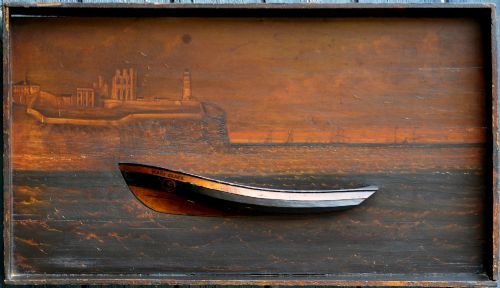
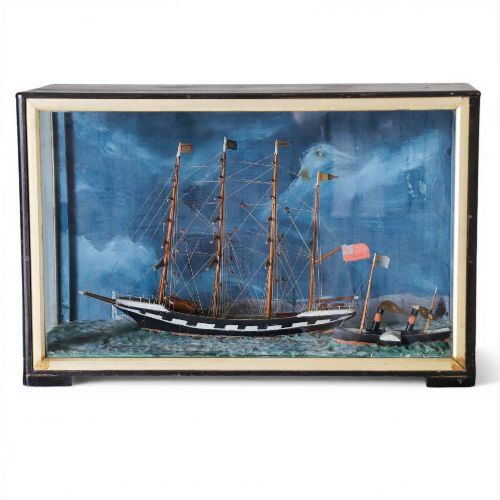
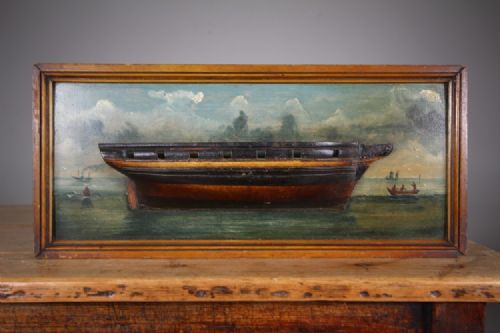
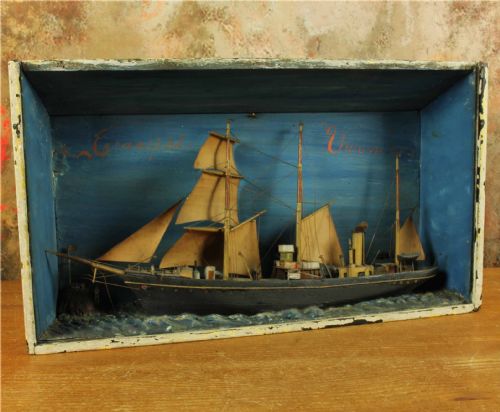
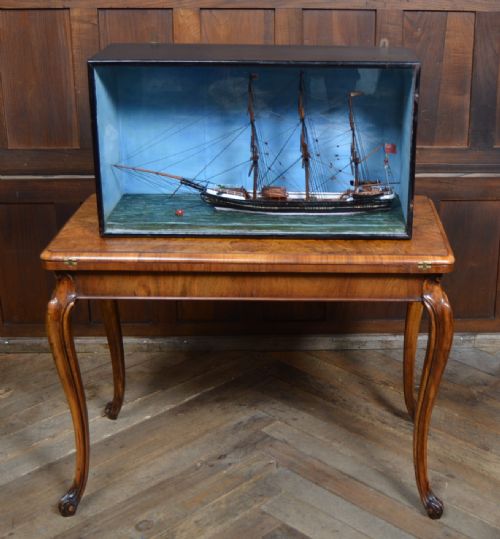
A framed maritime model ship takes the form of a shadow box diorama, presenting a detailed vessel set against a painted sea and sky background enclosed within a glass-fronted case.
Most examples found in this category belong to the Victorian era and the early twentieth century, spanning styles from maritime folk art to British folk art.
Makers ranged from sailors and coastal craftsmen to anonymous folk artists who constructed these pieces using wood, canvas, and paint to capture specific vessels like the Glynllifon or Queen Anne.
How these pieces were constructed
The hulls and spars of the model boats are carved or scratch-built from wood, often rigged with fine thread and fabric sails before being mounted within a shallow wooden frame.
Background seascapes are rendered using oil paint on canvas or paper, sometimes enhanced with plaster or layered straw work to create a three-dimensional illusion of waves and sky.
Some maritime dioramas incorporate intricate straw work to catch the light on a stormy sea.
What sets individual pieces apart
Quality rests upon the intricacy of the rigging and the fidelity of the model boat relative to the painted background sea. Pieces that integrate specific named vessels or elaborate Turneresque seascapes demonstrate a higher level of narrative ambition.
The architectural integrity of the shadow box and the survival of the original glass case preserve the interior elements from environmental degradation over the centuries.
The Framed Maritime Model Ship Glossary
- Diorama
- A three-dimensional scene in which carved models are set against a painted backdrop inside a shallow enclosed case. This technique creates depth within a wall-hung frame.
- Shadow box
- A deep glass-fronted frame designed to protect and display three-dimensional objects. It keeps dust and moisture away from delicate ship rigging.
- Folk art
- Creative work produced by self-taught individuals using traditional materials and methods. These pieces reflect regional aesthetics rather than academic art training.
- Scratch-built
- A model constructed entirely from raw materials rather than from a commercial kit. Makers shaped every component by hand.
Framed Maritime Model Ship: Frequently Asked Questions
What is a framed maritime model ship?
A framed maritime model ship is a three-dimensional diorama enclosed in a shadow box, featuring a carved wooden vessel set against a painted sea and sky.
These pieces combine model making and marine painting to preserve the likeness of historical sailing ships within a wall-hung format.
How were these ship dioramas displayed?
These pieces were designed to hang upon interior walls, functioning as both artwork and maritime commemoration.
The deep wooden frame and glass front protected the delicate fabric sails and rigging from household dust and atmospheric moisture.
Which periods do these models come from?
The pieces available primarily date from the nineteenth century and the early twentieth century, encompassing the Victorian era.
Folk art examples from this timeframe often reflect regional British and French coastal craftsmanship.
How do I identify a specific vessel?
Specific vessels are sometimes identified by inscriptions painted directly onto the woodwork, the glass, or a plaque affixed to the frame.
Names such as the Glynllifon or Queen Anne appear on certain nineteenth-century examples to record particular ships.