
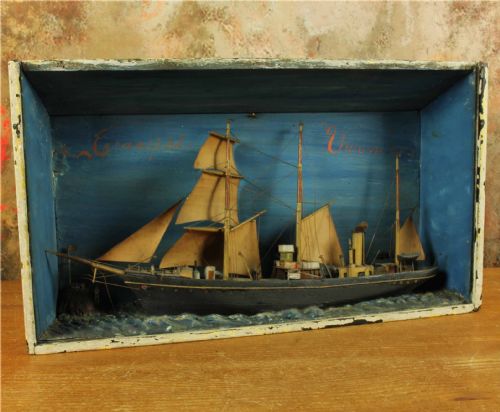


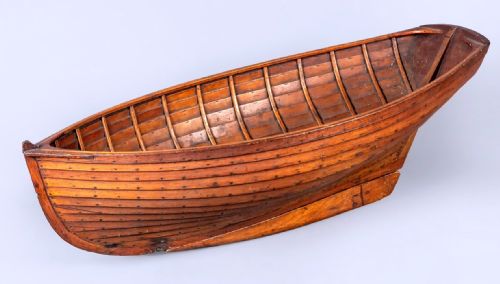


Folk Art Boat Model
These folk art boat model pieces bring handcrafted maritime history into a room, offering genuine character and coastal charm.
Folk Art Boat Model
A folk art boat model represents maritime heritage through handmade sculptures, ship models, and detailed dioramas. When searching for folk art boat model examples, buyers encounter scratch-built vessels, framed shadow boxes, and glass bottles enclosing miniature sailing ships.
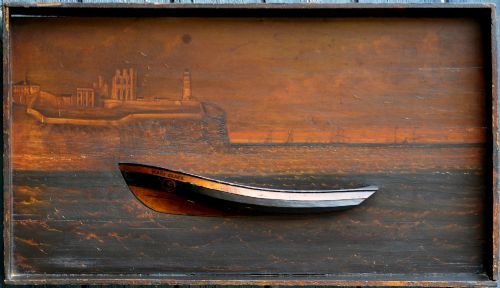
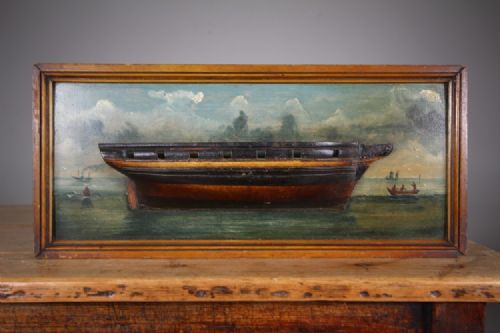
The pieces on this page span the nineteenth century through the early twentieth century, showing British, French, Canadian, and Inuit origins. Common forms include large dioramas of named sailing vessels like the Glynllifon, cradle boat hulls, and gondola models.
Makers ranged from sailors passing time at sea to local craftsmen constructing decorative objects from memory or dockside observation. Each item captures a distinct vernacular interpretation of maritime life rather than a strict naval blueprint.
How they were made
Makers utilised timber, wood, and metal alongside canvas, thread, and glass to construct these vessels and their enclosing cases. Scratch-built models demonstrate resourceful material use, shaping scrap timber into hulls and rigging miniature decks with fine thread.
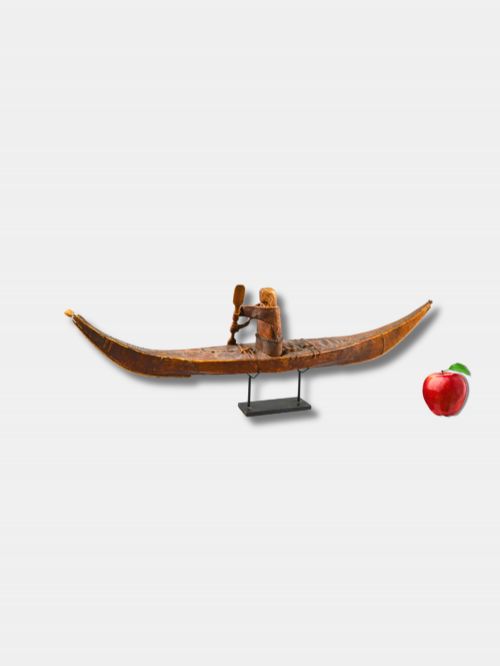
Enclosed pieces rely on careful assembly so that masts and sails pass through narrow bottle necks before being raised upright inside. Specialised items incorporate organic materials such as tanned seal skin and bone to depict northern craft like the Inuit kayak sculpture.
Some nineteenth-century makers used human hair for rigging when thread was scarce on long voyages.
What varies in quality
Quality rests upon the proportion of the vessel, the fineness of the rigging, and the condition of any protective housing. Scratch-built models with detailed deck furniture and careful paint application stand apart from simpler decorative objects.
The integrity of a diorama depends on the preservation of its painted backdrop and the clarity of its glass bottle or wooden shadow box. Vernacular skill determines whether a model feels stiff and schematic or lively and convincing.
The Folk Art Boat Model Glossary
- Diorama
- A three-dimensional scene enclosed in a box, frame, or bottle, often featuring a model ship set against a painted maritime backdrop. These displays protect delicate rigging from dust and damage.
- Scratch-built
- Describing a model constructed entirely from raw materials and scrap components rather than from a commercial kit or factory parts. This method defines much of authentic maritime folk art.
- Shadow box
- A deep, glazed wall frame designed to house and display a half-hull or full model ship in relief. It keeps the coastal scene secure while allowing clear viewing from the front.
- Cradle boat hull
- A carved or constructed wooden boat form resembling a cradle or half-hull, sometimes finished with traditional paint layers. These objects reflect both nautical carpentry and domestic folk traditions.
Folk Art Boat Model: Frequently Asked Questions
What is a ship in a bottle?
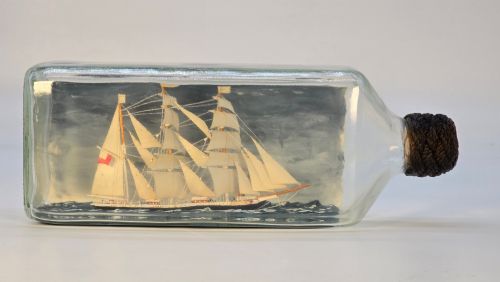
A ship in a bottle is a detailed miniature model constructed to fit through a narrow glass neck and erected inside using hidden strings. Makers seal these delicate maritime scenes permanently within the glass.
Such pieces represent traditional sailor craftsmanship, created during long voyages at sea using simple hand tools and salvaged materials.
How do I date a model ship?
Dating relies on the construction style, the materials used, and specific clues like named vessels or historical rigging patterns. Nineteenth-century examples often show distinct patination on the wood and hand-mixed oil paints.
Later pieces from the early twentieth century may incorporate different commercial threads or modified framing techniques while retaining scratch-built qualities.
Where were these maritime models made?
Maritime models originated in coastal communities, aboard working ships, and in inland towns across Britain, France, and Canada. Inuit makers produced distinct northern watercraft using bone and seal skin.
Local craftsmen and retired sailors created these objects for domestic display, capturing the specific vessels seen in local harbours.
How should I display a diorama?
Dioramas and shadow boxes require stable placement away from direct sunlight and damp conditions to protect old wood, paint, and thread. Wall-mounted shadow boxes need secure fixings suited to their weight.
Bottle models benefit from flat, level surfaces on sturdy wooden plinths where they remain undisturbed by vibrations.