


Framed Sailing Ship Model
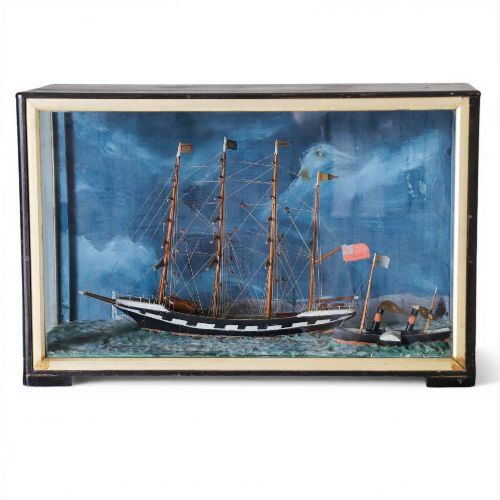
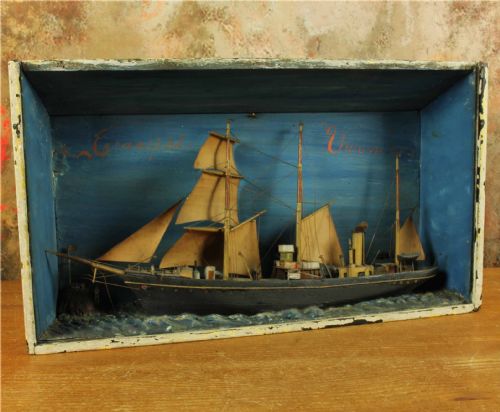
These framed sailing ship model pieces capture maritime history in three-dimensional folk art shadow boxes.
Framed Sailing Ship Model
A framed sailing ship model brings three-dimensional maritime history indoors through detailed maritime dioramas and shadow box displays. When you search for a framed sailing ship model, you encounter nineteenth century folk art creations alongside early twentieth century pieces.
The selection centres on antique shadow box diorama formats where wooden model boats sit inside glazed frames. These pieces originate from British and French makers, spanning Victorian maritime traditions and naive folk art styles.
How they were made
Makers constructed these models using wood, canvas, and fabric within glazed boxes to protect the intricate rigging and hulls. Painted backgrounds establish deep seas and dramatic skies behind the physical vessel.
Makers incorporated unconventional materials like straw work alongside traditional paint and plaster to build texture in the waves and coastal scenery. Scratch-built construction methods show individual maker interpretations rather than factory production.
Some makers utilised humble straw work to construct shimmering waves and coastal details inside their shadow boxes.
What varies in quality
Quality rests in the precision of the rigging and the depth of the painted backdrop within the shadow box. Greater care in miniature carpentry separates naive folk art interpretations from more ambitious clipper ship representations.
The preservation of original glass, gilt frames, and painted canvas surfaces defines the desirability of each diorama. Intricate details such as steam barges alongside the main vessel elevate the complexity of the composition.
The Framed Sailing Ship Model Glossary
- Shadow Box Diorama
- A deep framed display case enclosing a three-dimensional model set against a painted background. This format protects delicate ship models from dust and damage.
- Maritime Folk Art
- Decorative objects created by self-taught makers depicting ships and coastal life. These pieces often employ accessible materials like wood and fabric.
- Scratch-Built
- A model constructed entirely from raw materials without commercial kits. Makers shape every component by hand.
- Clipper
- A very fast sailing ship with multiple masts and square sails developed in the nineteenth century. These vessels frequently inspired detailed diorama tributes.
Framed Sailing Ship Model: Frequently Asked Questions
How were these dioramas displayed?
These shadow box dioramas were designed to hang on interior walls or sit on mantelpieces in maritime households. The glazed front kept the delicate paper, fabric, and painted elements secure.
Owners prized them as tangible records of specific vessels or general seafaring life. They brought the atmosphere of the ocean directly into Victorian parlours.
How do I date a ship diorama?
Dating relies on stylistic clues within the framing, painting technique, and the type of vessel depicted. Nineteenth century examples often display naive folk art characteristics and simpler wooden mouldings.
Later pieces from the early nineteen hundreds incorporate refined materials and specific named ships like the Glynllifon or Queen Anne. Construction methods also shift from early naive woodwork to more detailed scratch-built rigging.
Are these models made by professionals?
Most pieces originate from folk artists, sailors, or local craftsmen rather than large commercial factories. This naive approach means each model possesses unique proportions and material choices.
Makers utilised whatever was to hand, from painted canvas to straw work, to simulate the sea and sky. This individual craftsmanship defines the character of antique maritime dioramas.