




Victorian Ship Model Diorama
A victorian ship model diorama captures nineteenth-century maritime life inside a glazed box, bringing handcrafted sailing vessels and coastal scenes directly into your home.
Victorian Ship Model Diorama
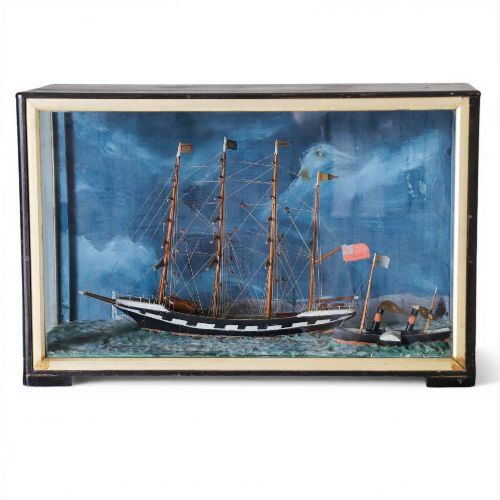
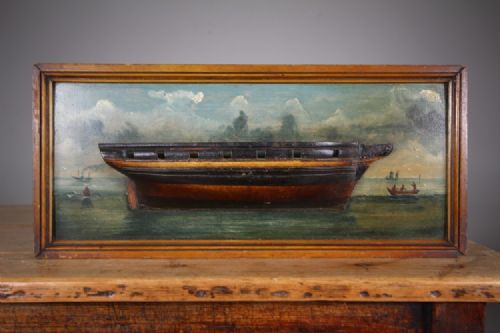
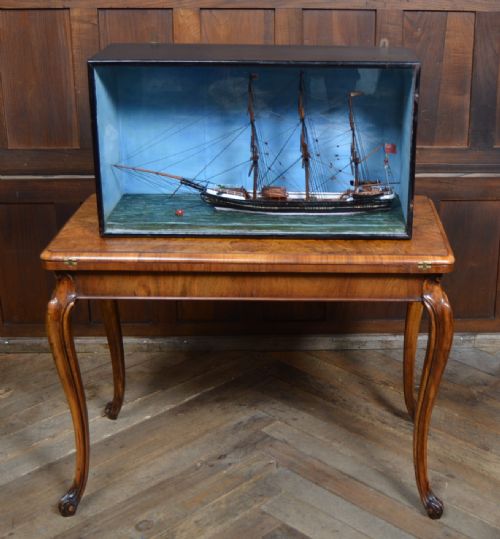
A victorian ship model diorama presents a three-dimensional sailing vessel or racing scene enclosed within a protective glass case, often styled as a shadow box. These pieces combine miniature wooden hulls and painted canvas backgrounds to create a convincing illusion of depth upon the open ocean.
The versions most commonly met on this page date from the nineteenth century and span folk art interpretations as well as named vessels like the Glynllifon or Queen Anne. Makers utilised simple materials to record the appearance of clippers, barques and sailing ships under full sail.
How they were made
Makers constructed these works using carved wood for the hulls and plaster or shaped canvas to model the turbulent waves of the sea. Details such as rigging were built from thread, while oil paint on canvas or board formed the painted skies and distant horizons.
Each model sat within a glazed wooden case that protected the delicate interior from dust and moisture. Straw work and other folk art techniques occasionally supplemented the standard carpentry to add texture to the maritime scene.
Object types on this page include shadow boxes, wall art, maritime folk art and detailed ship models.
What varies in quality
The standard of these works depends upon the precision of the ship model and the depth achieved in the painted background. Finer examples display meticulous rigging and realistic wave formation rather than crude carving.
Original glazing and untouched wooden cases hold greater interest for collectors than heavily restored pieces. The inclusion of specific vessel names or documented origins also separates standard workshop output from superior items.
The Victorian Ship Model Diorama Glossary
- Diorama
- A three-dimensional scene featuring miniature models set against a painted background inside a shallow case. This format protects delicate ship models while creating a sense of natural depth.
- Shadow box
- A deep glazed frame designed to house and display objects in relief. These wooden boxes keep dust away from fragile maritime folk art.
- Barque
- A sailing vessel with three or more masts having the foremast and mainmast square-rigged and the mizzenmast fore-and-aft rigged. This ship type appears frequently in nineteenth-century marine models.
- Clipper
- A very fast nineteenth-century sailing ship with multiple masts and a square rig. These vessels are a common subject for detailed diorama builders.
- Folk art
- Art produced by an untrained artist working within a traditional style. These maritime pieces reflect regional craftsmanship rather than formal naval academy standards.
Victorian Ship Model Diorama: Frequently Asked Questions
How were these dioramas displayed?
These cased models were typically hung on walls or placed upon surfaces in nineteenth-century homes, allowing owners to view detailed marine scenes indoors.
The glass front protected the fragile rigging and painted canvas from handling and atmospheric dust.
Today, they suit placement in studies, hallways or living rooms where wall space permits a deep frame.
What subjects do these models show?
The pieces depict various sailing vessels, including clippers, barques and racing ships caught in motion at sea.
Some represent specific named ships with documented histories, while others capture general maritime scenes.
Backgrounds often feature painted seascapes or Turneresque skies that complement the wooden hulls.
How do I care for a cased diorama?
Keep the piece away from direct sunlight and damp environments to protect the wood, canvas and original paint.
Clean the exterior glass gently with a dry or slightly damp cloth without applying pressure to the frame.
Avoid opening the sealed case, as the interior components remain fragile and sensitive to modern humidity changes.
Are these pieces purely decorative?
While they served as decorative maritime folk art in their own era, they also functioned as records of sailing ships and naval architecture.
Sailors and local makers constructed them to commemorate specific vessels or racing events.
They now serve both as historical documents of nineteenth-century shipping and as striking decorative objects.