
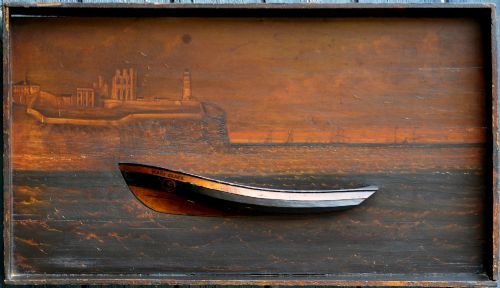
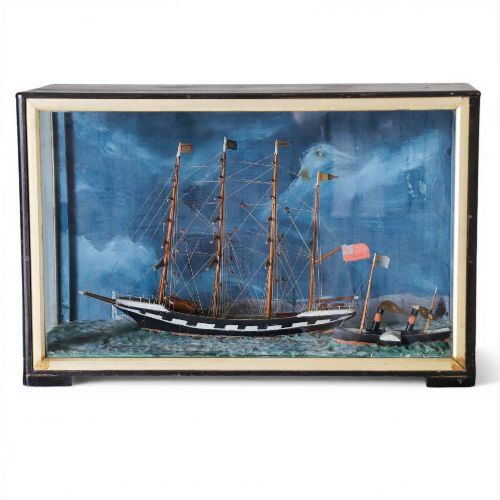
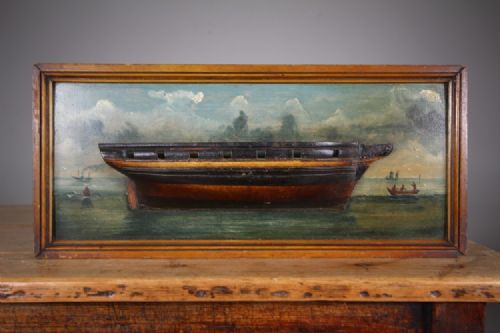
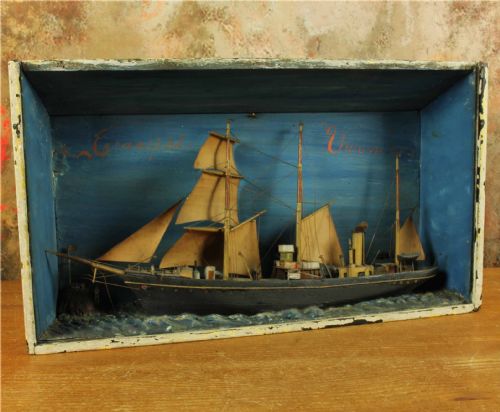


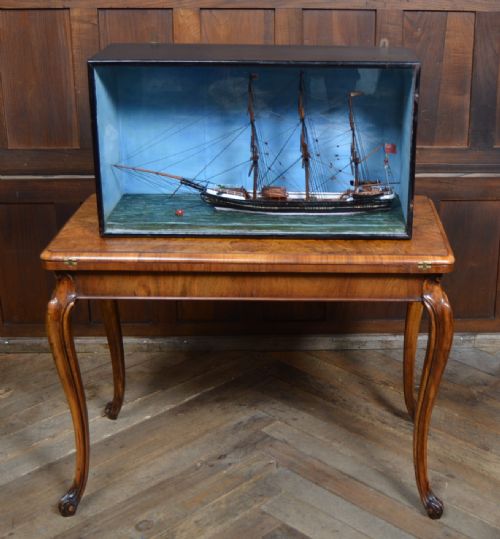


Framed Ship Diorama
Framed ship diorama pieces are layered maritime folk art models set within glazed shadow boxes that bring nineteenth-century sailing vessels into living spaces.
Framed Ship Diorama
When you search for a framed ship diorama, you encounter three-dimensional depictions of sailing vessels housed inside wooden shadow boxes. These items typically emerge from the nineteenth century, including the Victorian period and around nineteen hundred, alongside early twentieth-century examples from nineteen twenty.
The objects displayed on this page encompass various vessel types, from four-masted sailing ships and steam barges to specific named boats like the Glynllifon, Queen Anne, and The Hippolyta. British folk art and Victorian maritime styles dominate the selection, often presenting models in full sail against painted seascapes.
Most pieces function as wall art or cased models, originating from English, French, and Cornish makers. You will find both naive wooden constructions and detailed scratch-built ship models designed for display.
How they were made
The construction of these items relies on wood, canvas, and fabric to build the hull and rigging of the miniature vessels. Artisans apply paint, oil paint, and plaster to create textured seascapes and backgrounds within the enclosing box.
Makers incorporate paper and occasionally straw work to detail the maritime scenes and decorative elements. Glazed wooden frames protect the fragile model ships and painted backdrops from dust and damage.
Listings feature nineteen-century and Victorian pieces utilising wood, glass, canvas, oil paint, and paper within maritime folk art styles.
What varies in quality
The sophistication of the painted background, such as a Turneresque seascape, separates standard folk art pieces from more ambitious artistic efforts. Detail in the rigging and the accuracy of the scratch-built ship model also influence the character of each box.
Materials employed in the construction change the visual weight, ranging from simple naive wooden framing to intricate straw work decoration. The scale of the diorama, from standard wall art to large cased models, alters the impact of the piece.
The Framed Ship Diorama Glossary
- Diorama
- A three-dimensional scene enclosed in a case, representing a historical or maritime subject. These models use painted backgrounds to create depth behind the physical vessel.
- Shadow box
- A deep, glass-fronted frame designed to hold and protect objects in relief. It keeps dust away from delicate fabric and paper elements.
- Scratch-built
- A model constructed from raw materials rather than from a commercial kit. Makers build these ship models piece by piece using wood and canvas.
- Folk art
- Artistic work created within a traditional culture by self-taught makers. These maritime examples reflect local traditions rather than formal academic training.
- Turneresque
- Having the characteristics of J.M.W. Turner's paintings, particularly dramatic seascapes and atmospheric light. Such backdrops elevate the visual drama of the enclosed ship.
Framed Ship Diorama: Frequently Asked Questions
What is a framed ship diorama?
A framed ship diorama is a three-dimensional maritime model enclosed in a glazed wooden shadow box. It combines miniature sailing vessels with painted backgrounds to depict ships at sea.
Most examples date from the nineteenth century and reflect maritime folk art traditions. They serve as decorative wall art depicting clippers, steam barges, and named vessels.
How were these dioramas displayed?
These pieces function primarily as wall art, intended to be hung in domestic or maritime settings. The wooden frames and glass covers protected the delicate paper, fabric, and wood models from the elements.
Collectors usually place them in studies, living rooms, or hallways where the depth of the shadow box can be appreciated. Proper placement avoids direct sunlight to protect the oil paint and canvas backgrounds.
What periods do these pieces come from?
The listings consist mainly of nineteenth-century and Victorian pieces, alongside items from around nineteen hundred. You will also find early twentieth-century examples from nineteen twenty.
Victorian maritime folk art represents the core of the available selection. The age often shows in the materials used, such as early canvas, paper, and naive wooden elements.
How do I identify folk art ship models?
Folk art ship models often display a naive charm, built by makers outside formal naval drafting traditions. They utilise accessible materials like wood, fabric, straw work, and plaster.
Unlike precise factory-made scale models, these handmade boat models reflect the individual maker's interpretation. Named vessels and regional attribution help trace their origins.