


Sailing Ship Model Case
A sailing ship model case protects a maritime miniature behind glass, preserving detailed nautical handiwork for interior display.
Sailing Ship Model Case
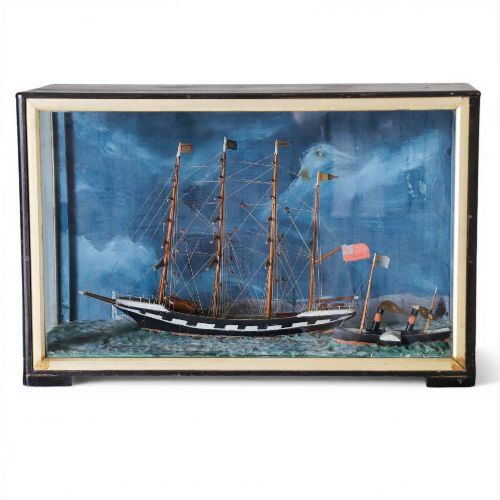
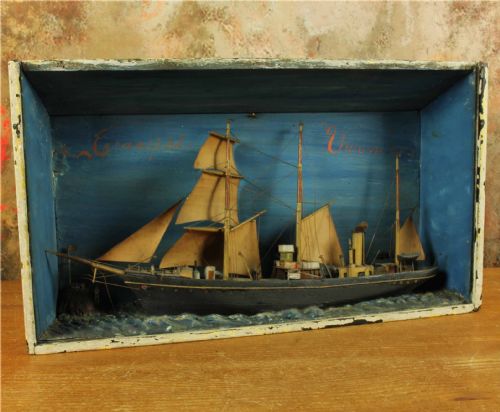
A sailing ship model case encloses a detailed representation of a vessel, frequently constructed as a shadow box diorama or a waterline model. These pieces present maritime scenes under glass, showing vessels such as barques, ketches, and schooners positioned against painted backdrops.
Most examples originate from the nineteenth century and the Edwardian era, reflecting maritime folk art traditions. The selection includes French handmade boat models in boxes alongside English works depicting named vessels like the Glynllifon.
Buyers encounter both wall-mounted shadow boxes and freestanding cased scale models. The enclosing frame or box preserves delicate rigging and painted plaster or canvas waves from dust and handling.
Materials and construction
Maker construction relies on wood for the hulls, masts, and enclosing display boxes, paired with glass panes to protect the interior scene. Artisans build scratch-built models utilising canvas and fabric for sails, alongside brass components for fine details.
Backdrops utilise paint and plaster to model realistic seascapes, sometimes incorporating decorative straw work within the composition. Artisans mount these miniature vessels inside shadow boxes or glazed frames to complete the maritime diorama.
Judging quality and execution
Quality rests in the precision of the scale model and the realism of the painted or modelled seascape. Finer examples display meticulous rigging and convincing volume in the plaster waves rather than generic forms.
The sophistication of the enclosing case influences the overall merit. Original glass and well-joined wooden boxes maintain the integrity of the maritime folk art presentation.
The Sailing Ship Model Case Glossary
- Diorama
- A three-dimensional scene enclosed in a box, displaying a model ship set against a painted background. This format protects delicate maritime folk art behind glass.
- Waterline model
- A scale model constructed to show only the upper hull above the water line. These pieces mount directly onto a painted plaster or canvas sea.
- Shadow box
- A deep frame utilised to house and protect objects in relief. Maritime examples safely enclose cased ship models and textured seascapes.
- Barque
- A sailing vessel with three or more masts having square sails on the fore and mainmasts and fore-and-aft sails on the mizzenmast. Makers frequently depicted these ships in cased dioramas.
Sailing Ship Model Case: Frequently Asked Questions
How do I hang a ship diorama?
Most shadow box examples feature integrated hanging hardware suited for wall display. Ensure the wall anchors support the weight of the wood and glass enclosure securely.
Keep the case away from direct sunlight and damp environments to protect the painted canvas backdrops and internal wooden components.
What periods do these pieces span?
The available selection primarily encompasses nineteenth-century works and Edwardian pieces. These range from mid-nineteenth-century racing vessel displays to early twentieth-century scale models.
Folk art examples from these decades demonstrate distinct construction methods, from straw work embellishments to scratch-built hulls.
Are the glass cases usually original?
Many pieces retain their original glazed fronts and wooden frames, which is standard for well-preserved maritime folk art. Examine the glazing and frame joints for consistency with the period.
Original glass often shows minor bubbles or surface variations appropriate to nineteenth-century and early twentieth-century manufacture.
How are the water and waves made?
Artisans typically shaped plaster, canvas, or fabric to form textured waves surrounding the waterline model. Painters then applied pigment to create realistic depth and movement in the sea.
Some makers incorporated specialised materials like straw work to add texture and reflective quality to the maritime background.