
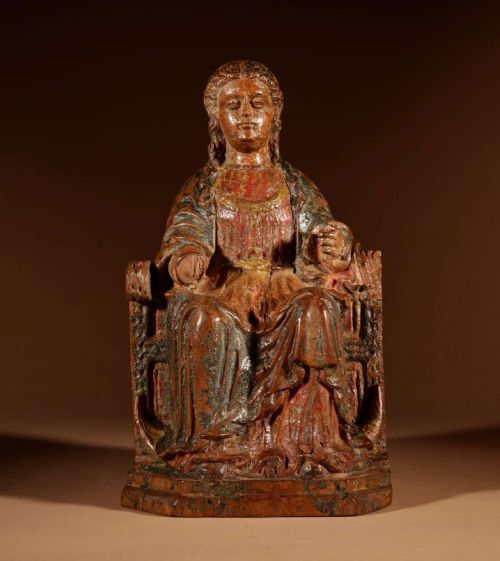
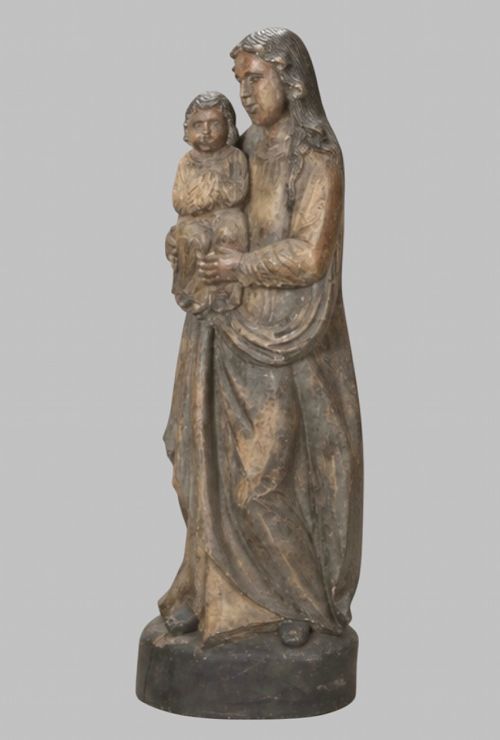
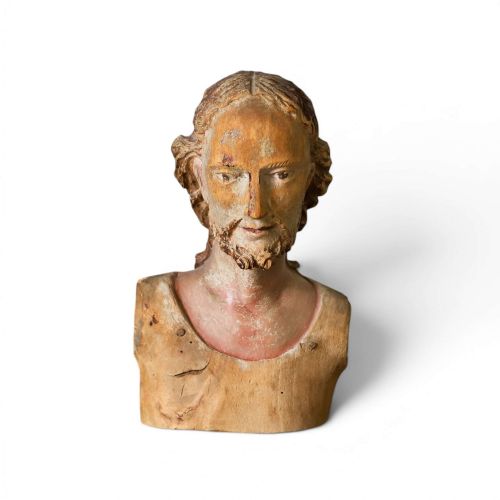
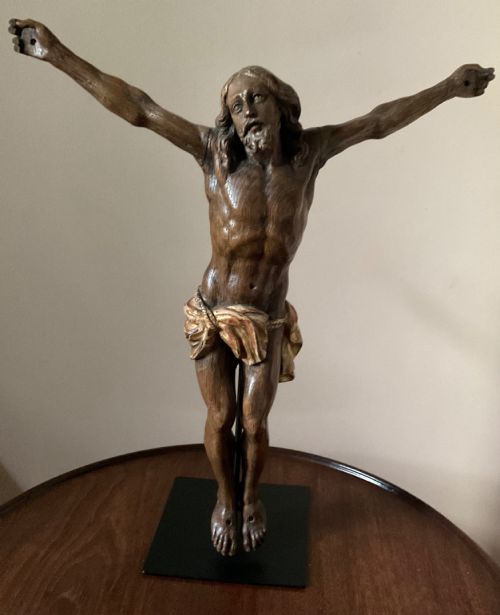
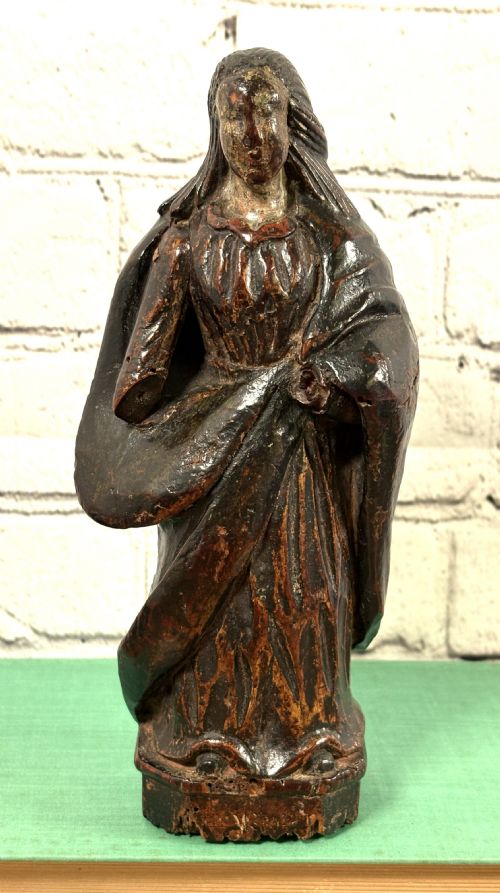


Antique Sacred Art Figure
These antique sacred art figure pieces are historic devotional sculptures hewn from timber, offering a direct tangible link to centuries of European religious worship.
Antique Sacred Art Figure
An antique sacred art figure represents religious devotion through carved wood, taking the form of saints, Madonnas, and corpus Christi pieces spanning from pre-sixteenth century medieval examples to the nineteenth century. Buyers encounter continental works from regions such as Italy, Sicily, and the Low Countries, rendered in oak, walnut, limewood, and pine.
The objects on this page range from small devotional busts and seated figures on thrones to life-size representations of Christ and saints. Styles shift from medieval gothic and Renaissance to Baroque and later revivals, reflecting the shifting ecclesiastical tastes of their eras.
Materials and construction
Carvers shaped dense hardwoods like oak, walnut, applewood, and limewood with chisels and gouges to create these figures. The resulting sculptures often display intricate grain patterns beneath subsequent layers of finish.
Many surfaces received preparation with gesso before application of polychrome paint, gold leaf, or parcel gilt. This polychromy added colour and realism to the devotional imagery.
The listings feature carved wood materials such as limewood, oak, walnut, and pine across multiple centuries.
Assessing craftsmanship
Quality rests in the anatomical precision of the carving, seen in the treatment of drapery folds and facial expressions. Master carvers imbued timber with a naturalistic softness that lesser hands failed to achieve.
The survival of original polychrome paint and gilding alters the visual power of a piece. Traces of historical pigments elevate an object beyond plain bare wood.
Franz Keller
The Antique Sacred Art Figure Glossary
- Polychrome
- Decorated in multiple colours. This technique was widely applied to wood sculptures to enhance realism.
- Corpus Christi
- The body of Christ on the cross. These figures focus on the crucifixion.
- Gesso
- A plaster mix applied as a base. It prepared wood surfaces for gilding and painting.
- Parcel gilt
- Partly gilded with gold leaf. This highlighted specific areas of a wooden sculpture.
- Limewood
- A fine-grained timber favoured by carvers. It allowed for intricate detail without splitting.
Antique Sacred Art Figure: Frequently Asked Questions
How old are these wooden figures?
The pieces span from pre-sixteenth century medieval carvings up to the nineteenth century. Each era brings distinct stylistic traits.
Earlier works show gothic characteristics while later pieces lean towards baroque or revival aesthetics.
What woods were used for carving?
Carvers utilised local timbers including oak, walnut, limewood, applewood, and pine. The choice often depended on regional availability and workshop tradition.
Limewood was particularly favoured for its smooth grain which suited intricate detail.
What is polychrome paint?
Polychrome paint refers to the multi-coloured pigments applied directly to the wood or over a gesso layer. It brought devotional statues to life with realistic skin tones and garments.
Many surviving pieces retain only fragments of this original decoration.
Where did these figures originate?
The pieces come from various continental European workshops including Italy, Sicily, Croatia, and the Low Countries. Regional carving traditions heavily influenced the final form.
церковні (ecclesiastical) and domestic chapels housed these sculptures before they entered collections.