



16th Century Wooden Statue
A 16th century wooden statue brings surviving devotion and early craftsmanship directly into a room, offering tangible history.
16th Century Wooden Statue
Every 16th century wooden statue on this page belongs to a period of profound transition in European sculpture, moving from late gothic severity into the developing vocabulary of the renaissance. Buyers searching for a 16th century wooden statue encounter figures of saints, madonnas, donor figures, and biblical groups intended originally for devotional settings.
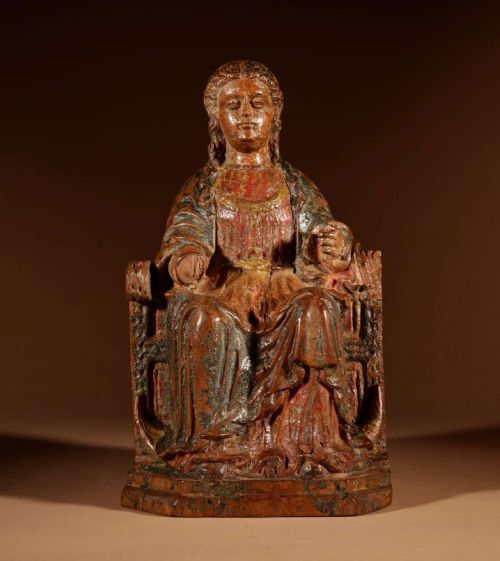
The most common survivals take the form of oak or walnut sculptures, often depicting seated madonnas, individual saints, or relief carvings of human figures. Continental workshops produced these pieces across regions such as the Upper Rhine and Flanders, creating sculptures and fragments that now serve as focal points for interiors.
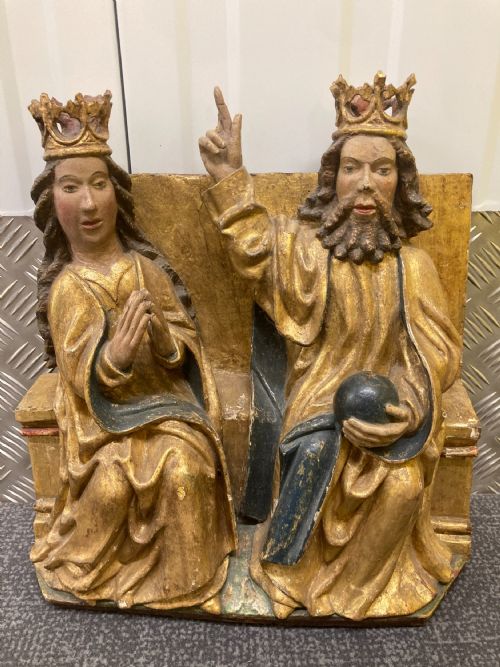
Forms vary from single standing saints to paired figures and substantial group carvings like 'God and Mary'. These works range from full-length figures to expressive busts of apostles such as St. Jude, reflecting the diverse liturgical functions they once fulfilled.
Judging the work
Quality in a 16th century wooden statue rests upon the confidence of the hand behind the chisel and the depth of the carving. Master carvers achieved natural movement in drapery and expressive vitality in hands and faces, distinguishing superior regional work from simpler village production.
The preservation of original surface finishes, such as polychrome paint and gold leaf, alters the character and desirability of a piece. Sculptures that retain substantial portions of their historic surface offer a more complete view of period craftsmanship than those stripped down to bare wood.
Current listings feature pieces spanning oak, walnut, and limewood, decorated with polychrome paint and gold leaf.
The 16th Century Wooden Statue Glossary
- Polychrome paint
- Decoration applied to the surface of sculpture using multiple colours. This traditional finish brought realism and symbolic meaning to religious figures.
- Giltwood
- Wood that has been decorated with thin sheets of gold leaf. This technique illuminated sacred carvings in dim ecclesiastical interiors.
- Gesso
- A plaster mixture applied to wood as a smooth base for painting and gilding. It seals the timber and provides a bright ground for colour.
- Late Gothic
- An artistic style bridging the medieval period and the renaissance, characterised by complex folds of drapery and emotional intensity. Figures from this tradition often display angular postures and expressive faces.
- Relief carving
- Sculpture where figures project from a flat background rather than existing in the round. These panels often formed parts of larger altarpieces.
16th Century Wooden Statue: Frequently Asked Questions
Where were these statues originally placed?
These statues stood within churches, private chapels, and domestic devotional spaces across Europe. They served as focal points for prayer and contemplation in religious interiors.
Many figures formed parts of larger altarpieces or architectural church schemes before being separated over the centuries.
How do I care for a wooden statue?
Keep the sculpture away from direct sunlight, heat sources, and rapid changes in humidity to protect the dry timber. Stable indoor conditions prevent the wood from splitting and safeguard any surviving gesso or paint.
Dust the surface gently with a soft, dry brush without applying liquid cleaners or polishes that might damage historic finishes.
How can I tell a fragment from a complete figure?
Fragments often show cut or broken edges at the base, sides, or limbs where they once joined a larger architectural grouping or altarpiece. Examining the back and mounting points reveals how the piece integrated into its original setting.
Complete figures retain their original boundaries, such as integrated bases or finished backs, though centuries of handling have touched most surfaces.