


Carved Walnut Figure
When you search for a carved walnut figure, you enter a world of dense timber sculpture ranging from religious icons to Black Forest animals.
Carved Walnut Figure
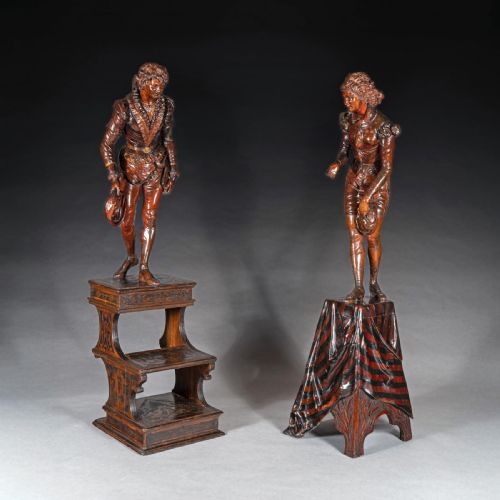
A carved walnut figure encompasses standalone sculptures, portrait studies, and figural supports originating from periods spanning the sixteenth century through the Victorian era and into the early twentieth century.
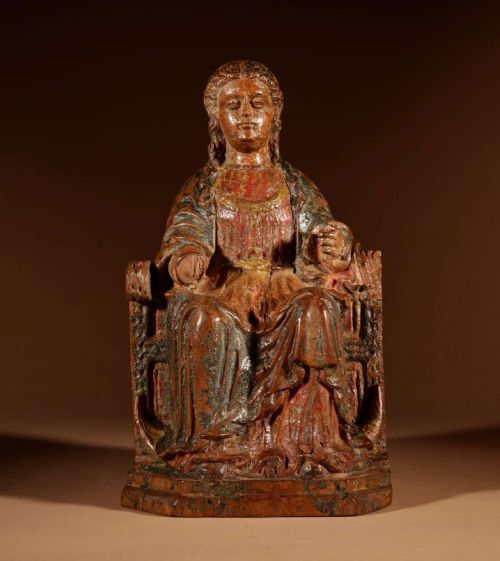
The objects take many forms, including devotional subjects like Madonnas and saints, expressive Black Forest fauna, mythological terms, and decorative grotesques.
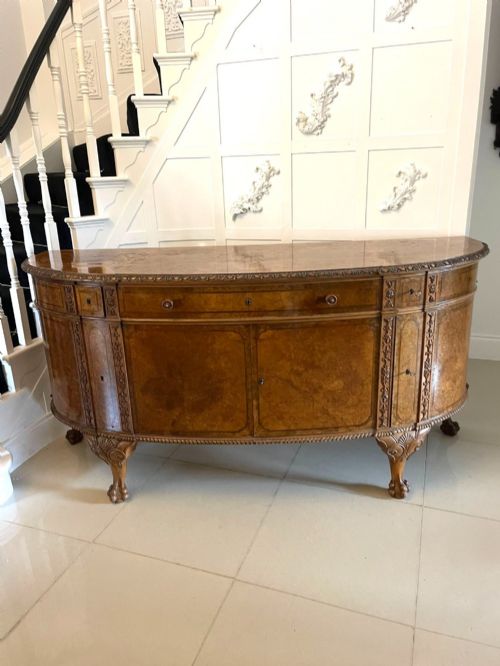
Buyers will encounter these carvings both as independent tabletop sculptures and as figural elements integrated into larger furniture forms such as console tables and cabinets.
Materials and Carving Technique
Craftsmen utilised the fine grain and rich warmth of solid walnut, burr walnut, and figured walnut veneers to bring depth to sculptural forms.
Carvers employed sharp gouges and chisels to exploit the dense, cooperative nature of walnut, allowing for crisp undercut details in hair, drapery, and fur.
Surfaces were frequently finished with traditional polish or wax to enhance the natural figuring of the timber without obscuring the hand-carved facets.
Carved Walnut Figure Retail Price Guide 2026
Typical asking prices for carved walnut figure among the pieces listed under this phrase on Sellingantiques today, from the lower quarter to the upper quarter. They describe what is for sale here now, not the wider market.
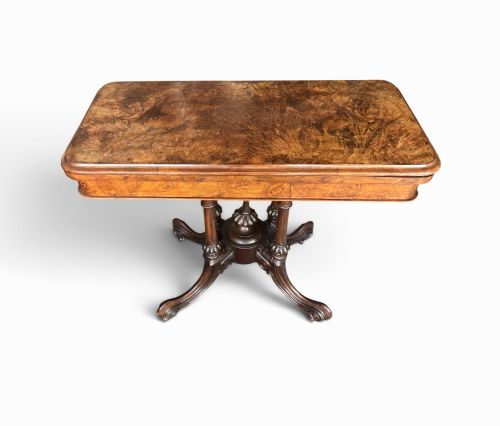
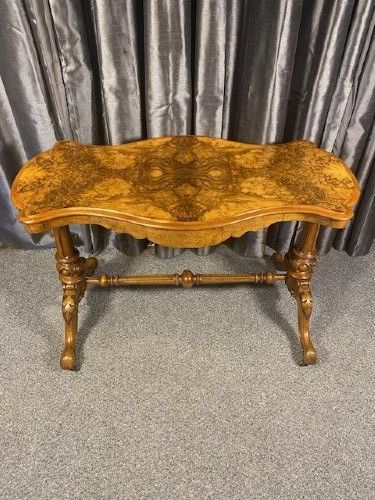
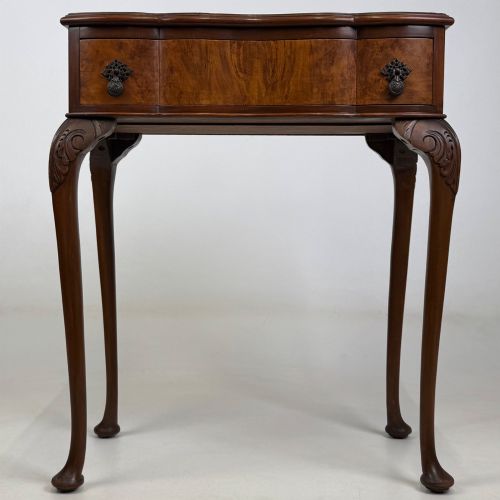
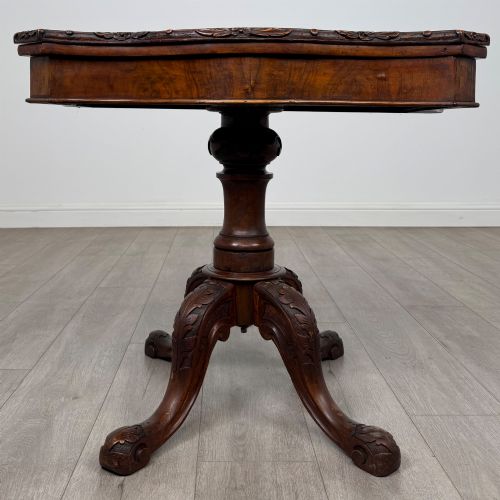
The listings demonstrate a strong presence of nineteenth-century Victorian walnut furniture alongside earlier seventeenth-century devotional carvings.
Judging Quality in Walnut Carvings
The hierarchy of quality rests primarily on the depth and animation of the carving, distinguishing stiff, mechanical replication from spirited, anatomically convincing hand work.
Exemplary pieces demonstrate a sophisticated command of proportion and expression, particularly evident in the treatment of human faces, hands, and animal musculature.
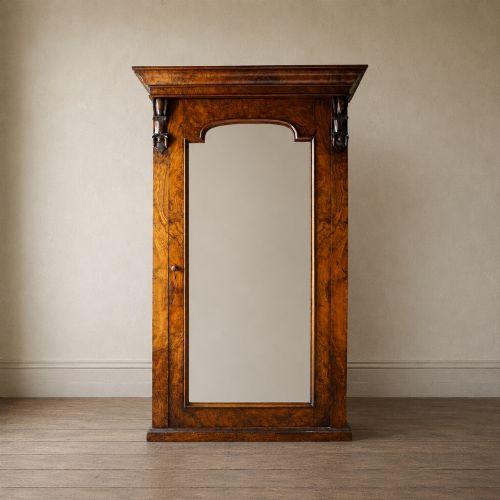
The choice of timber also defines the tier, with richly figured burr walnut commanding attention for its complex grain patterns alongside sound structural integrity.
Holland & Sons Of London·Valentino Besarel·Hille of London·Epstein
The Carved Walnut Figure Glossary
- Burr walnut
- A prized timber harvested from the wart-like growths on walnut trees, yielding turbulent, highly decorative grain patterns. It is frequently employed as a veneer on high-status nineteenth-century furniture.
- Black Forest
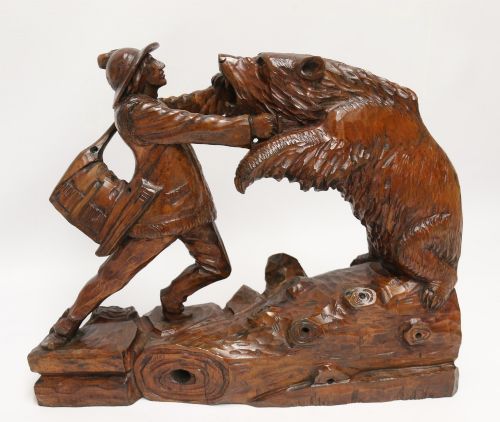
- A style of wood carving originating from the mountainous region of Central Europe during the nineteenth century. These pieces are typically characterised by realistic renderings of bears, owls, and forest flora.
- Term
- A pillar or pedestal tapering downward, surmounted by a carved human bust or head. These architectural figures often appear on seventeenth-century and revival furniture.
- Pie crust
- A decorative, raised edge carved with C-scrolls and moulding, resembling pastry crimping. This detail is commonly found on the tops of tables from the Victorian period onward.
- Figured walnut
- Timber exhibiting distinctive natural patterns such as curls or mottling caused by local growth irregularities. It is selected for decorative surfaces where visual movement is desired.
Carved Walnut Figure: Frequently Asked Questions
What periods do these figures come from?
The pieces span several centuries, with early examples originating in the sixteenth and seventeenth centuries, followed by nineteenth-century Victorian and Black Forest works.
Later items extend into the early twentieth century, reflecting enduring revival styles and regional carving traditions.
Were these figures meant for display?
Standalone sculptures served as devotional objects or cabinet art, while others functioned as architectural supports on console tables or bookcases.
Figural carvings were integrated into domestic settings to demonstrate taste and sculptural craftsmanship.
How should I care for walnut carvings?
Maintain a stable room environment away from direct heat sources and strong sunlight to prevent the timber from drying out or splitting.
Apply a light application of appropriate furniture wax periodically to nourish the grain and preserve the surface sheen.
How do I distinguish Black Forest carvings?
Black Forest pieces are characterised by naturalistic subject matter, most notably bears, owls, and woodland animals rendered with textured fur and lifelike poses.
These works typically date from the nineteenth or early twentieth century and originate from European forest regions.