


Renaissance Religious Sculpture
Renaissance religious sculpture brings sacred figures into timber, marble and bronze with a striking command of human form and devout expression.
Renaissance Religious Sculpture
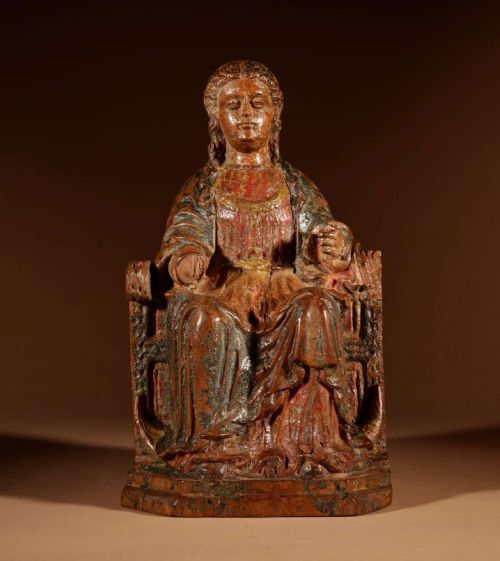
Renaissance religious sculpture captures sacred devotion through carved wooden figures, relief panels and devotional busts from the sixteenth century and earlier periods. A buyer seeking renaissance religious sculpture will encounter Continental European works depicting saints, the Madonna and child, and biblical scenes.
The pieces on this page span from pre-sixteenth century Gothic survivals to sixteenth century French, Italian, and Flemish carvings. Nineteenth-century revivals and plaster copies after earlier masters also appear alongside the primary sixteenth-century works.
Materials and construction
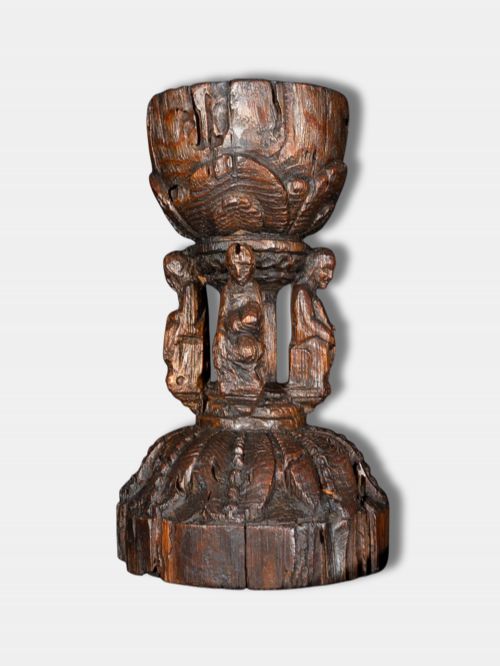
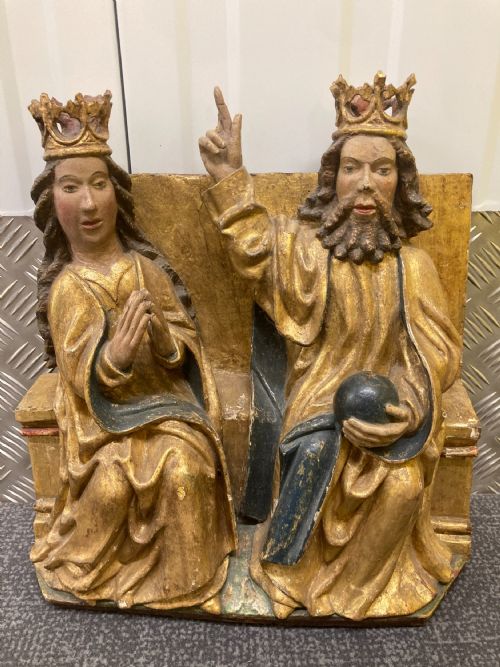
Carvers shaped these works primarily from oak, walnut, and limewood, utilising traditional timber preparation before applying fine chisel work. Many surfaces received layers of gesso, polychrome paint, and gold leaf to bring lifelike colour and divine radiance to the figures.
Relief plaques and sculptural groups were also cast in bronze or carved in marble, while later nineteenth-century interpretations utilised plaster to replicate celebrated Renaissance compositions.
Saint John the Baptist appears frequently, often caught mid-contemplation in limewood.
Judging the work
Quality rests in the precision of the carving, particularly in the handling of drapery folds, facial expressions, and anatomical proportion. The survival of original polychrome paint and gold leaf elevates a piece, as does the crispness of detail in limewood and oak.
The distinction between a primary sixteenth-century workshop piece and a later nineteenth-century revival lies in the depth of hand-carving and the natural ageing of the wood and gesso.
Antonio Rossellino·Gian Federigo Bonzagna·Donatello
The Renaissance Religious Sculpture Glossary
- Polychrome
- Painted in several colours. This finish was commonly applied to wood carvings to enhance realism.
- Gesso
- A plaster mix applied to wood surfaces as a base for painting and gilding. It provides a smooth ground for gold leaf.
- Relief
- Sculpture carved so that figures project from a flat background. Relief plaques often depict narrative biblical scenes.
- Corpus Christi
- The body of Jesus Christ shown on the cross. These wooden figures are frequently parcel gilt.
- Giltwood
- Wood that has been covered with a thin layer of gold leaf. This technique highlights sacred details.
Renaissance Religious Sculpture: Frequently Asked Questions
What periods do these sculptures cover?
The selections range from pre-sixteenth century Gothic pieces to sixteenth-century Renaissance works from Italy, France, and Flanders. Nineteenth-century revival pieces and plaster copies also feature.
These later iterations demonstrate the enduring nineteenth-century appetite for Renaissance aesthetics and masterworks by sculptors like Donatello.
How were wooden figures finished originally?
Carvers frequently applied gesso over the timber before adding polychrome paint and gold leaf. This created rich, colourful surfaces designed to elevate devotional spaces.
Over centuries, much of this pigment has worn away or been restored, leaving varying degrees of the original finish.
What subjects do the carvings depict?
Common subjects include the Madonna and child, various saints such as John the Baptist and St Jude, and biblical narratives. Relief sculptures often portray scenes like Christ carrying the cross.
These pieces served as focal points for private devotion or church altarpieces.
Are all pieces from the sixteenth century?
While many examples date from the sixteenth century, the listings also include pre-sixteenth century Gothic pieces and nineteenth-century copies or revivals.
Each listing specifies the period to help distinguish original Renaissance carvings from later interpretations.