
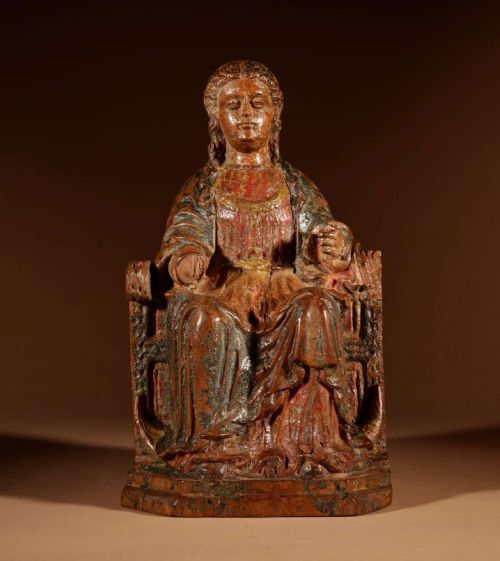
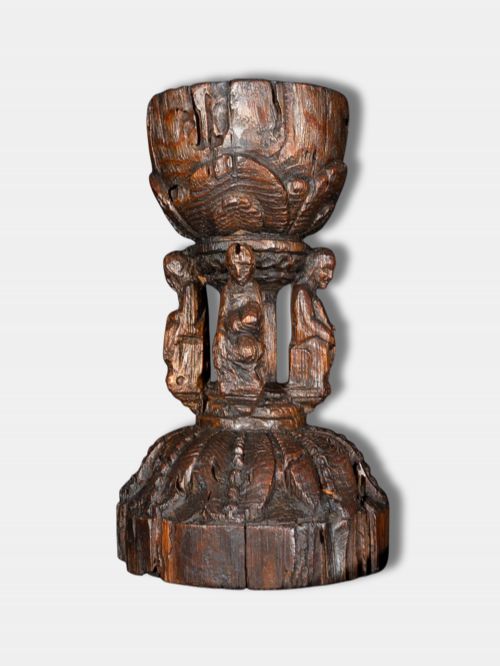

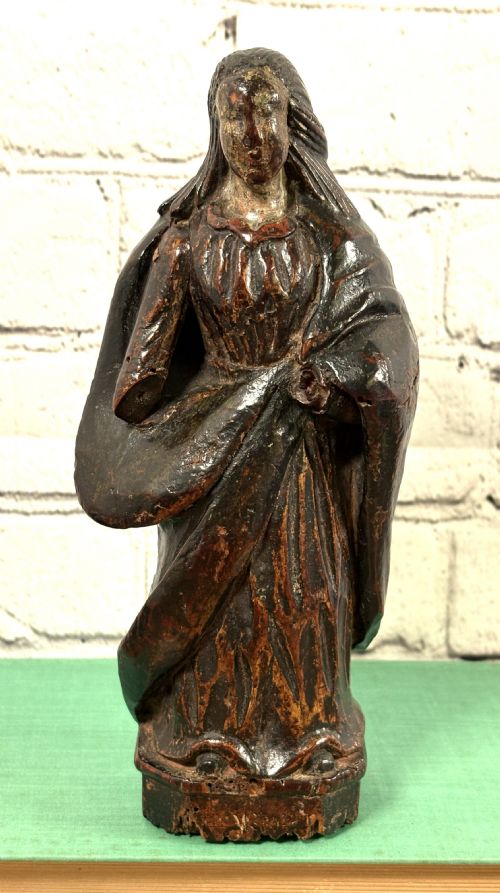


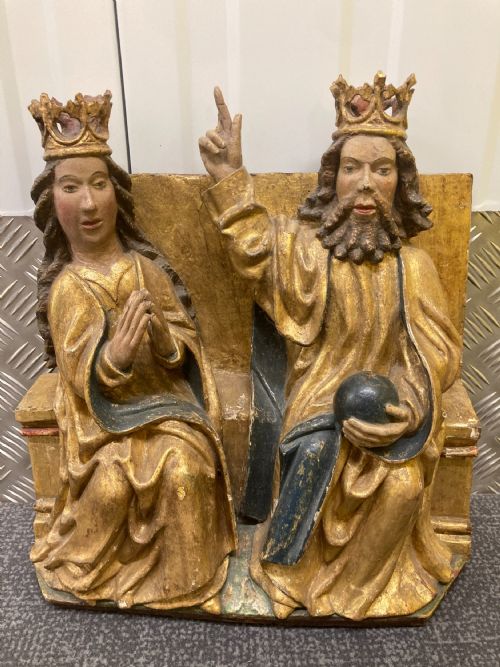


Gothic Wooden Religious Figure
A gothic wooden religious figure is a carved devotional carving, and collectors seek these pieces for their enduring spiritual presence and historical craftsmanship.
Gothic Wooden Religious Figure
When you search for a gothic wooden religious figure, you encounter carved representations of saints, the Madonna and Child, angels, and biblical figures spanning multiple centuries. These sculptures originate from workshops across Europe, notably Germany, Flanders, and the Low Countries, taking forms from single standing figures to relief panels and grouped compositions.
The selection on this page ranges from pre-sixteenth century medieval and late gothic carvings to sixteenth-century Renaissance examples. Later revivals from the nineteenth century also appear, capturing the solemnity and architectural styling of earlier ecclesiastical art.
How they were made
Over centuries, much of the original pigment and metal leaf has worn away or survived in fragmentary traces, revealing the raw carved wood underneath and showing the hand of the sculptor through tool marks left in the grain.
Listings feature woods such as oak, walnut, limewood, and pine, spanning periods from pre-sixteenth century to the nineteenth century.
What varies in quality
The calibre of a gothic wooden religious figure depends upon the anatomical proportion, the sensitivity of the facial carving, and the depth of the undercut drapery. Master carvers from the medieval and Renaissance periods imparted distinct psychological expression and fluid movement to figures like saints and angels, setting them apart from utilitarian workshop output.
Condition and originality dictate desirability, particularly the survival of original polychrome paint, parcel gilding, and structural integrity within the timber. Pieces that retain their early surface treatments offer greater insight into historical devotional art than heavily restored examples.
The Gothic Wooden Religious Figure Glossary
- Polychrome
- Painted in several colours. This surface treatment decorated medieval and Renaissance wooden sculptures to enhance their realism.
- Gesso
- A plaster mixture used as a smooth base for painting and gilding. Artisans applied it to wood before adding pigments or gold leaf.
- Pieta
- A subject depicting the Virgin Mary supporting the dead body of Christ. It appears frequently in late medieval and Renaissance wood carvings.
- Anna Selbdritt
- An iconographic representation showing Saint Anne, the Virgin Mary, and the infant Jesus together. This grouping is common in late fifteenth-century continental sculpture.
- Giltwood
- Wood that has been decorated with thin sheets of gold leaf. This finish added a heavenly glow to ecclesiastical figures and altarpieces.
Gothic Wooden Religious Figure: Frequently Asked Questions
What is a gothic wooden religious figure?
A gothic wooden religious figure is a hand-carved devotional sculpture depicting saints, biblical figures, or holy scenes made for churches, domestic shrines, or private contemplation.
These sculptures date primarily from the medieval period through the Renaissance, with later nineteenth-century revivals also represented.
How were these figures originally used?
These sculptures served as focal points for prayer and veneration in churches, abbeys, and household altars. Some formed parts of larger architectural retables or wall installations.
Commissioned by patrons and religious orders, they helped visual storytelling for congregations across Europe.
How do I care for a wooden sculpture?
Keep wooden religious carvings away from direct sunlight, heat sources, and damp environments to prevent the timber from splitting or warping. Stable room humidity preserves both the wood and any remaining historic gesso and paint.
Dust the surface gently with a dry, soft brush rather than using liquid polishes or chemical cleaners.