


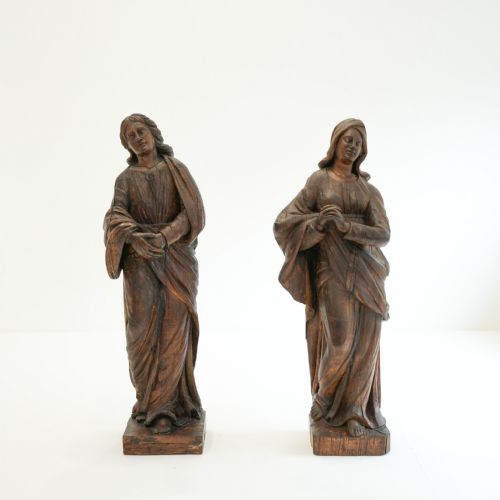


Antique Church Statue Figure
An antique church statue figure brings centuries of devotion, carved wood, and painted surface into a room.
Antique Church Statue Figure
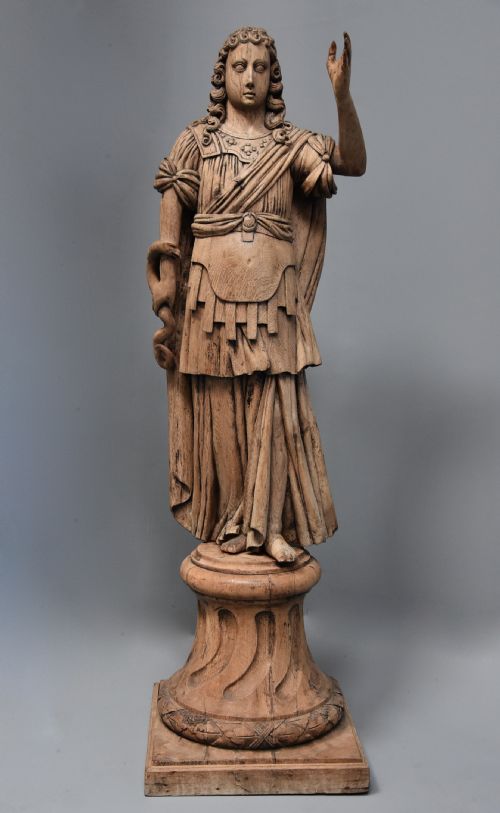
An antique church statue figure encompasses carved representations of saints, angels, and holy figures originating from European sacred spaces. These works span centuries of ecclesiastical craft, moving from late medieval and Gothic workshops through Renaissance and Baroque traditions into the nineteenth century.
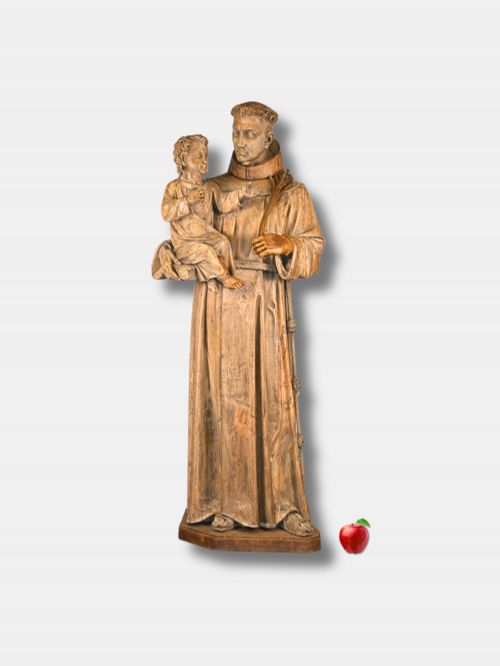
The selections here centre heavily on carved wood examples, often rendered in oak, limewood, or general timber. Figures of the Virgin Mary, Saint Anthony, and various saints appear alongside processional pieces and architectural carvings.
Continental origins dominate the selection, with particular representations from France, Italy, Spain, and Germany. Buyers encounter both monumental life-size sculptures and smaller devotional figures intended for altars or private chapels.
How they were made
Makers shaped these antique church statue figure examples primarily through direct wood carving, utilising solid blocks of oak, limewood, or other timber. Artisans then applied gesso as a smooth preparation layer to receive subsequent decoration.
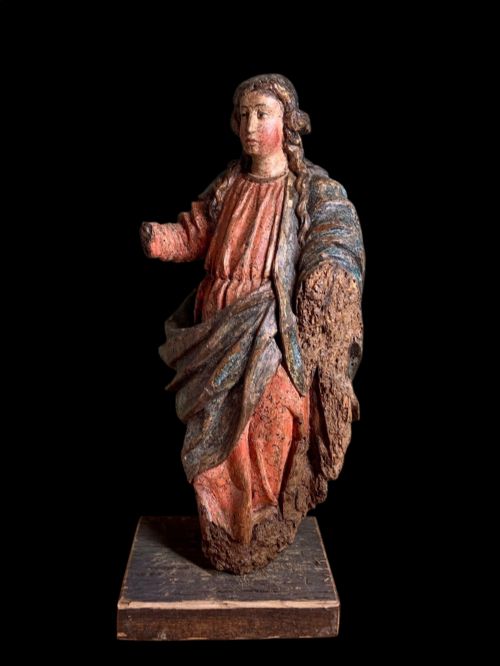
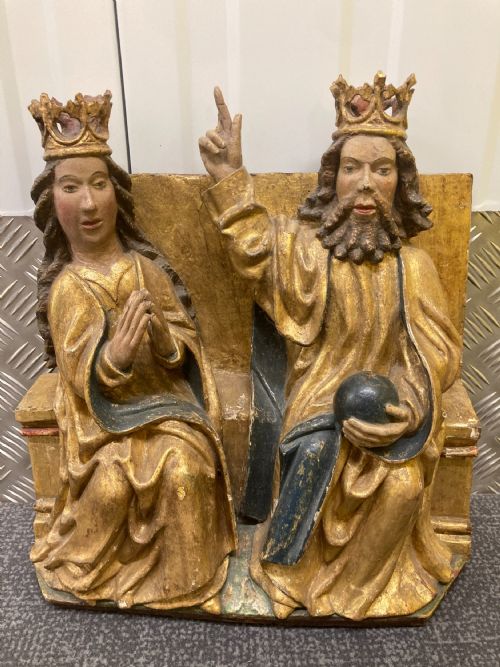
Surfaces frequently received polychrome paint and gold leaf, building rich colour and metallic brilliance onto the carved wood substrate. Terracotta and plaster also appear in later examples from the twentieth century.
Joinery and construction techniques varied by period, with larger figures often hollowed out to prevent timber splitting as the wood aged within ecclesiastical environments.
Materials recorded across the inventory include carved oak, limewood, gesso, gold leaf, and polychrome paint.
What varies in quality
The survival of original surface decoration dictates much of the distinction between examples. Pieces retaining untouched layers of early polychrome paint or gold leaf hold greater visual integrity than those subjected to heavy later repainting.
Proportion and scale also separate standard devotional items from major liturgical commissions. Life-size Continental figures and detailed Gothic groupings demonstrate a higher degree of artistic ambition than standard devotional carvings.
Rouillard Angers
The Antique Church Statue Figure Glossary
- Polychrome
- Painted in several colours. This term describes the multi-coloured pigment applied directly to wood or gesso surfaces.
- Gesso
- A plaster mixture used as a smooth base for painting or gilding. It provides an adhesive surface for gold leaf and pigments.
- Giltwood
- Wood carved and then covered with gold leaf. This technique added reflective brilliance to church interiors under candlelight.
- Santos
- A carved figure of a saint used in religious processions and domestic shrines. These Spanish and Italian wooden figures often feature articulated limbs or fabric garments.
- Capipote
- A Spanish devotional figure with a detailed carved head and hands attached to a simple wooden framework. The body framework was designed to be covered with real textiles.
- Pieta
- A representation of the Virgin Mary mourning over the dead body of Christ. This subject appears frequently in late medieval and Renaissance sculpture.
Antique Church Statue Figure: Frequently Asked Questions
Where did these statues originate?
These figures originated primarily in European churches, convents, and private chapels across France, Italy, Spain, Germany, and the wider Continent. They served focal roles in religious devotion, processional displays, and architectural altarpieces.
Over centuries, many left their original ecclesiastical settings through secularisation, church restructuring, and dispersal into private collections.
How should I display a wooden figure?
Place the sculpture away from direct sunlight and strong heat sources to protect the aged wood and delicate painted surfaces. Stable indoor humidity prevents the historic timber from cracking.
Ensure adequate structural support underneath, particularly for life-size or heavy carved pieces that require firm foundations.
How can I tell the period?
Dating relies on stylistic markers such as the treatment of drapery, facial expressions, and carving tool marks. Gothic figures display linear, vertical folds, while Baroque examples introduce dramatic movement and deep undercutting.
Material choices, preparation layers like gesso, and the ageing patterns of the wood provide additional physical evidence for chronological placement.
What is polychrome paint?
Polychrome paint refers to the traditional application of multiple coloured pigments directly onto the carved wooden surface. Painters used natural earth and mineral colours bound in mediums like tempera or oil.
These painted layers brought realism and symbolic colour schemes to religious sculptures intended for dim church interiors.