

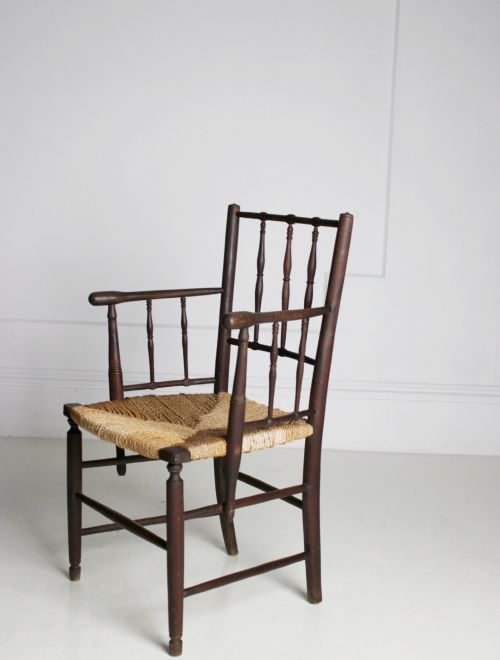
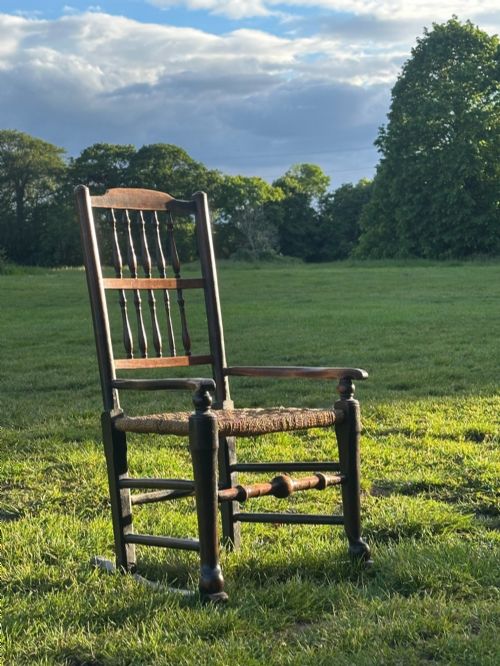
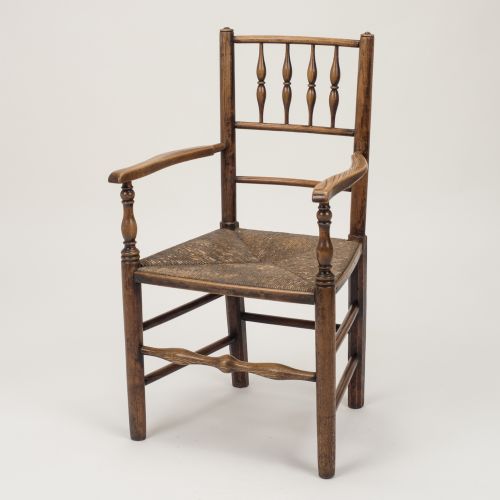
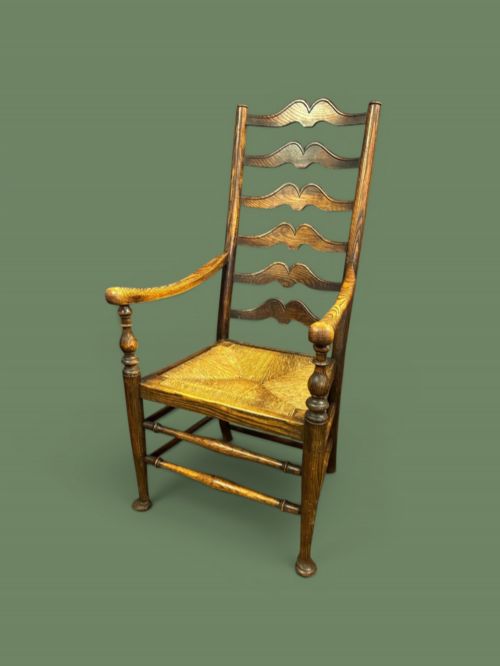

Antique Rush Armchair
An antique rush armchair brings honest vernacular craftsmanship and organic texture into a room, offering both sturdy everyday seating and deep historical character.
Antique Rush Armchair
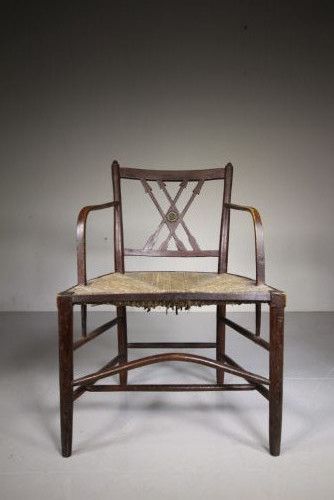
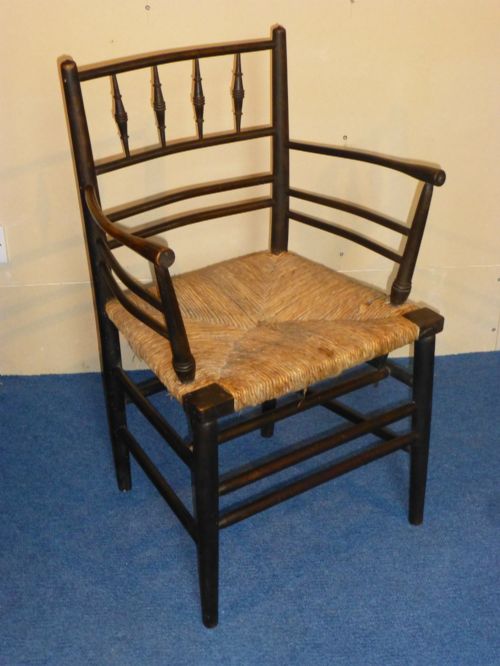
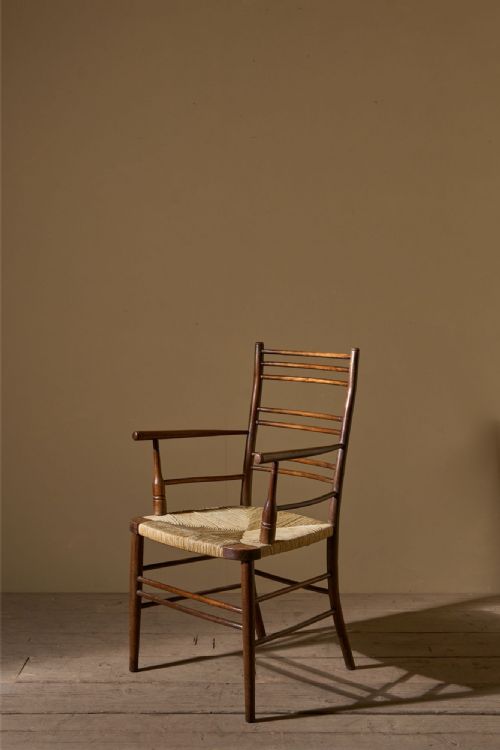
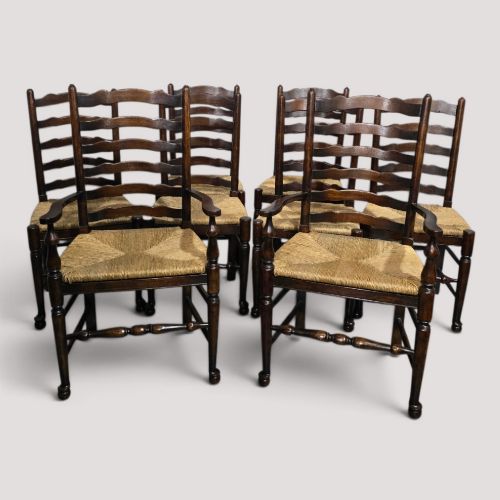
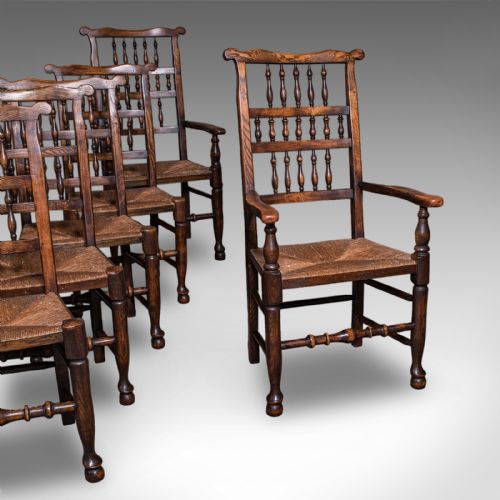
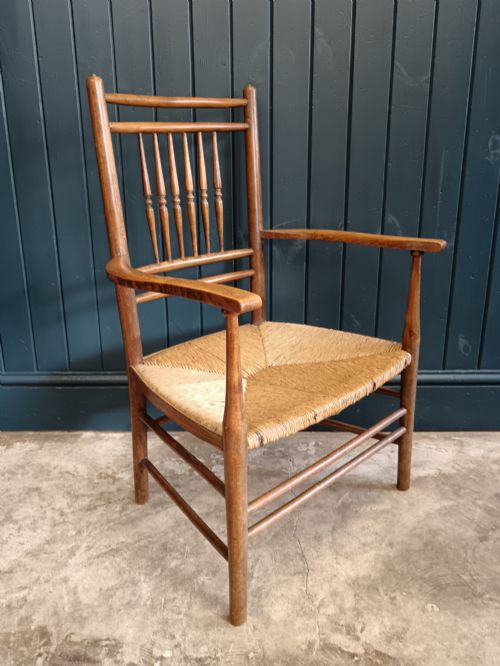
An antique rush armchair is a seating form defined by a woven rush seat cradled within a traditional wooden frame, emerging from regional vernacular traditions and later Arts and Crafts revivals. When searching for an antique rush armchair, buyers encounter pieces ranging from 18th-century country workshops to 19th-century spindleback designs and specific maker commissions.
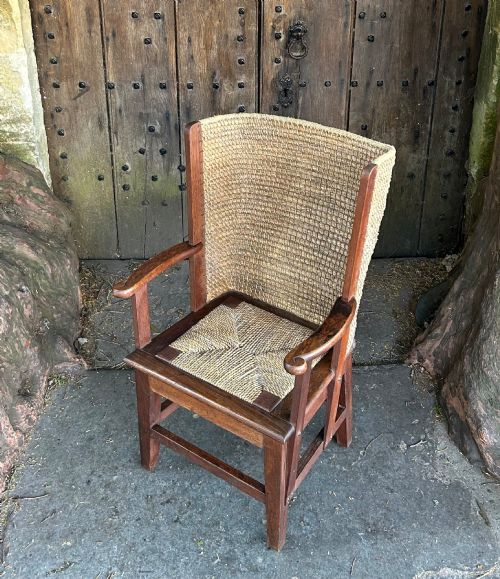
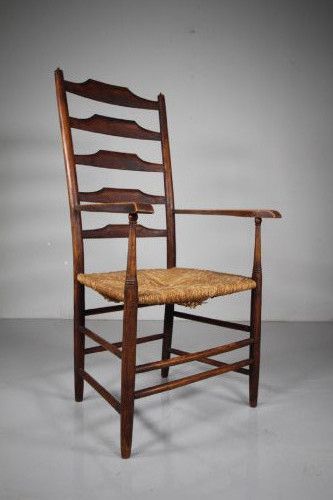
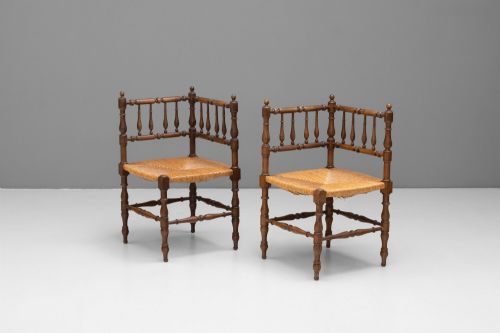
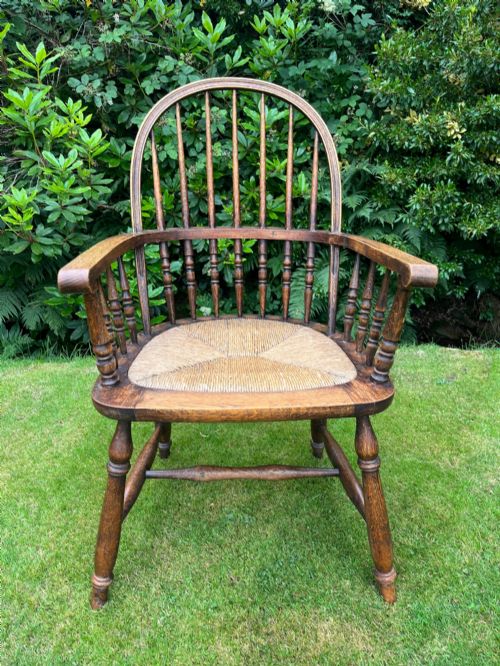
The regional variations span English country, Scottish, Lancashire, and Cheshire origins, frequently taking the shape of ladderbacks, spindlebacks, and low fireside chairs. Elm, ash, oak, and beech form the structural skeletons of these chairs, supporting the hand-twisted natural straw or rush seating surfaces.
Makers such as Philip Webb, Morris & Co., and Philip Clissett appear alongside anonymous rural craftspeople who supplied domestic farmhouses and provincial cottages. The survival of original paint surfaces, rush seats, and regional turning marks distinguishes these vernacular items on the market.
How They Were Made
Frames rely on local hardwoods such as ash, elm, beech, and oak, turned on lathes or shaped by hand to create spindles, posts, and ladder-back rails. Joinery typically employs pegged mortise and tenon joints to withstand the daily pressures placed upon country seating.
Seats are woven by hand using dried marsh rush or straw, wound tightly around seat rails in distinct geometric patterns to distribute weight evenly. Certain pieces retain original painted finishes or ebonised surfaces applied over the timber frames during production.
Several miniature ladderbacks wait patiently for tiny occupants, proving that 19th-century toddlers sat just as sternly as their parents.
What Varies In Quality
The integrity of the original frame construction and the tightness of the woven rush seating dictate the standing of an individual chair. Pieces retaining undisturbed original painted surfaces or authenticated connections to known workshops command greater regard than later assembled or heavily restored examples.
Proportion and regional turning detail separate standard utilitarian seating from refined vernacular output. Chairs demonstrating balanced spindle arrangements, authentic regional characteristics, and minimal timber replacement represent the higher tiers of surviving stock.
Morris & Co·Philip Webb·Philip Clissett·E W Godwin·Dicon Nance
The Antique Rush Armchair Glossary
- Rush
- Dried marsh grass woven to create resilient, flexible seating surfaces. It provides a natural texture characteristic of traditional country chairs.
- Ladderback
- A chair back featuring horizontal arched or straight slats between two upright posts. This regional form dominated 18th and 19th-century country seating.
- Spindleback
- A chair utilising numerous thin turned wooden rods along the backrest. These vertical elements offer lighter framing and support.
- Vernacular
- Everyday utilitarian objects made by regional craftspeople following local traditions rather than high-style metropolitan fashions. These pieces reflect specific geographic building methods.
- Carver
- An armchair designed alongside matching side chairs for dining tables. They usually feature open arms and sturdy upright posts.
Antique Rush Armchair: Frequently Asked Questions
How do I identify a rush seat?
A traditional rush seat consists of twisted marsh vegetation or straw woven tightly across a wooden frame in square or diagonal patterns.
Over decades, genuine rush develops a smooth, hard texture and darkens in tone, whereas modern synthetic replacements feel pliable and uniform.
Where were these chairs made?
Regional workshops across English counties such as Lancashire, Cheshire, and Yorkshire produced the majority of vernacular ladderback and spindleback seating.
Specialist forms like Orkney chairs originated in Scotland, while later Arts and Crafts versions emerged from urban design studios.
Can I use an antique armchair daily?
Most solid hardwood frames built with pegged joints easily accommodate regular sitting when placed on level flooring.
Care must be taken with the woven seating surface, avoiding excessive localized weight or moisture that could weaken the dried plant fibres.