



Antique Lancashire Spindle Chairs
These antique lancashire spindle chairs bring substantial vernacular character to a room, offering sturdy seating shaped by regional traditions.
Antique Lancashire Spindle Chairs
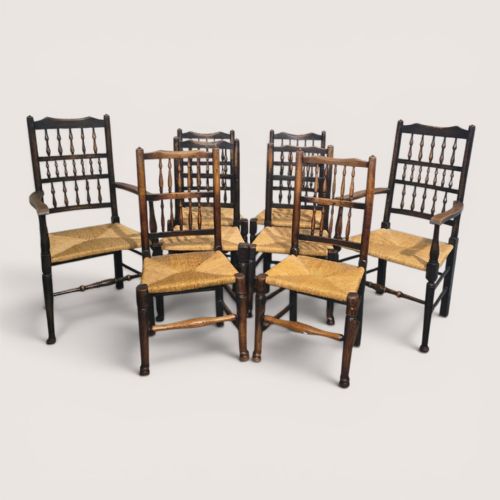
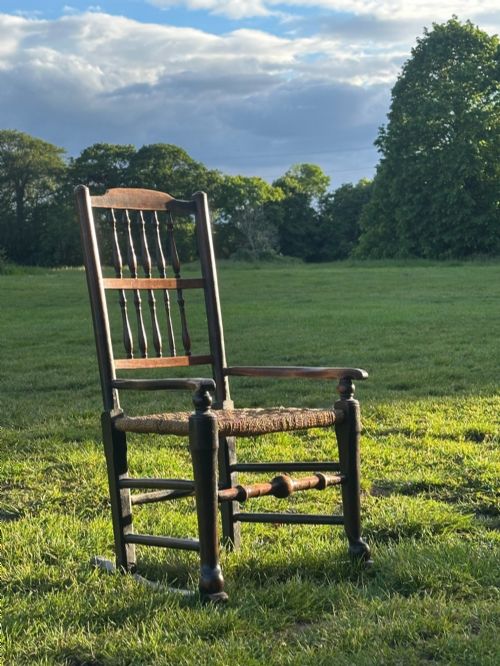
When you search for antique lancashire spindle chairs, you encounter robust regional seating designed for everyday farmhouse and kitchen use. These pieces span dining chairs, armchairs, and rocking chairs originating from eighteenth-century workshops through to the Edwardian period.
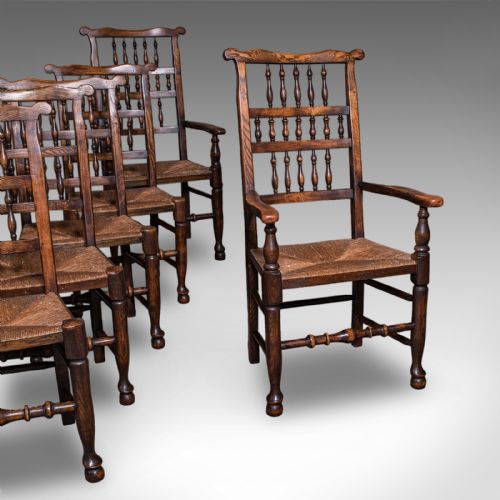
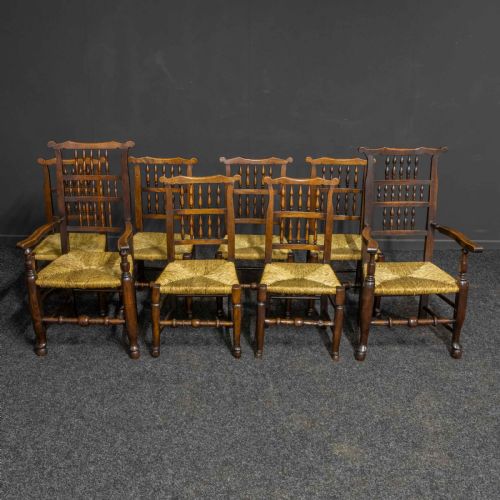
The version most commonly met on this page is the single or carver dining chair, frequently found in small sets or harlequin groups. They combine high spindle backs with rush seats, reflecting centuries of English country vernacular design.
How they were made
Maker-craftsmen built these chairs using locally sourced woods such as ash, elm, beech, oak, and alder for the frames and spindles. These timbers provided the necessary strength and flexibility to shape the uprights and turned components without splitting.
Seats were typically woven from natural rush, creating a resilient, textured platform designed to withstand heavy daily wear. Joinery relied on traditional turned and pegged construction methods characteristic of regional English cabinet-making.
Several armchairs carry the unmistakable scars of fireside service, bearing tiny burn marks where stray embers once popped onto the rush.
What varies in quality
Quality rests in the harmony of the timber selection and the crispness of the spindle turnings. Chairs featuring richly grained elm seats paired with well-turned ash uprights demonstrate a higher grade of regional craftsmanship.
The integrity of the original rush seating and the stability of the frame joints dictate the overall standard. Examples that retain their original structural rigidity without excessive timber replacement hold greater appeal for collectors.
The Antique Lancashire Spindle Chairs Glossary
- Spindle back
- A chair back constructed with a series of slender, turned wooden uprights between the top rail and the seat. This design lightens the visual weight of the frame while maintaining robust support.
- Rush seat
- A seating platform woven from dried marsh grass or rushes twisted around a frame. It provides a durable, slightly springy surface traditional in country furniture.
- Carver
- An armchair, traditionally placed at the head of a dining table, featuring supportive armrests matching the side chairs in a set. These pieces offer a wider seat and more elaborate turning.
- Harlequin set
- A collection of chairs that match in style, period, and general form but vary slightly in detail and proportions. Such groups were assembled over time from individual pieces sharing a common origin.
- Vernacular furniture
- Domestic objects made by regional craftsmen following local traditions rather than high-style metropolitan fashions. These pieces prioritize practical utility and local materials.
Antique Lancashire Spindle Chairs: Frequently Asked Questions
How do I clean a rush seat?
Dust the woven surface gently with a soft brush or vacuum using a low-suction attachment. Avoid applying excessive moisture, which can cause the natural fibres to weaken over time.
For stubborn marks, wipe lightly with a barely damp cloth and dry immediately. Keeping the rush away from direct heat sources prevents the material from becoming brittle.
Can I mix these chairs with a modern table?
The rustic timber tones and simple silhouettes pair comfortably with contemporary dining tables. Their neutral aesthetic bridges traditional and modern interior schemes without dominating the space.
Ensure the seat heights match the clearance of your table before combining them. The variety in harlequin sets actually helps soften rigid modern layouts.
What wood types should I expect?
The listings feature a combination of ash, elm, beech, oak, and alder across the frames and spindles. Elm was heavily utilised for solid seats due to its resistance to splitting.
Ash and beech provided strong, pliable material for the turned uprights and stretchers. Oak appears in select regional examples, adding extra weight and durability to the construction.
How do I date an older chair?
Dating relies on observing tool marks, timber ageing, and construction methods characteristic of specific periods like the eighteenth century or the Victorian era. Hand-turned spindles often show subtle irregularities unique to early lathe work.
Comparing the wear patterns on the foot rails and the construction of the seat frame helps confirm the era. Regional styles changed slowly, making historical context essential for accurate dating.