
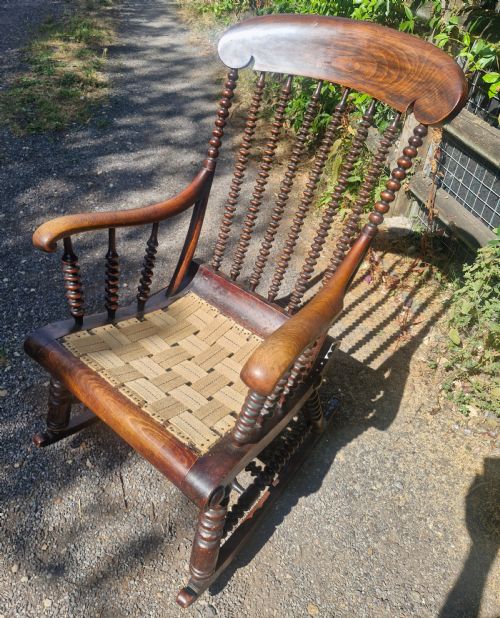
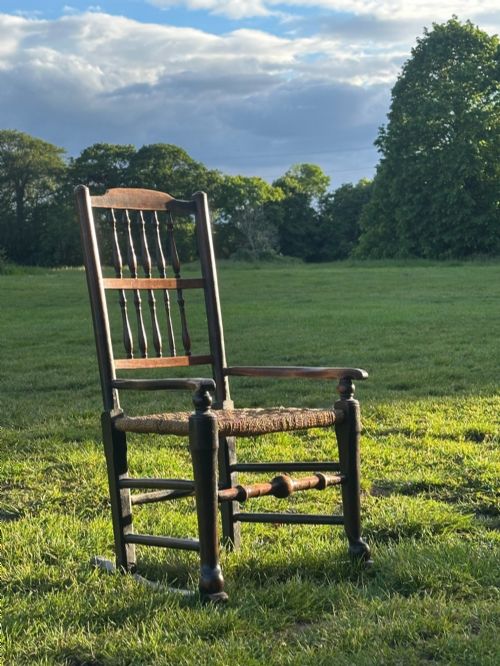
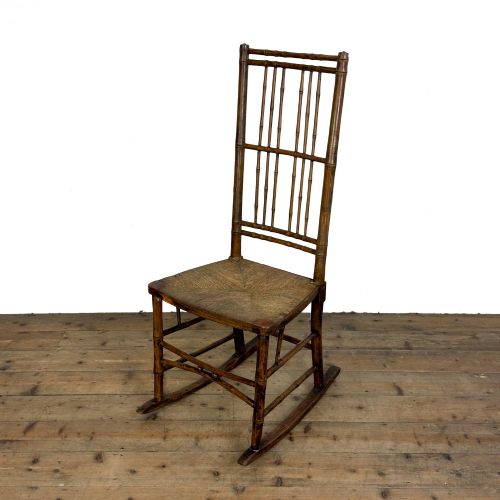


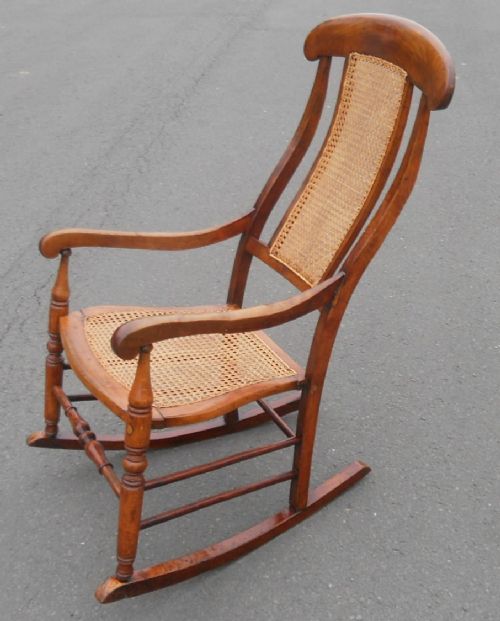

Woven Seat Rocker
These woven seat rocker examples combine traditional timber frames with flexible cord, rush or cane panels to deliver a gentle motion.
Woven Seat Rocker
A woven seat rocker is a seated rocking furniture piece built to support the user while allowing gentle back-and-forth movement across the floor. When searching for a woven seat rocker, buyers encounter diverse forms ranging from compact child iterations to full-scale armchairs rooted in country vernacular traditions.
The selections span multiple eras including the eighteenth, nineteenth, and early twentieth centuries. Regional vernacular styles and simplified Shaker-influenced designs appear alongside Victorian country interpretations and faux bamboo decorative framing.
Materials and construction methods
Makers utilised native timbers such as oak, elm, ash, beech, and mahogany for the primary chair frames and curved rocker runners. Structural components were often shaped using traditional turning lathes or steam-bent methods, as seen in bentwood and bobbin-framed examples.
The seating surfaces rely on flexible natural or woven materials including rush, cane, sea grass, and woven webbing. These pliable elements were tightly laced or threaded through the timber framework to create a supportive, resilient platform for the sitter.
Current listings feature nineteenth-century and eighteenth-century timber rocking chairs utilising rush, cane, and sea grass woven seats.
Judging quality in construction and material
Quality rests on the integrity of the timber frame and the tightness of the woven seating surface. Solid joinery in woods like oak or elm indicates durable craftsmanship, whereas loose joints or degraded webbing signal a loss of original stability.
The refinement of the turning work and the uniformity of the weave distinguish standard regional items from more ambitious pieces. Retaining the original rush, cane, or sea grass surface adds substantial authenticity to the object.
The Woven Seat Rocker Glossary
- Rush
- Dried marsh grass twisted into cords and hand-woven to form resilient chair seats. This material has been utilised for centuries in country furniture.
- Cane
- Thin strips derived from the outer bark of rattan palms, woven into decorative patterns for chair panels. It provides a light and flexible seating surface.
- Ladder back
- A chair back featuring multiple horizontal wooden slats between the upright posts. This traditional form appears frequently in vernacular seating.
- Bentwood
- Timber shaped into curves by exposure to steam and pressure. This technique allows for continuous, flowing chair frames without heavy joints.
- Bobbin framing
- Furniture turned on a lathe to resemble a series of wooden spools or bobbins. It creates a decorative, tactile surface texture.
Woven Seat Rocker: Frequently Asked Questions
How do I care for a rush seat?
Keep woven organic seats away from excessive moisture and direct heat sources to prevent the natural fibres from becoming brittle. Regular dusting with a soft brush helps maintain the material.
Avoid sitting on the woven surface with sharp objects or heavy point loads that might snap individual strands. Applying occasional light humidity in very dry rooms preserves the flexibility of rush and cane.
What is a ladder back rocker?
A ladder back rocker is a wooden chair featuring horizontal slats across the backrest and curved runners attached to the feet. These pieces originate mainly from country and regional workshops.
The simple slatted design allowed makers to construct sturdy seating using readily available local hardwoods. They provide straightforward lumbar support combined with a gentle rocking motion.
How do I date an old rocking chair?
Dating relies on examining the timber species, tool marks, turning styles, and assembly methods. Eighteenth-century examples often display simpler regional framing like elm and ash, while Victorian pieces introduce faux bamboo or cane.
Later nineteenth and early twentieth-century versions may show industrial turning techniques or bentwood steam-shaping. Comparing the construction details to documented period styles helps narrow the decade.
Can these chairs be used daily?
Most antique rockers remain structurally sound for regular use provided the frame and woven seat are stable. Inspecting the joints ensures the timber can handle continuous movement.
Weight distribution should remain balanced, and placement on smooth carpets or rugs protects the wooden runners from uneven wear. Regular checks of the lacing prevent minor loosening from becoming major damage.