


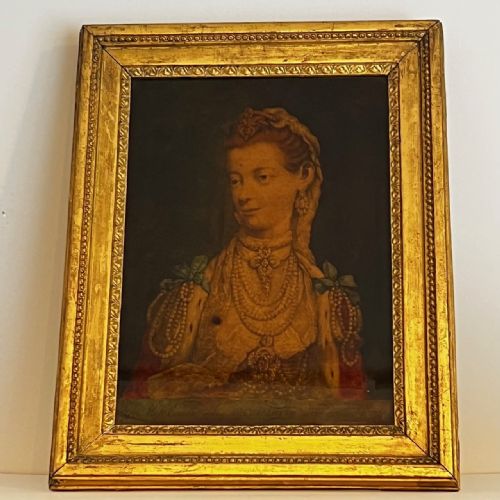


Antique Royal Portrait Print
An antique royal portrait print captures the solemn dignity of sovereigns and courts through centuries of ink, glass and paper.
Antique Royal Portrait Print
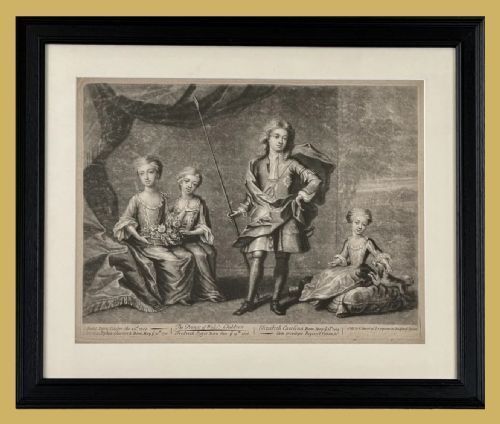
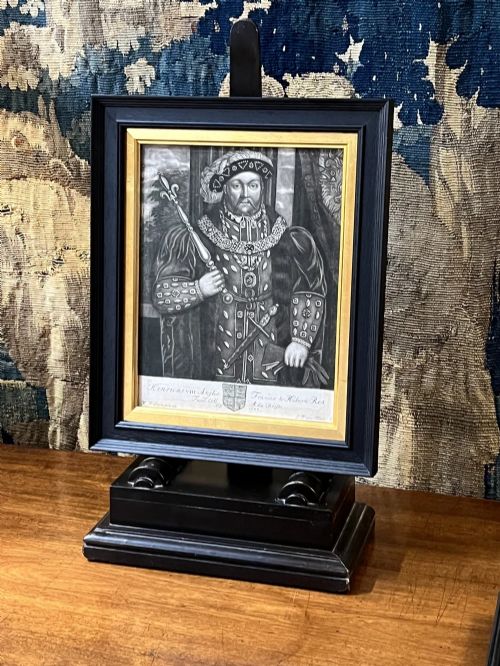
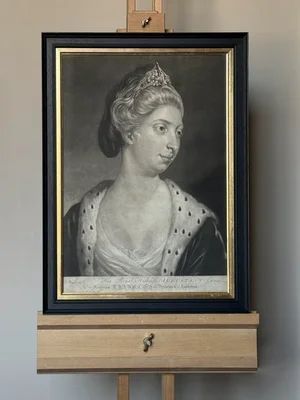
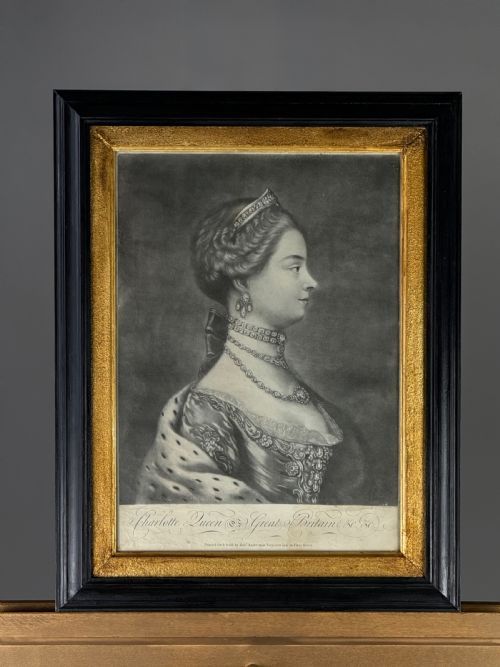
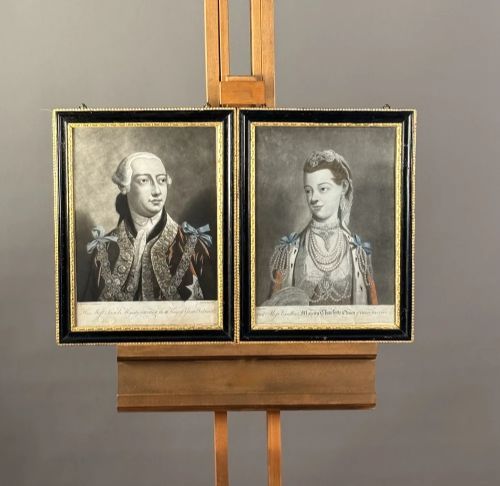
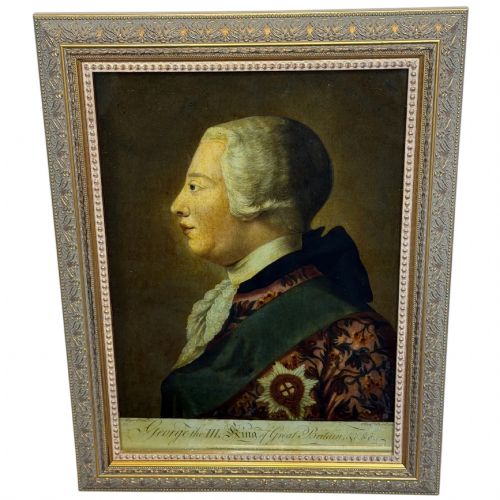
An antique royal portrait print represents monarchs and their families from periods spanning the seventeenth century through to the Edwardian era. Buyers seeking these works encounter historic mezzotints, reverse glass prints and engraved plates depicting figures such as Queen Charlotte, King George III and earlier royalty. These framed works capture the likeness of monarchs and princes as recorded by contemporary artists and printmakers.
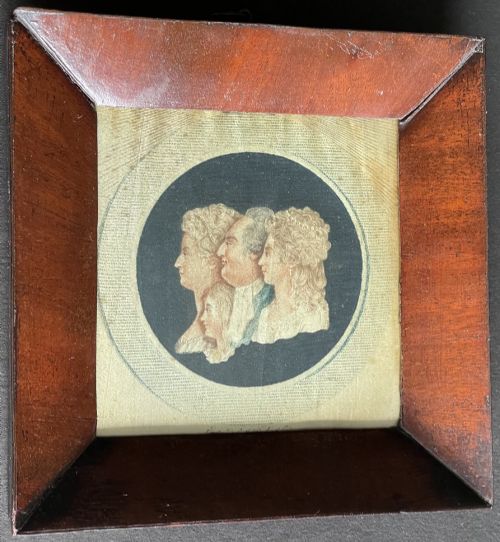
The selection on this page leans heavily toward eighteenth-century mezzotints and Georgian reverse glass prints framed in wood or giltwood. Pieces range from large individual plates to pairs of sovereigns and political allegorical works involving rulers like King George III. Alongside these prints appear occasional silhouettes, lithographs and photographs housed in their original frames.
How these pieces were made
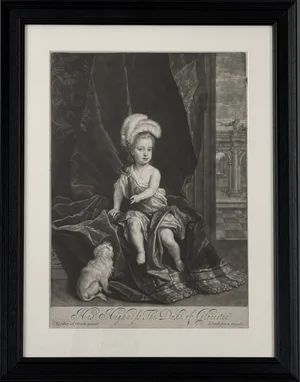
Printmakers utilised inked copper plates to produce detailed mezzotints and engravings on paper, often working after paintings by prominent artists of the period. Skilled hands transferred these tonal portraits using rich black inks that captured the elaborate attire and expressions of royal subjects.
Reverse glass prints involved transferring or painting directly onto the underside of a glass sheet, sometimes combined with mezzotint techniques to create a luminous surface. Finished works were then secured within timber frames, frequently enhanced with gold leaf or giltwood mouldings.
Antique Royal Portrait Print Retail Price Guide 2026
Typical asking prices for royal portrait print among the pieces listed under this phrase on Sellingantiques today, from the lower quarter to the upper quarter. They describe what is for sale here now, not the wider market.
Listings feature paper, glass, ink and gold leaf combined within seventeenth, eighteenth and nineteenth-century frames.
What varies in quality
Original framing adds significantly to the character of a piece, with period giltwood and gold leaf moulding preserving the historical integrity of the work. The survival of fragile glass panels in reverse glass prints also distinguishes better-preserved examples.
John Smith·Thomas Murray·John Faber Snr·Hans Holbein The Younger·James McArdell·Thomas Frye·Richard Purcell
The Antique Royal Portrait Print Glossary
- Mezzotint
- A printmaking process where the copper plate is roughened to achieve rich dark tones and subtle gradations of light. This technique was widely utilised in the seventeenth and eighteenth centuries for royal portraiture.
- Reverse glass print
- An image applied to the back of a glass panel, creating a glossy and reflective finished surface. These delicate works require careful handling and preservation.
- Giltwood
- Timber carved and coated with a thin layer of gold leaf or gilt. It provides ornate framing for historic portraits.
- Lithograph
- A planographic printing process utilising stone or metal plates to produce multi-toned images. Nineteenth-century examples capture later monarchs with photographic precision.
- Allegorical print
- An artwork depicting symbolic figures or themes alongside historical personalities. These prints often comment on political events during the Georgian period.
Antique Royal Portrait Print: Frequently Asked Questions
How do I identify a reverse glass print?
Reverse glass prints present a distinct reflective sheen because the image sits behind the protective glass rather than on paper. The glossy surface catches light differently than standard engravings.
Examining the edges where the glass meets the frame often reveals the unusual depth characteristic of this eighteenth and nineteenth-century technique.
What is a mezzotint portrait?
A mezzotint is a specialised form of printmaking that achieves velvety dark backgrounds and smooth tonal gradations. Printmakers roughened copper plates to hold ink in ways that rendered skin tones and fabrics with remarkable softness.
These prints formed the standard medium for disseminating royal likenesses prior to the invention of photography.
Are these frames original to the prints?
Many historic prints retain their period wooden or giltwood frames, which contribute greatly to their authenticity and aesthetic appeal. Original frames often show the gentle wear and oxidation appropriate to their age.
Matching the moulding style and wood type helps confirm whether the framing dates to the same era as the portrait within.
How should I care for antique paper and glass prints?
Keep framed prints away from direct sunlight to prevent the fading of delicate inks and paper substrates. Stable indoor humidity levels protect both the timber frames and the vulnerable glass panels.
Avoid hanging these works in damp environments to preserve the integrity of the original materials.