


Antique Roemer Glasses
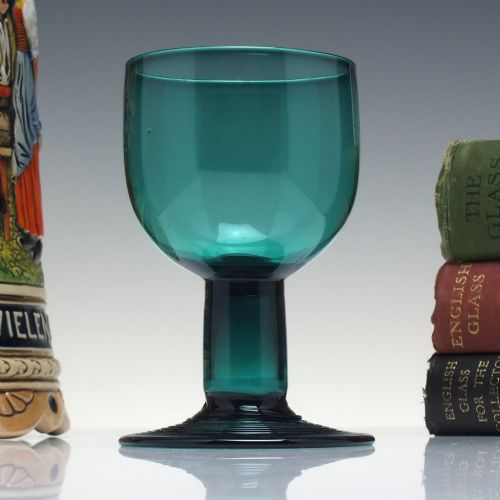
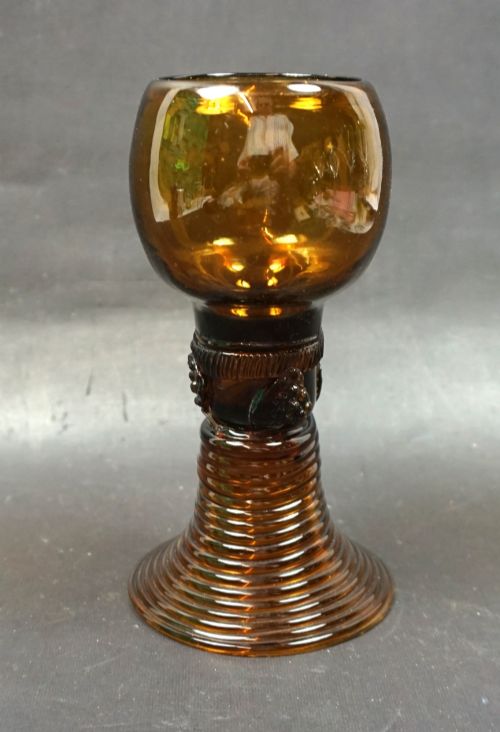
Antique roemer glasses are traditional stemmed drinking vessels, most frequently encountered in green or amber glass with distinctive coiled feet, prized for their rich historic character and German heritage.
Antique Roemer Glasses
When you search for antique roemer glasses, you are looking at historic European drinkware rooted in Germanic traditions, designed primarily for white wine and hock. The pieces listed span Georgian, Victorian, and early twentieth-century periods, reaching back to the late eighteenth century.
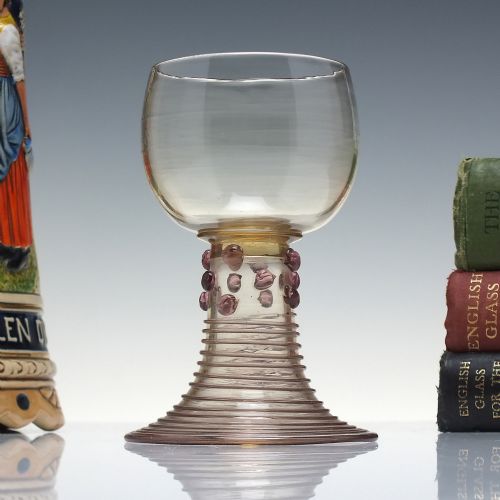
You are most likely to meet green or amber glass examples on this page, often featuring hollow stems and applied prunts or coiled feet for grip. Forms range from single tall goblets to matched sets of cordial and wine glasses.
The styles recorded encompass German Baroque, Biedermeier, Historicism, and Art Nouveau influences alongside English export pieces. Makers from Bohemia, Germany, France, and Austria contribute to the diverse regional interpretations of this classic form.
How they were made
These glasses were shaped using hand-blown glass techniques, often utilising coloured glass batches in shades of green, amber, and amethyst. The signature hollow stem and coiled foot required skilled manipulation of hot metal by the glassblower.
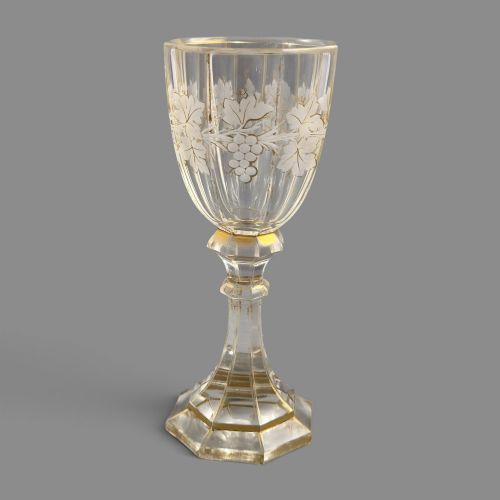
Decoration on finer examples includes polychrome enamel work, heraldic motifs, and intricate engraving or gilding. Cut crystal variants demonstrate precision cold-working to create faceted bowls that catch the light.
Listings span periods from Georgian and Victorian eras through to the early twentieth century, incorporating German Historicism and Biedermeier styles.
What varies in quality
Quality in these glasses rests on the crispness of the hand-blown form and the delicacy of any applied decoration. Enamelled heraldic details and precise gilding separate workshop pieces from standard utility drinkware.
The weight and clarity of the coloured glass, alongside the symmetry of the coiled foot and hollow stem, dictate the standing of an individual goblet. Complete sets matched in tone and decoration command greater attention than isolated single items.
Moser Bohemian·Lobmeyer·Frits Hechert
The Antique Roemer Glasses Glossary
- Roemer
- A traditional Germanic drinking vessel with a large bowl, a cylindrical stem, and a wide foot formed by coiling hot glass. They were traditionally used for drinking Rhine wine.
- Prunt
- A blob or applied lump of molten glass fused to the stem to provide a secure grip for greasy fingers during feasts. They often appear as raspberry or thorn shapes.
- Historismus
- A nineteenth-century artistic movement reviving historical styles, particularly German Renaissance and Baroque forms. Roemers from this period often feature heraldic enamel work.
- Hollow stem
- A stem constructed as an extension of the bowl cavity, common in earlier roemer glasses. This technique reduced the weight of the thick glass vessel.
- Biedermeier
- A Central European style spanning the mid-nineteenth century focusing on utilitarian comfort and clean lines. Pieces from this era often display simplified cut glass patterns.
Antique Roemer Glasses: Frequently Asked Questions
What were antique roemer glasses used for?
These vessels were traditionally designed for serving white wine, hock, and Germanic regional wines during formal dining.
The large bowl allowed the aromas of the wine to collect, while the distinctive coiled foot prevented slipping during long feasts.
How do I clean antique roemer glasses?
Wash these pieces by hand using warm water and a mild detergent, avoiding abrasive sponges that might damage enamelling or gilding.
Dry them immediately with a soft lint-free cloth to prevent water spots on the coloured glass.
Are these glasses safe for daily use?
While structurally sound, antique glass requires careful handling and is best reserved for occasional toasts rather than everyday dining.
Hand-blown vessels with enamel or gilded decoration should be kept away from dishwashers and sudden temperature changes.
How can I tell the period of a roemer?
Georgian and early eighteenth-century examples often display simpler, heavier green glass with hollow stems, reflecting early export manufacturing.
Later Victorian and twentieth-century pieces frequently introduce vibrant amber tones, precise cutting, or elaborate polychrome enamel heraldry.