

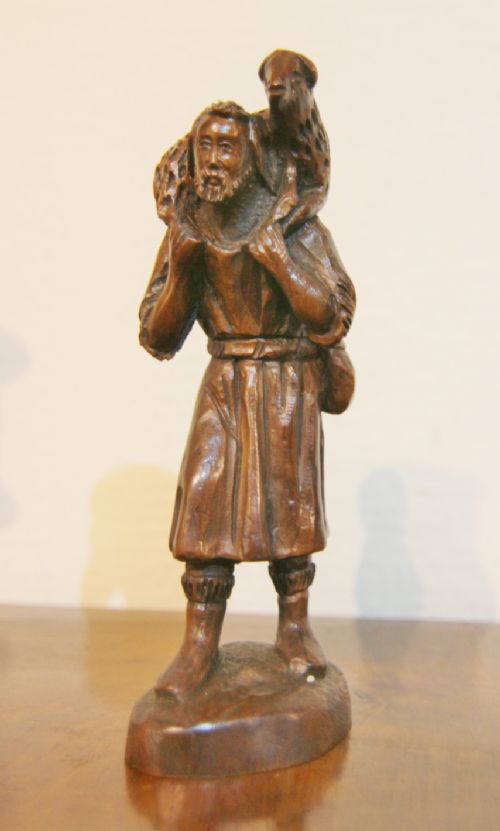


Antique Religious Statuette
These antique religious statuette pieces span centuries of devotional carving and modelling, offering intimate focal points for reflection or collection.
Antique Religious Statuette
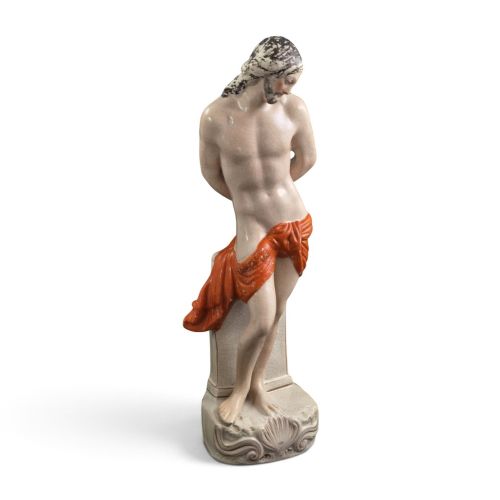
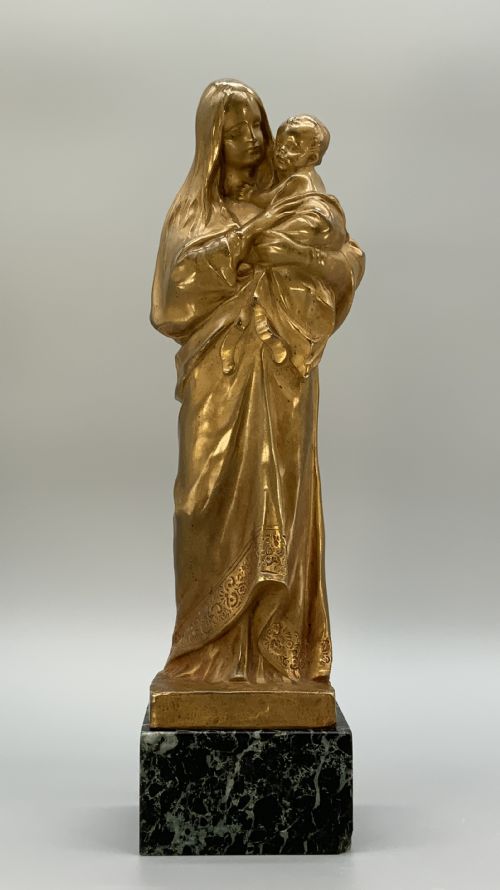
When you search for an antique religious statuette, you encounter a diverse range of devotional figures spanning from the sixteenth century to the early twentieth century. These objects include carved hardwood representations of the Madonna and Child, early Flemish carved groups, and detailed portrait figures.
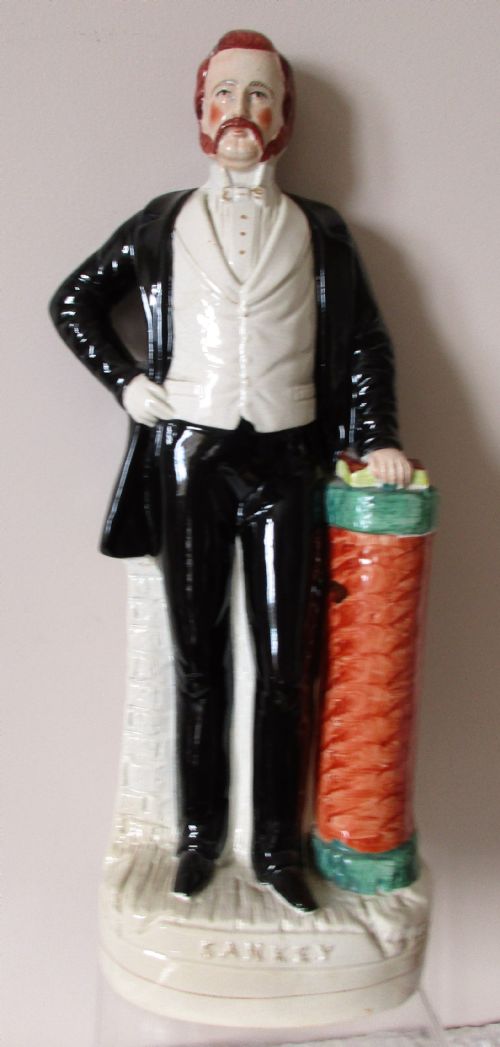
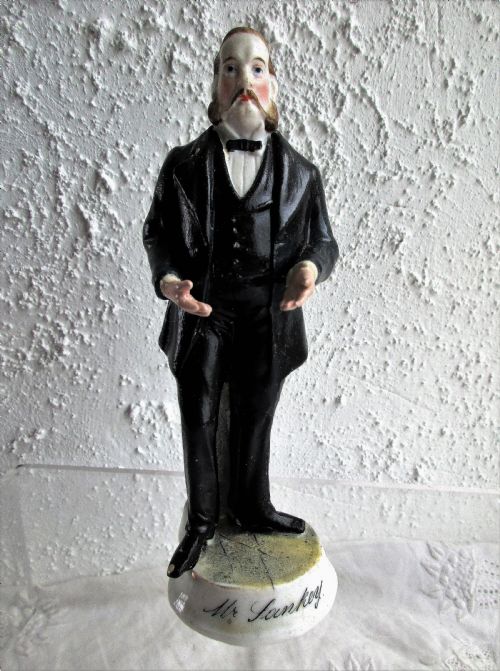
You are most likely to meet nineteenth-century examples on this page, particularly Victorian Staffordshire earthenware figures and porcelain depictions of religious subjects. The selection bridges various regional traditions, encompassing English pottery, Austrian gilt bronze, and French alabaster.
The forms range from small figurines and decorative sculptures to apostle figures and carved wooden depictions of shepherds and saints. Each piece carries the distinct stylistic markers of its period, moving from Gothic Revival and Baroque influences through to Victorian and Edwardian interpretations.
Assessing quality in devotional figures
In ceramic and porcelain pieces, the quality depends on the clarity of the moulding and the care taken with hand-painting and glaze application. Finer examples retain crisp details without blurring or running in the pigments.
The choice of material also dictates the tier of the piece, with heavy cast gilt bronze and early hardwood carvings representing higher levels of artisanal investment compared to standard earthenware pottery.
Even a humble nineteenth-century monk figure manages to look mildly judgemental about your life choices from the mantelpiece.
Hans Müller·James Hadley
The Antique Religious Statuette Glossary
- Parianware
- A fine-grained, unglazed porcelain resembling white marble, developed in the nineteenth century for statuary and portrait figures. It provides a smooth surface that shows delicate sculptural detail.
- Staffordshire pottery
- Earthenware figures produced in the Staffordshire potteries during the Victorian era. These decorative pieces often portray religious or secular subjects with hand-painted colours.
- Gilt bronze
- Metalwork featuring a thin layer of gold applied to the surface of a bronze casting. This technique creates a rich, luminous finish on decorative sculptures.
- Carved group
- Multiple figures sculpted from a single piece of wood or stone to form a cohesive scene. Examples include depictions of the Madonna and Child.
Antique Religious Statuette: Frequently Asked Questions
What materials are used?
These devotional pieces appear in a variety of materials including hardwood, alabaster, earthenware, porcelain, Parianware, bronze, and silver.
Potteries utilised ceramic clays for nineteenth-century figures, while earlier workshops relied on carved timber and stone.
How old are these pieces?
The selection spans from the early sixteenth century through the seventeenth, eighteenth, and nineteenth centuries, extending into the Edwardian era around nineteen ten.
Nineteenth-century Staffordshire pottery and Victorian porcelain represent the most common periods found within these listings.
Where were they made?
Originating from across Europe, these figures reflect regional craftsmanship from England, France, Flanders, and Austria.
English potteries produced earthenware portrait figures, while continental workshops supplied carved hardwood groups and gilt bronze sculptures.
How do I care for wooden carvings?
Wooden and alabaster pieces require stable environmental conditions away from direct sunlight and excessive humidity to preserve the material.
Gentle dusting with a dry, soft cloth maintains the surface without introducing moisture that could harm aged finishes.