


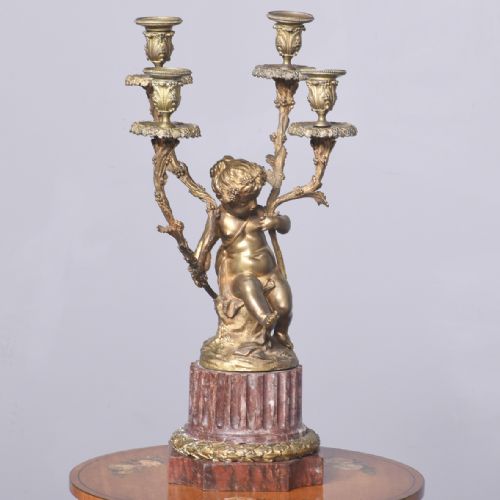


Antique Putti Candle Holders
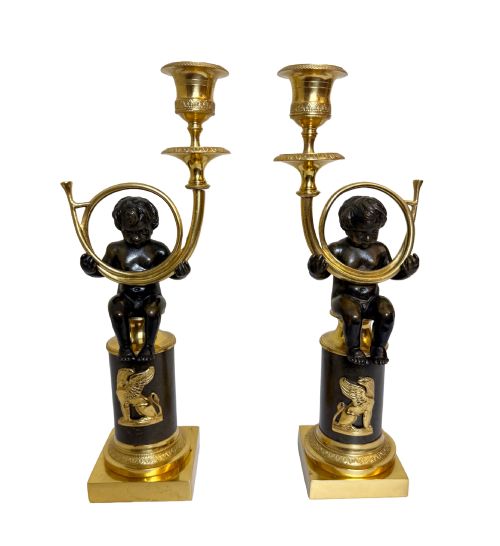
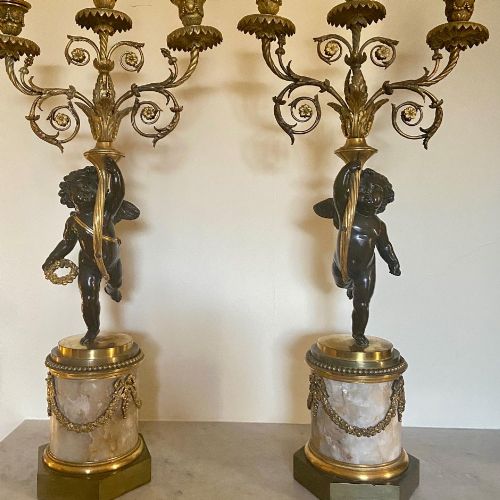
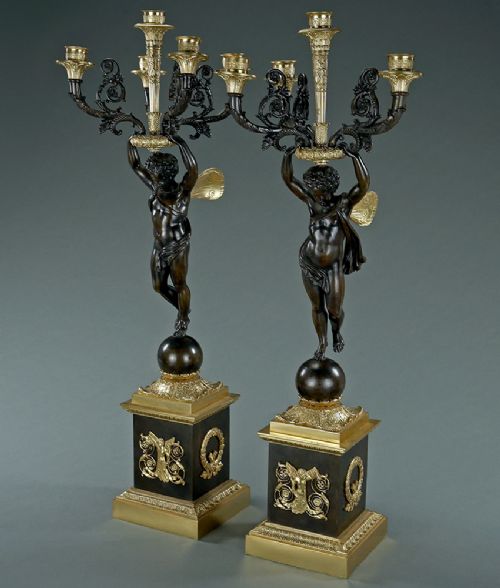
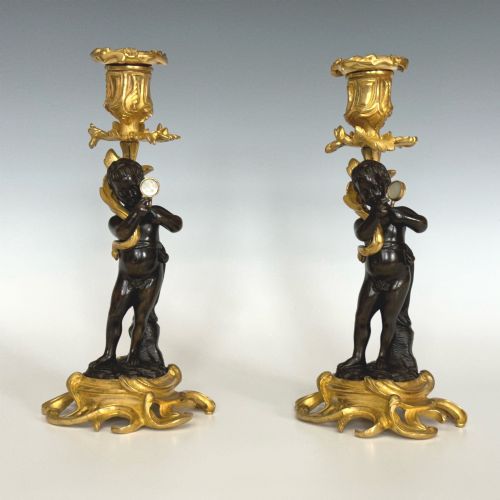
These antique putti candle holders combine sculptural figures of cherubs with functional lighting, bringing classical French and Victorian decorative arts into a room.
Antique Putti Candle Holders
When you search for antique putti candle holders, you find figural lighting pieces depicting winged cherubs or putti holding sconces, branches, or drip pans. These items appear primarily as pairs of candlesticks or multi-light candelabra, often accompanied by matching mantel clocks in garniture sets.
The selections span from the eighteenth century into the twentieth century, with nineteenth-century French Empire, Rococo Revival, and Louis XVI styles dominating the available pieces. Italian grand tour examples and German porcelain figures also emerge among the listings.
Forms range from single-light desk sticks to substantial five-light candelabra. Cherubs are cast in metal or modelled in ceramic, frequently positioned upon circular or plinth-shaped marble bases.
How they were made
Metals such as bronze, brass, or spelter form the primary structure of the figural components, frequently finished with patination, gilding, or ormolu. Artisans combined cast metal with carved marble or fluorspar bases to create weight and contrast.
Ceramic examples utilise porcelain, blanc de chine, and enamel techniques, particularly in German and English factories. Gildwood and silver plating provide alternative surface treatments on specific nineteenth-century pieces.
Listings feature eighteenth-century Georgian pieces alongside nineteenth-century French Empire and Victorian interpretations in bronze, porcelain, and marble.
What varies in quality
The integration of materials influences overall execution. Superior pieces join heavy marble or fluorspar bases securely to accurately balanced metal branches without visible gaps or misalignment.
Francois Redmond·Minton·Triebner ENS and Eckert Volkstedt·Sitzendorf·Claude Clodion
The Antique Putti Candle Holders Glossary
- Putti
- Plural of putto, depicting plump, winged infant figures derived from classical art. They appear frequently in Renaissance revival and Baroque decorative metalwork and ceramics.
- Ormolu
- Finely ground high-carat gold applied to a bronze base using a mercury amalgamation technique. This finish imparts a warm, enduring lustre to nineteenth-century French metalwork.
- Candelabra
- A branched lighting fixture holding multiple candles. These pieces often feature a central cherub figure supporting two to five arms.
- Clock Garniture
- A decorative set comprising a central mantel clock flanked by matching side pieces such as candelabra or urns. They share identical material treatments like marble and ormolu.
- Grand Tour
- Cultural travel undertaken by wealthy Europeans in the eighteenth and nineteenth centuries. Tourists acquired small bronzes and sculptural objects as souvenirs of Italy.
Antique Putti Candle Holders: Frequently Asked Questions
What is the difference between putti and cherubs?
Putti are secular mythological infants derived from classical art, whereas cherubs possess a specific biblical association.
In antique lighting and decorative arts, the terms are used interchangeably to describe winged infant figures.
How do I clean bronze and ormolu candle holders?
Bronze and ormolu surfaces require only gentle dusting with a soft, dry cloth to remove accumulation.
Harsh chemical polishes strip the historic gilt or patinated finishes and must be avoided entirely.
Were these pieces used for everyday lighting?
These decorative objects served elite domestic interiors during the eighteenth and nineteenth centuries.
They functioned primarily as formal reception room illumination and mantelpiece ornamentation.
How can I tell a French Empire piece from a Rococo Revival piece?
French Empire pieces rely on classical symmetry, military motifs, and austere architectural lines.
Rococo Revival items feature asymmetrical curves, naturalistic foliage, and playful putti in dynamic poses.