
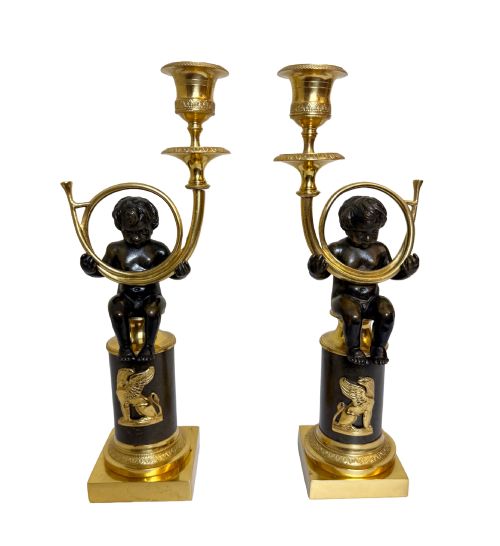
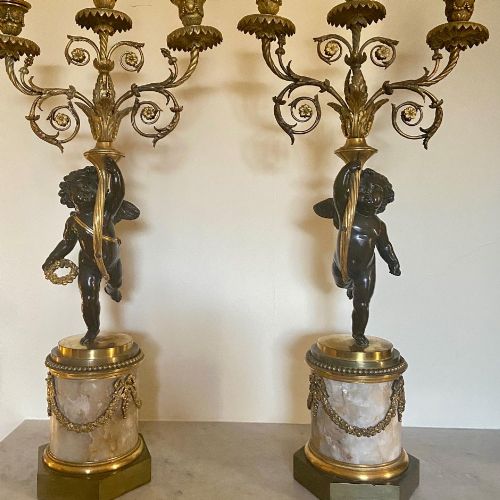
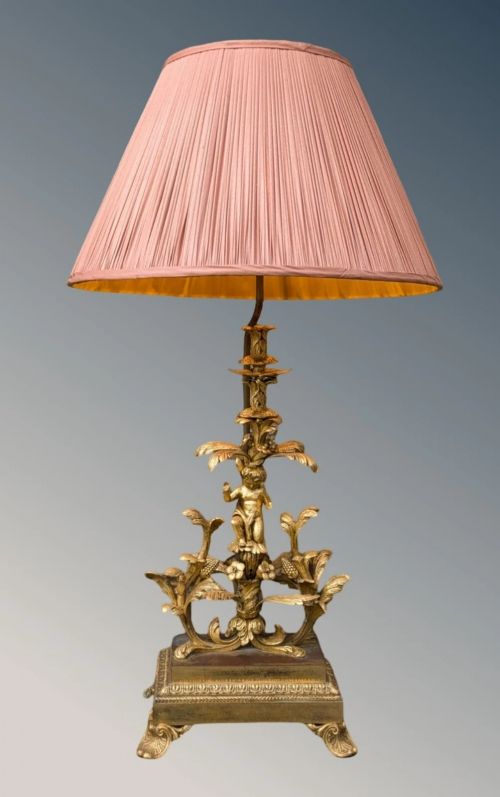
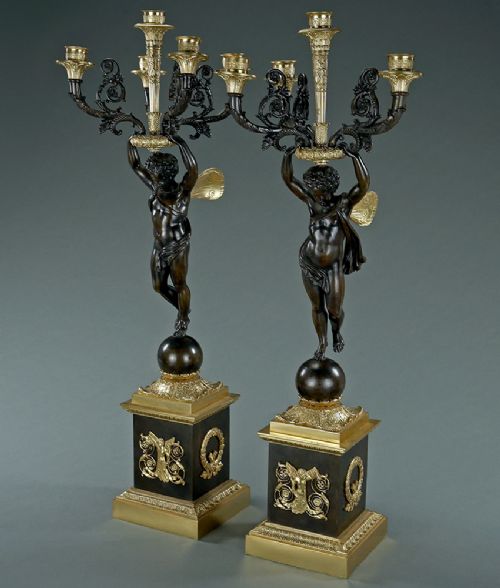




Bronze Cherub Candlesticks
These bronze cherub candlesticks combine figural sculpture with functional lighting, bringing continental elegance and classical motifs straight into a room.
Bronze Cherub Candlesticks
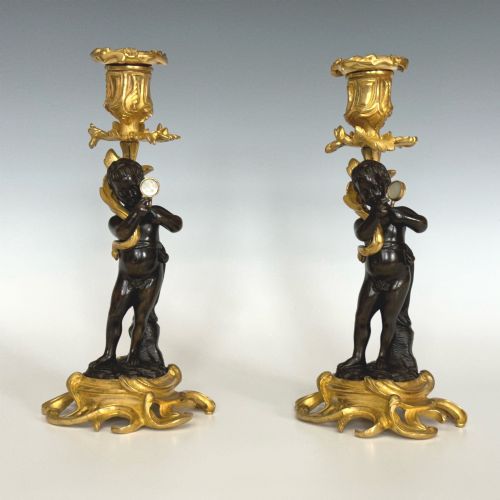
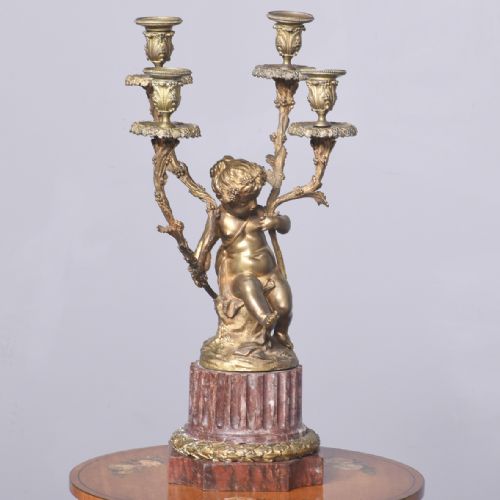
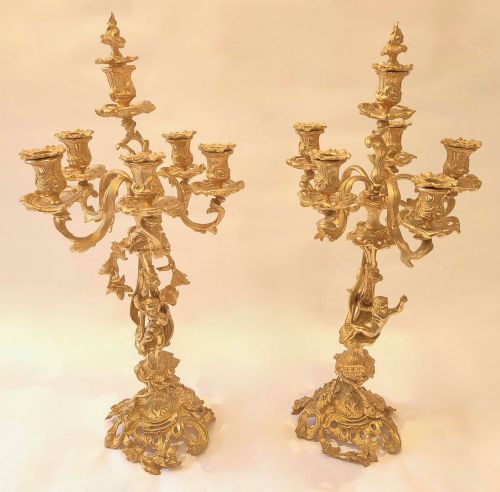
Bronze cherub candlesticks take the form of winged putti supporting sconces or branches, predominantly arriving from French and Italian workshops across the nineteenth century. The phrase encompasses single table lights, twin-light candelabra, and larger multi-branched examples set upon heavy stone plinths.
Buyers frequently encounter pairs dating from the Victorian era and the mid-nineteenth century, styled in the French Empire, Louis XVI, and Rococo revival manners. These objects merge classical mythology with domestic illumination, depicting youthful figures holding aloft candleholders or drum sockets.
The materials span patinated bronze, bright ormolu, and parcel-gilt surfaces, frequently mounted on contrasting marble or fluorspar bases. Such combinations reflect the nineteenth-century passion for grand tour souvenirs and opulent continental interior design.
Materials and methods
Gilding was applied via mercury amalgamation to create rich ormolu finishes, contrasting against dark patinated bronze bodies. Stonemasons cut and polished the marble and fluorspar bases to anchor the heavy metal figures securely.
Among the nineteenth-century menagerie, at least one pair of Regency bronze cherubs chose to ride into battle upon crocodiles.
Judging the work
Quality rests upon the crispness of the chasing on the bronze figures and the depth of the hand-finishing in the facial expressions and feather details of the cherubs. Superior examples display fluent moulding where the arms and wings join the body, rather than flat or rigid casting.
The choice and weight of the mounting materials also dictate the standard, with dense marble bases and heavy fire-gilt ormolu separating fine salon pieces from standard commercial production.
Francois Redmond·Claude Clodion
The Bronze Cherub Candlesticks Glossary
- Ormolu
- Gilt bronze created by applying a mercury and gold amalgam to a bronze base and heating it. This technique produces a brilliant golden finish characteristic of French decorative arts.
- Putto
- A plump, naked male child figure, frequently winged, seen in classical art. These figures form the central sculptural motif of the candlesticks.
- Patinated bronze
- Metal treated with chemical solutions to produce a controlled surface colour, usually dark brown or green. This finish highlights the sculptural contours of the figures.
- Fluorspar
- A colourful mineral used for decorative bases and ornamental objects. It provides a striated, translucent foundation for the bronze sculptures.
Bronze Cherub Candlesticks: Frequently Asked Questions
How were bronze cherub candlesticks used?
These pieces served to illuminate nineteenth-century drawing rooms, dining tables, and mantelpieces, placed to catch the flickering light from candles.
They functioned both as practical lighting devices and as sculptural ornaments that displayed the homeowner's taste for classical revival aesthetics.
Where were these pieces made?
The vast majority originate from French foundries in Paris, alongside Italian workshops catering to travellers on the grand tour.
French makers dominated the production of Louis XVI and Empire revival lighting during the nineteenth century.
How do I date a pair?
Dating relies on stylistic clues, such as the heavy neoclassical proportions of the Empire period or the lighter, ornate flourishes of the Napoleon III era.
Material composition, casting marks, and the type of marble used for the base also assist in establishing the decade of manufacture.
Can I use standard candles in them?
Most antique candle sockets accommodate standard taper candles, though minor variations in nineteenth-century sizing occur.
Collectors should check the inner diameter of the drip pan and nozzle before fitting modern candles to ensure a secure fit.