




Ormolu Putti Candle Holders
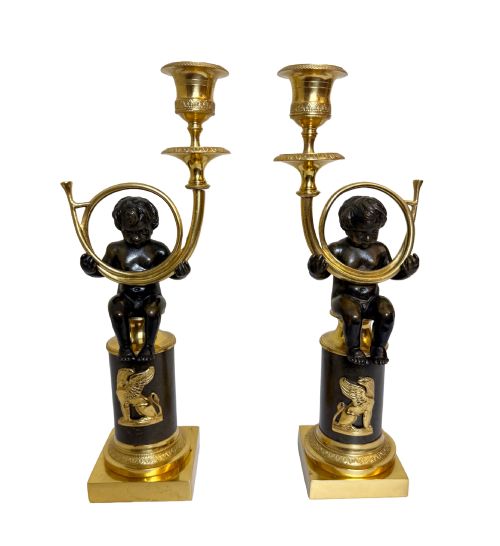
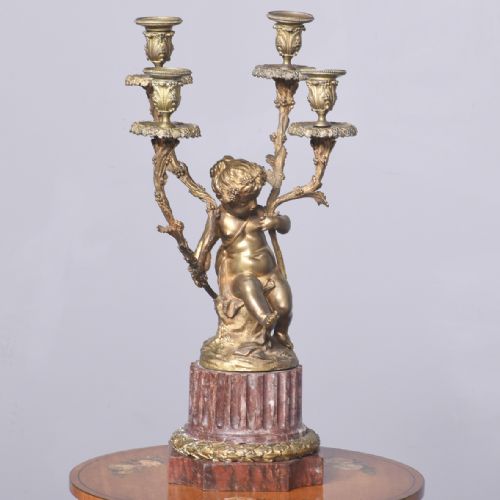
These ormolu putti candle holders bring figurative French glamour and sculptural presence to a mantelpiece, combining gilded metal with classical cherub motifs.
Ormolu Putti Candle Holders
When searching for ormolu putti candle holders, a buyer encounters figural lighting pieces that merge functional illumination with classical sculpture. The listings show a strong presence of pairs designed for mantelpieces, often supporting multiple candle arms alongside central figures of cherubs.
The objects span periods from the eighteenth century through the nineteenth century, taking forms such as paired candlesticks, multi-arm candelabra, and complete clock garnitures. French workshops dominate the selection, referencing Louis XVI, Empire, and Rococo styles in their decorative vocabulary.
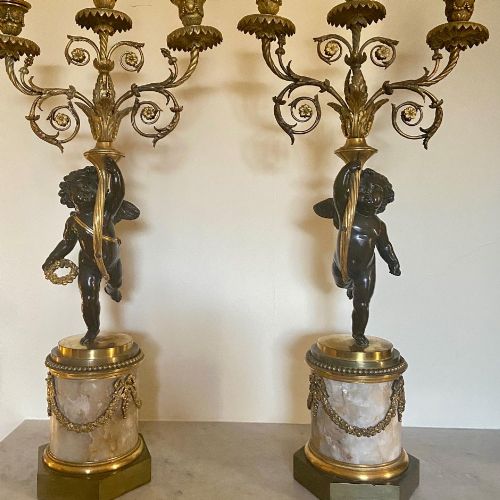
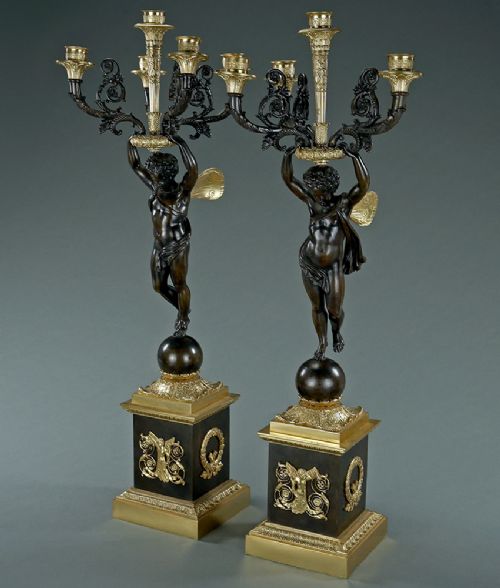
Most examples meet the eye as combinations of gilded or patinated bronze and white marble, frequently featuring winged cherubs or putti holding aloft candle branches. These pieces served both to light formal interiors and to display sculptural craftsmanship on desks and tables.
Materials and Construction
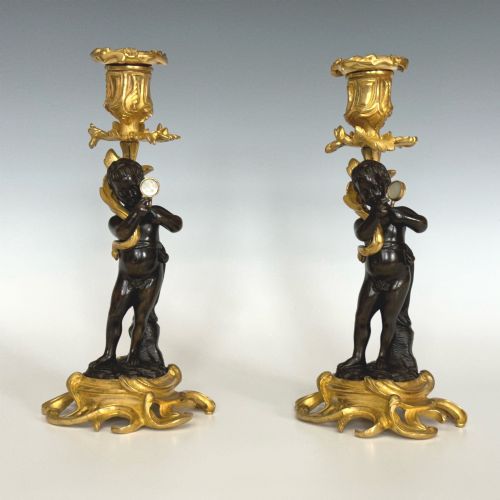
The manufacture of these pieces relies heavily on bronze casting, utilising both mercury gilding for the bright ormolu sections and dark chemical patination for contrasting figures. This dual treatment highlights the anatomy of the putti against the gleaming, gilded mounts of the candle holders.
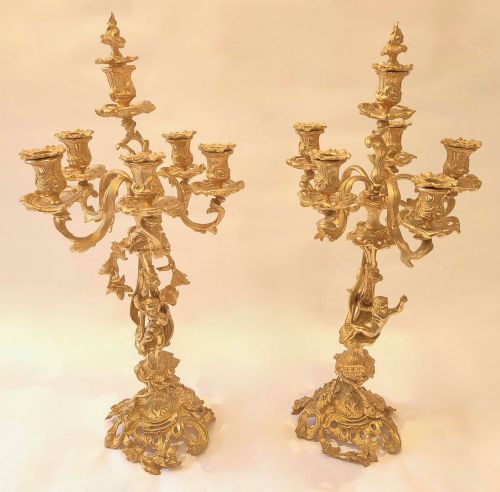
Object forms range from simple desk candlesticks to complex five-light candelabra and complete white marble clock garnitures.
Judging Quality and Execution
Quality in these figural pieces rests on the crispness of the bronze chasing and the subtlety of the contrast between patinated and gilded surfaces. Superior examples display lifelike modelling in the putti figures, with finely articulated facial expressions and hair rather than generalised casting.
The integration of materials also defines the hierarchy, where solid marble bases and well-balanced multi-arm branches demonstrate greater ambition than simple single-light desk sticks. Weight, structural rigidity, and the harmony between the bronze mounts and the stone bases separate standard production from exceptional pieces.
Francois Redmond·Claude Clodion
The Ormolu Putti Candle Holders Glossary
- Ormolu
- A technique of applying finely ground high-carat gold amalgam to bronze objects, followed by heating to drive off the mercury. The resulting surface gives a bright, durable golden finish characteristic of luxury French metalwork.
- Putti
- Depictions of plump, winged infant boys used extensively in classical and revival art. In these pieces, they act as the primary figural support for the candle branches.
- Candelabra
- A branched candlestick designed to hold multiple candles simultaneously. They frequently form symmetrical pairs on either side of a mantel clock.
- Patinated bronze
- Bronze treated with chemical solutions to produce a dark, uniform surface colour. This dark tone contrasts deliberately with the bright ormolu highlights.
- Clock garniture
- A matching set comprising a central mantel clock flanked by paired candlesticks or candelabra. They were manufactured en suite to create a unified decorative scheme.
Ormolu Putti Candle Holders: Frequently Asked Questions
How do I clean ormolu putti candle holders?
Dust the metal surfaces gently with a soft, dry brush to prevent the accumulation of dirt in the chased recesses. Avoid harsh chemical polishes, which can strip the historic mercury gilding from the bronze.
For marble bases, a damp cloth is sufficient to remove surface marks without risking moisture damage to the joined metal mounts.
Were these pieces always made in pairs?
Many surviving examples were created as symmetrical pairs to adorn either end of a mantelpiece or sideboard. Single sticks do appear, particularly desk models or survivors from larger dispersed garnitures.
When buying multi-arm candelabra, matching pairs offer a more complete decorative impact for formal interior displays.
How can I tell a nineteenth-century revival piece from an eighteenth-century original?
Nineteenth-century revival pieces often display sharper, more mechanised casting techniques and heavier use of standard components. Eighteenth-century models generally show hand-chiselled detailing and softer, more nuanced patination across the bronze.
Examining the internal screw threads and the composition of the marble bases helps clarify the production era.