


Antique Purple Necklace
An antique purple necklace brings together deep violet gems and delicate goldwork, offering a wearable piece of history.
Antique Purple Necklace
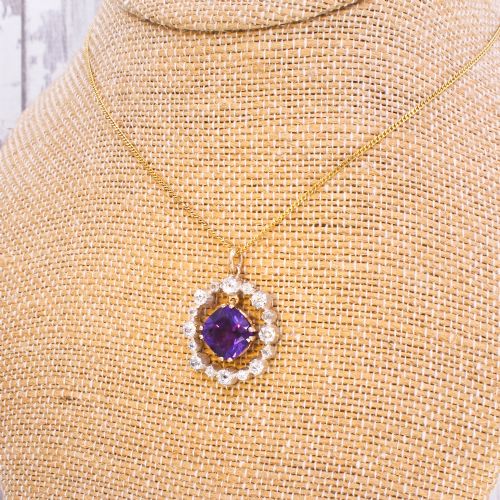
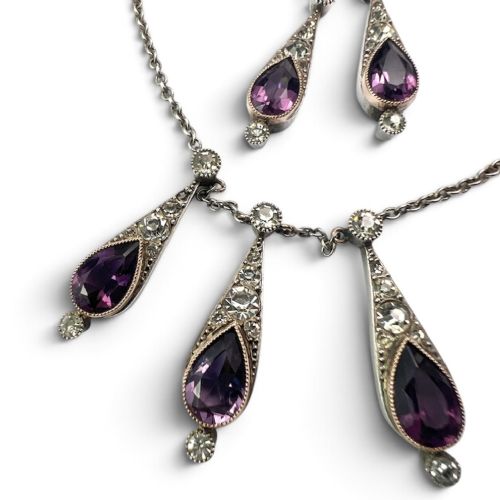
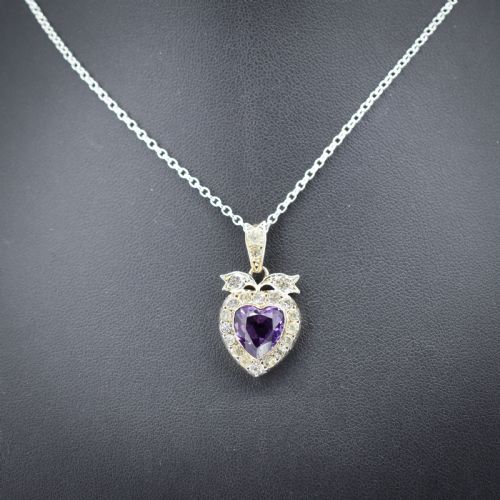
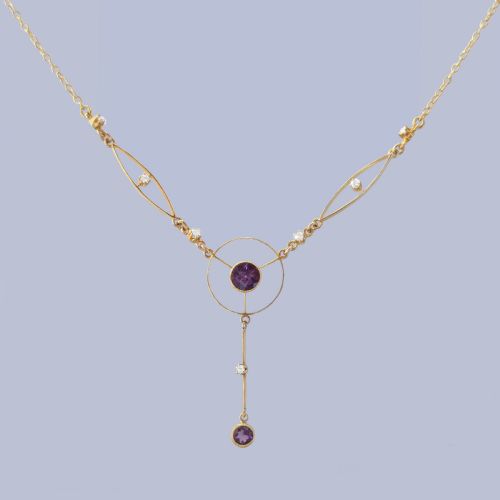
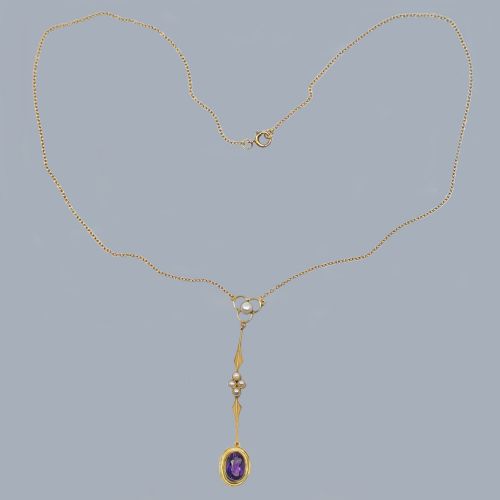
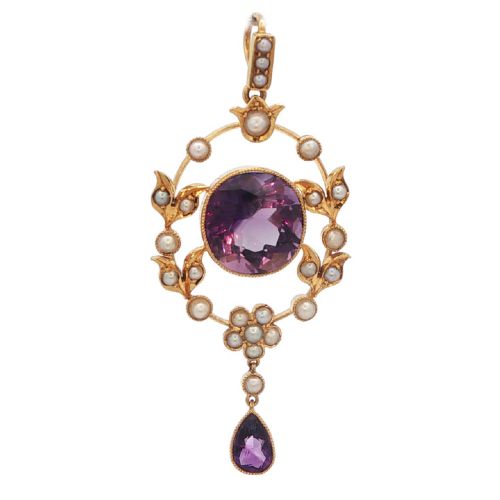
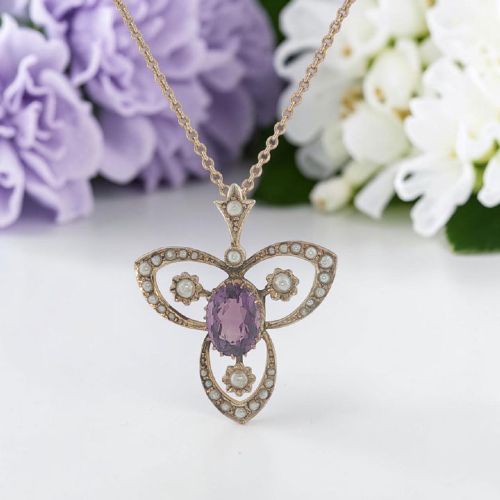
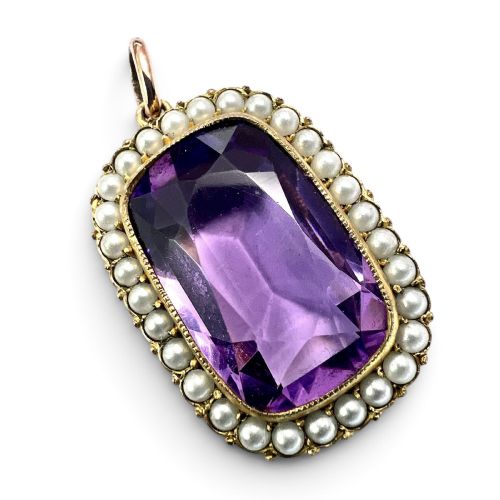
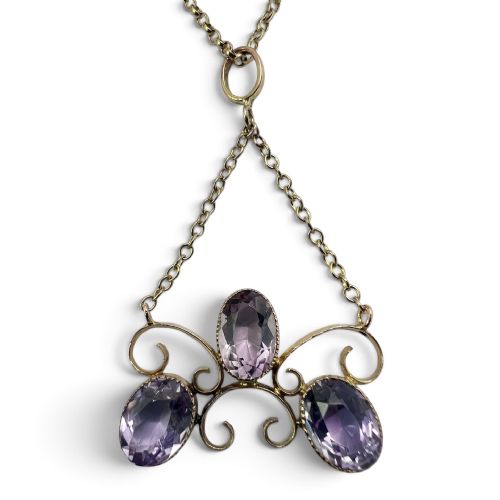
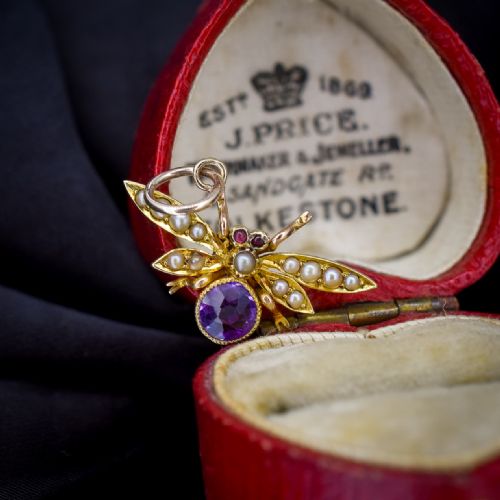
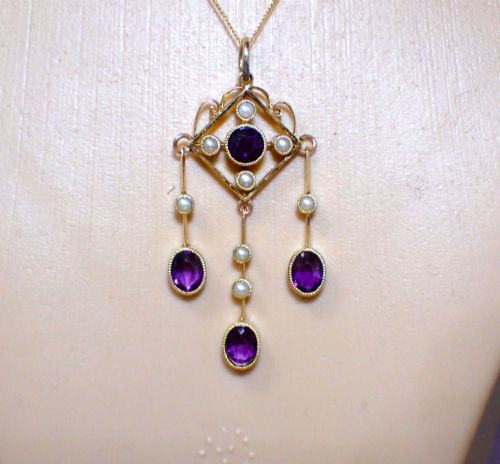
When you search for an antique purple necklace, you encounter Victorian, Edwardian, and Art Nouveau pieces dominated by rich violet amethysts set in yellow gold or silver. These items span various forms, from simple drop pendants and lavalier necklaces to elaborate cluster designs and intricate foliate settings.
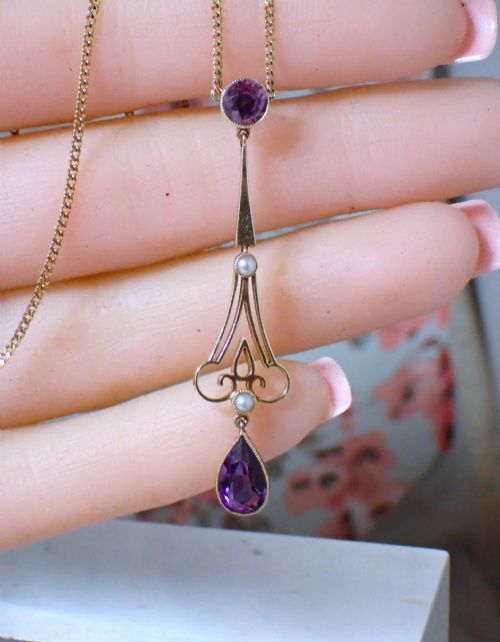
The most common examples on this page date from the late nineteenth and early twentieth centuries, particularly the Edwardian era. These typically combine faceted amethysts with seed pearls or small old-cut diamonds, suspended from delicate gold chains or integrated into flexible lavalier settings.
Earlier Georgian and Victorian iterations often feature foiled amethysts or paste stones in silver settings, while later Art Deco and 1960s pieces introduce geometric frames and glass elements like pate de verre. Each period contributes distinct mountings, ranging from heavy yellow gold locket backs to fluid Art Nouveau whiplash curves.
Materials and technique
Makers constructed these pieces using 9ct, 12ct, 14ct, 15ct, and 18ct yellow gold, alongside silver and occasionally platinum or white gold accents. Gemstones primarily include natural amethysts, sometimes supplemented by seed pearls, natural pearls, diamonds, and coloured paste.
Craftsmen employed techniques such as claw setting, bezel setting, and closed-back foiling to enhance stone brilliance, particularly in Georgian and Victorian examples. Delicate wirework, granulation, and pierced scrolling defined the Edwardian and Art Nouveau periods, creating light, articulated structures like lavalier and negligé necklaces.
Listings feature items spanning the Georgian, Victorian, Edwardian, Art Nouveau, Art Deco, and mid-century periods, utilising amethysts, gold, silver, and pearls.
Variations in quality
The standard of an antique purple necklace depends on the depth and clarity of the central amethyst and the precision of the surrounding metalwork. Superior examples feature well-matched pearls, clean gemstone facets, and substantial gold weight without hollow or compromised mounts.
Design complexity and maker attribution also elevate a piece, separating mass-produced items from finer workshop output. Original components, intact chains, and surviving period presentation boxes further distinguish top-tier examples from altered or assembled pieces.
S. Blanckensee & Son·Hamilton & Co·Gabriel Argy-Rousseau
The Antique Purple Necklace Glossary
- Amethyst
- A purple variety of quartz prized in antique jewellery for its rich violet hues. It serves as the primary gemstone across Victorian and Edwardian pendants.
- Lavalier
- A necklace featuring a pendant that drops below the main chain, often with a second suspended stone or tassel. This style gained immense popularity during the Edwardian period.
- Seed Pearl
- A very small, naturally occurring pearl, often unperforated or half-drilled, used extensively to outline or accent amethyst centerpieces in Victorian and Edwardian designs.
- Paste
- Hand-cut and polished lead glass used to imitate gemstones. In older pieces, paste was carefully foiled to reflect light and mimic the depth of natural stones.
- Foliate
- A design motif incorporating leaves, vines, and natural plant forms. This style is characteristic of Art Nouveau and late Victorian metalwork.
Antique Purple Necklace: Frequently Asked Questions
What is an antique purple necklace made of?
These pieces typically combine natural amethysts with yellow gold, silver, and seed pearls. Older or alternative versions may utilise coloured glass paste and diamonds.
The metal purity ranges from lower nine-carat gold to higher fifteen and eighteen-carat standards, depending on the period of manufacture.
How do I date an antique purple necklace?
Dating relies on stylistic clues, such as the flowing organic lines of Art Nouveau or the symmetrical geometry of Art Deco. Hallmarks stamped on the metal mount also provide precise assay office and year markers.
Setting techniques and gemstone cuts further help separate early Georgian foiled pieces from later Edwardian and Victorian creations.
How should I care for an antique amethyst necklace?
Clean these items gently using warm soapy water and a soft brush, avoiding harsh chemical dips or ultrasonic cleaners that can damage pearls or foil-backed stones. Store each piece separately in a lined box to prevent scratching the softer gold and gems.
Regularly check delicate settings, such as seed pearls and lavalier drops, to ensure the mounts remain secure.
What is a lavalier necklace?
A lavalier is a drop necklace featuring a central gemstone suspended from a delicate chain, often with an additional dangling element below. This graceful form was a defining trend of the Edwardian era.
They are designed to sit close to the collarbone, allowing the central purple stone and accent pearls to move freely.