


Silver Amethyst Necklace
A silver amethyst necklace brings together cool metal and deep purple quartz in designs spanning Georgian crosses to 1960s modernist work.
Silver Amethyst Necklace
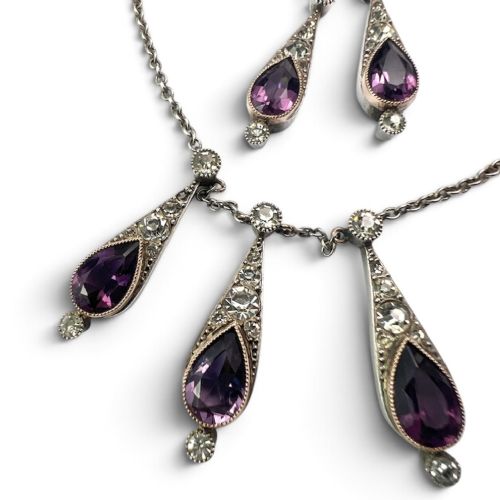
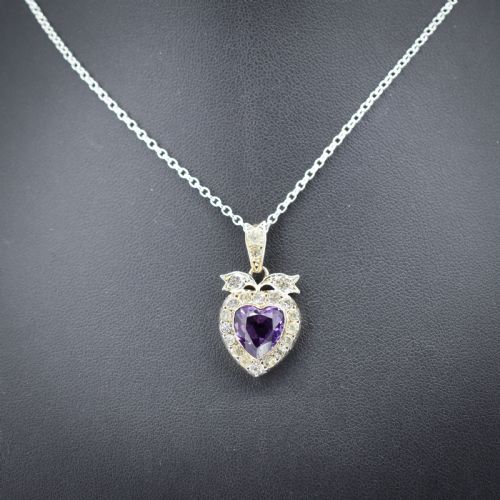
A silver amethyst necklace draws on styles from Georgian, Victorian, Edwardian, and mid-century periods, offering everything from simple pendants to elaborate sets. You encounter Arts and Crafts iterations alongside Art Nouveau and Art Deco designs on this page.
Forms range from single stone pendants and crosses to complex festoon necklaces and matching jewellery sets incorporating earrings. Makers utilise varied link configurations and drop formats to showcase the purple stones.
Earlier examples often feature foiled stones or paste glass accents, whilst mid-century pieces lean towards clean Scandinavian lines. Buyers seek these out for their distinct period character and versatile wearability.
How they were made
Silversmiths set natural amethysts alongside materials like paste glass, seed pearls, enamel, and marcasite into silver mountings. Some pieces employ gold accents or silver gilt finishes to warm the overall palette.
Techniques span hand-beading, filigree wirework, and plique-à-jour enamel, creating translucent cells of colour behind or around the stones. Cross pendants and heart motifs rely on precision bezel and prong settings to secure the gems.
Listings feature silver, gold, amethyst, pearl, paste glass, enamel, marcasite, and foil across periods from the Georgian era through the 1960s.
What varies in quality
The refinement of the silverwork and the depth of colour in the amethyst dictate the standing of a piece. Hand-wrought Arts and Crafts details or crisp Art Nouveau casting separate superior examples from standard production.
The integration of supportive elements, such as matched pearls, enamel work, or supplementary stones like moonstone and coral, influences the overall cohesion and execution of the design.
Eduard Loss·Georg Jensen·Niels Erik From·Murrle Bennett
The Silver Amethyst Necklace Glossary
- Festoon necklace
- A necklace featuring draped chains of links or beads suspended across the chest, often punctuated by drops or pendants.
- Plique-à-jour
- An enamelling technique similar to stained glass where enamel is applied without a backing, allowing light to shine through the transparent colour.
- Paste glass
- Vitreous glass cut and polished to imitate gemstones such as amethyst, common in Georgian and Art Deco jewellery.
- Marcasite
- Small faceted pyrite stones set into silver to provide a sparkling, metallic border around central gems.
- Lavalier pendant
- A necklace design featuring a drop pendant suspended from a central motif or directly from the chain, popular during the Edwardian era.
Silver Amethyst Necklace: Frequently Asked Questions
How do I date a silver amethyst necklace?
Dating relies on stylistic markers such as the flowing vegetal lines of Art Nouveau or the geometric symmetry of Art Deco. Hallmarks and clasp types also offer clues to the period of manufacture.
Craftsmanship details, such as hand-beaten silver versus stamped components, further help distinguish early twentieth-century work from later mid-century Scandinavian pieces.
Are all the amethysts natural?
Not every stone is a mined gem, as historical pieces frequently utilise paste glass to achieve the desired purple hue. Examination under magnification reveals whether a stone is natural quartz or glass.
Georgian and Art Deco makers often employed paste alongside real stones to create bold visual contrasts within the metalwork.
How should I clean a silver amethyst necklace?
Gentle cleaning with a soft microfibre cloth removes everyday oils from both the silver and the amethyst. Avoid harsh chemical dips, particularly if the piece contains pearls, enamel, or foiled stones.
Storing the necklace flat in a lined box prevents the silver from tarnishing rapidly and protects delicate drops from scratching.
What is foiled amethyst?
Foiling involves placing a thin sheet of reflective metal behind a gemstone or paste to enhance its colour and brilliance in candlelight. This technique is most frequently found in Georgian pieces.
Because moisture can damage the foil behind the stone, these necklaces require extra care to keep them away from water.
Can I wear an antique silver amethyst necklace daily?
Many sturdy Edwardian and mid-century designs suit regular wear, provided you handle clasps and delicate links with care. Pieces featuring enamel, pearls, or foiled gems require more mindful rotation.
Checking the security of the settings periodically ensures the stones remain firmly anchored during use.