


Purple Stone Pendant
These purple stone pendant examples offer rich colour and historical depth, capturing the enduring appeal of amethyst set in gold and silver.
What purple stone pendants are
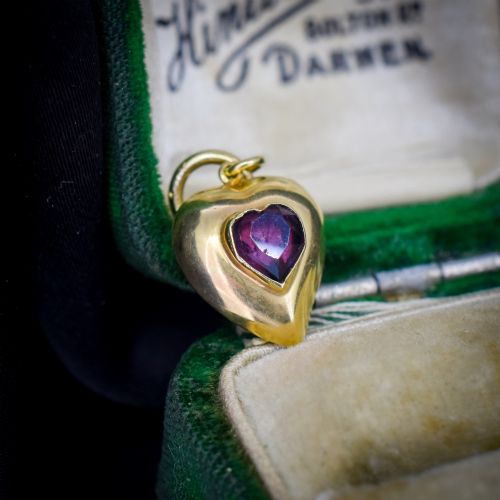
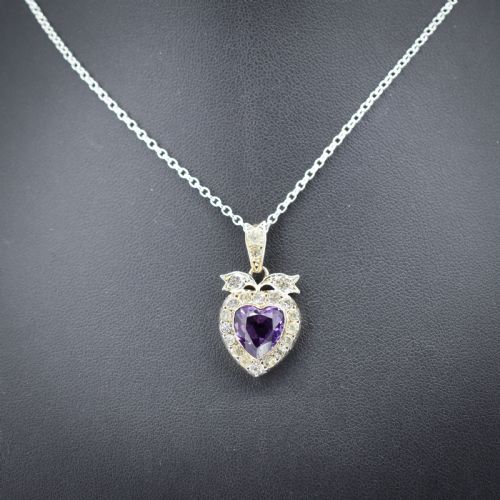
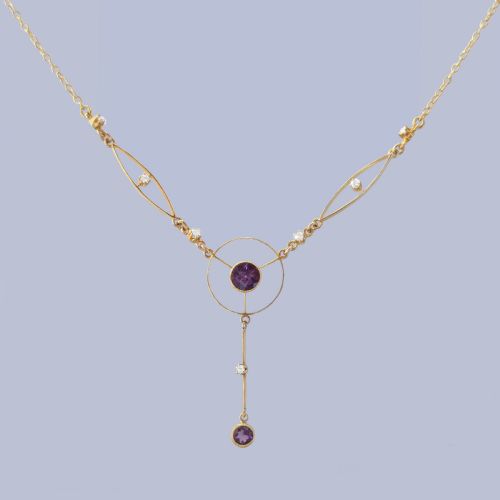
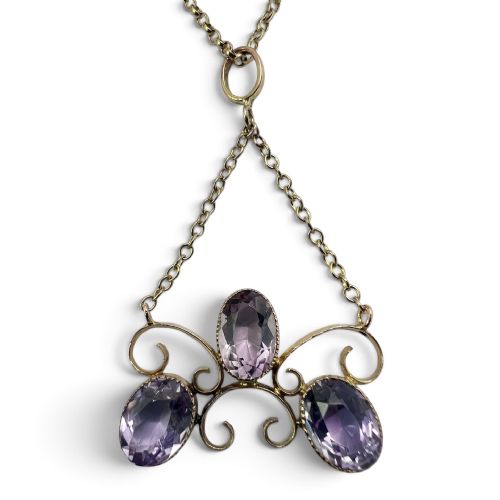
A purple stone pendant spans Victorian, Edwardian, and later twentieth-century periods, showing how jewellers set rich amethysts and paste stones into precious metals. These pieces range from simple charms to elaborate lavalier necklaces designed to sit centrally on the chest.
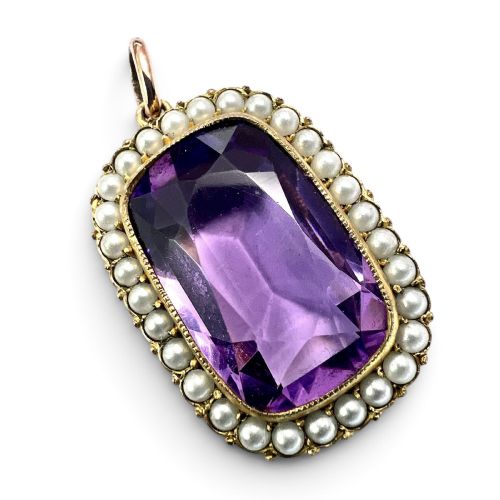
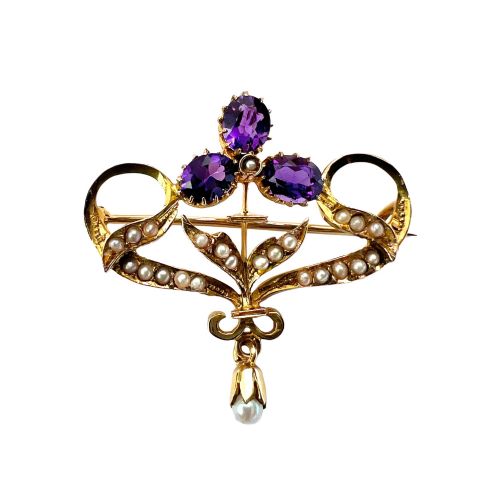
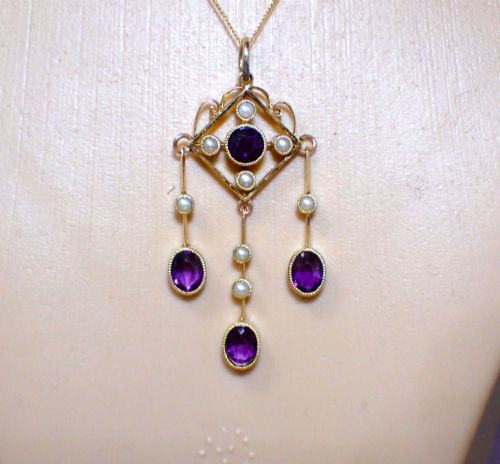
The most common examples on this page feature amethysts mounted in gold or silver, often accompanied by accent stones like diamonds or seed pearls. Styles stretch from traditional fine jewellery to the distinct handcrafted aesthetic of the arts and crafts movement.
Makers utilised various gold purities alongside silver settings, creating pendants that reflect the shifting tastes of the nineteenth and twentieth centuries. Each piece demonstrates how historical artisans turned purple stones into focal points of personal adornment.
How they were made
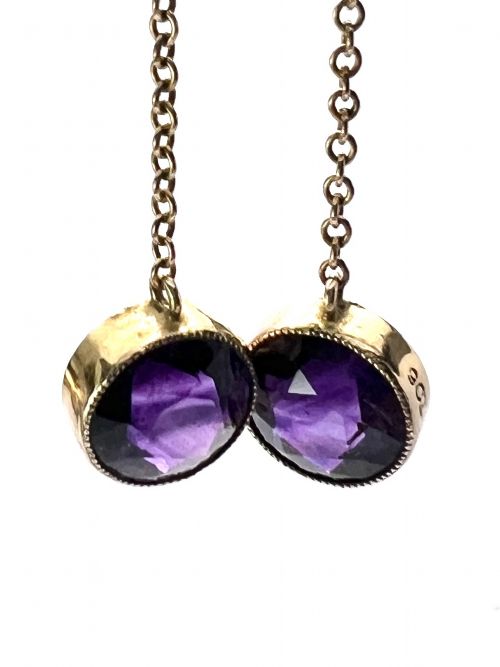
Goldsmiths shaped eighteen-carat gold, fifteen-carat gold, and silver into secure settings designed to cradle amethysts and amethyst paste. Metalwork often incorporated fine wirework or cast elements typical of traditional fine jewellery and arts and crafts workshops.
Gemstones including old cut diamonds and seed pearls were meticulously hand-set alongside central amethysts to enhance the overall design. Glass and paste substitutes were similarly utilised in period pieces to achieve vibrant purple hues at different price points.
Retail Price Guide 2026
Typical UK retail prices for purple stone pendant, calculated from the Sellingantiques database of over a million retail prices indexed since 2003. This retail price guide relies exclusively on Sellingantiques data; no external sources or auction records are used, so the figures do not describe the wider market.
Listings feature amethysts, diamonds, and seed pearls mounted in silver alongside gold of varying purities.
What varies in quality
The calibre of the central amethyst dictates much of the piece's visual impact, with deeper, more evenly saturated purple stones commanding greater visual presence. Settings executed in higher carat gold or detailed silver work demonstrate superior craftsmanship compared to simpler mounting styles.
The inclusion of accompanying stones, such as old cut diamonds or delicate seed pearls, elevates the complexity of the pendant. Masterful metal manipulation in arts and crafts or Edwardian pieces further separates standard production from exceptional work.
The Purple Stone Pendant Glossary
- Amethyst
- A purple variety of quartz prized in antique jewellery for its vivid colour and durability. It serves as the primary gemstone across these Victorian and Edwardian examples.
- Lavalier necklace
- A drop necklace featuring a central suspended ornament, popular during the Edwardian era. These pieces often incorporate swinging stones that catch the light with movement.
- Seed pearl
- A very small, naturally occurring pearl often used as delicate accent decoration in nineteenth-century jewellery. They provide a soft white contrast to deep purple stones.
- Old cut diamond
- A hand-faceted diamond shape typical of antique jewellery before the advent of modern brilliant cutting. These stones display smaller tables and deeper pavilions.
Frequently Asked Questions
How do I date a purple stone pendant?
Dating relies on examining the metal purity marks, the cut of any accompanying diamonds, and the overall stylistic traits of the setting. Victorian and Edwardian pieces exhibit distinct manufacturing techniques that separate them from mid-century examples.
Familiarising yourself with period hallmarks and characteristic design movements helps clarify the exact era of manufacture.
What metals are used in these pendants?
Pendants from these periods utilise a range of precious metals including eighteen-carat gold, fifteen-carat gold, and silver. Each metal reflects the specific standards and aesthetic preferences of its decade of creation.
Subtle differences in metal colour and weight often correspond to the precise historical period of the jewellery.
Are amethyst pastes considered authentic antiques?
Amethyst paste pieces are period items created using historical glass-working methods rather than natural quartz. They represent genuine historical craftsmanship from eras when high-quality paste was valued alongside gemstones.
These pieces offer an authentic glimpse into past decorative arts without relying on mined stones.
How should I care for an antique pendant?
Antique pendants require gentle handling due to their age and delicate settings like seed pearls or fine gold wirework. Cleaning should be done with a soft cloth, avoiding harsh chemical dips that might damage softer stones or historical metals.
Storing each piece separately prevents scratching between the purple stone and surrounding elements.