
Antique Purple Pendant
An antique purple pendant brings the rich violet tones of amethyst together with gold, silver, and pearls in pieces designed to be worn close to the heart.
Antique Purple Pendant
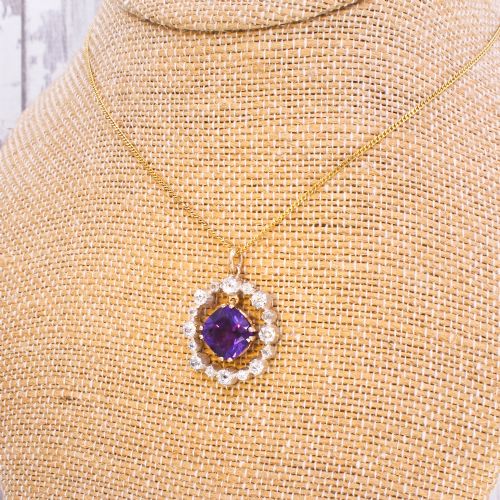
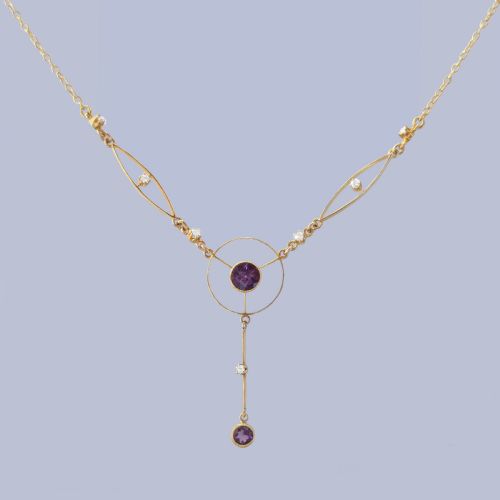
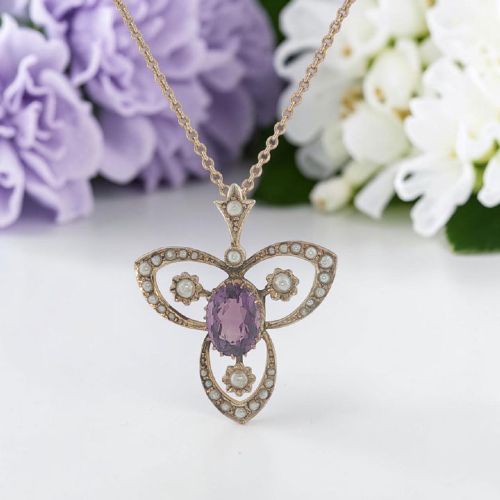
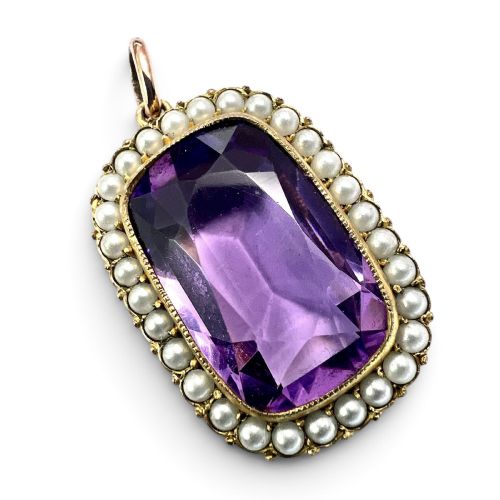
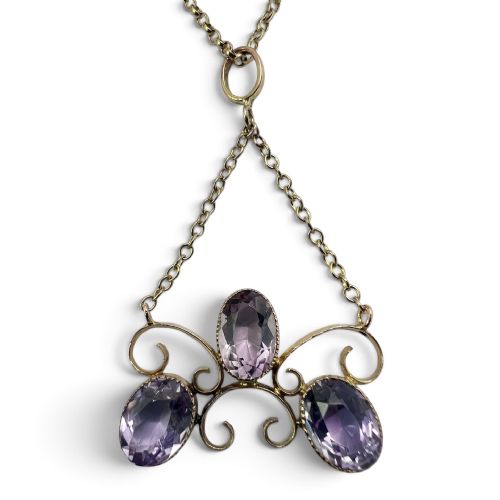
When you search for an antique purple pendant, you encounter jewels defined predominantly by amethyst, paired with seed pearls, diamonds, and gold or silver settings. These pieces span from the late nineteenth century through the Edwardian era and the Art Deco period, capturing the distinct aesthetic shifts of each decade.
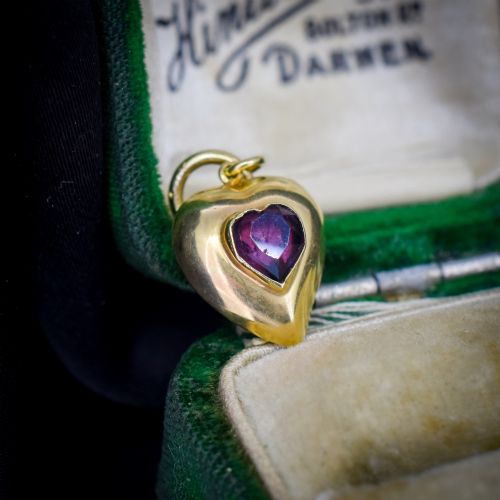
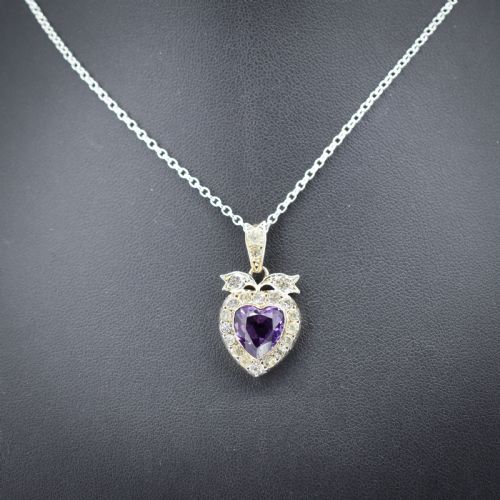
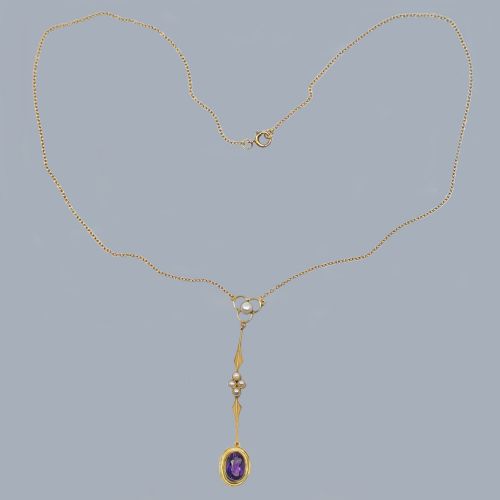
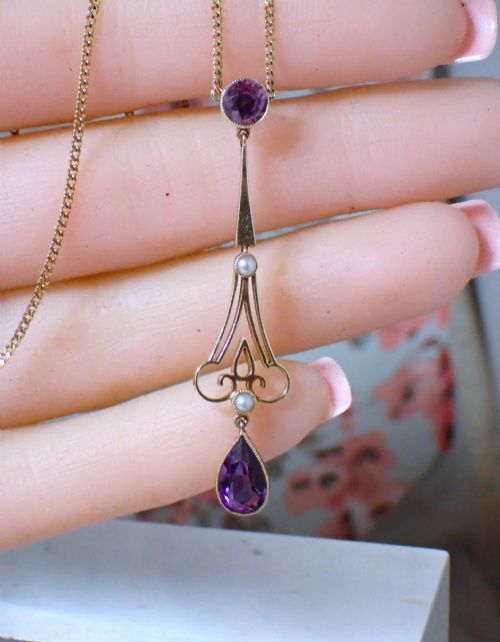
The most common examples on this page are Edwardian lavalier necklaces and cluster pendants, alongside Victorian heart motifs and Art Nouveau designs featuring flowing, organic lines. They range from delicate nine-carat and fifteen-carat yellow gold mounts to grander stones set in higher karat gold or silver.
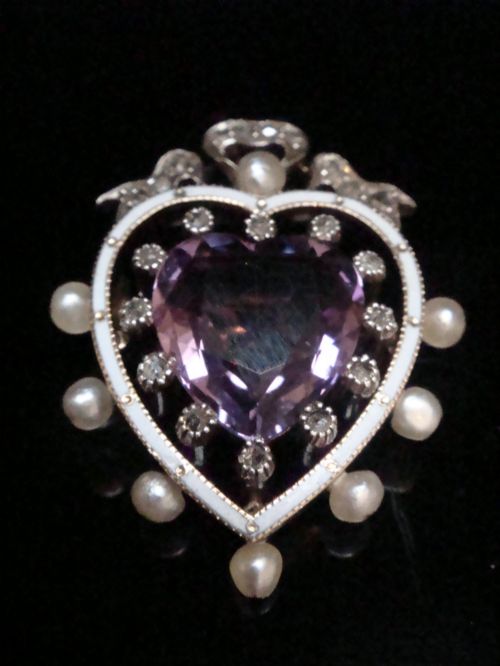
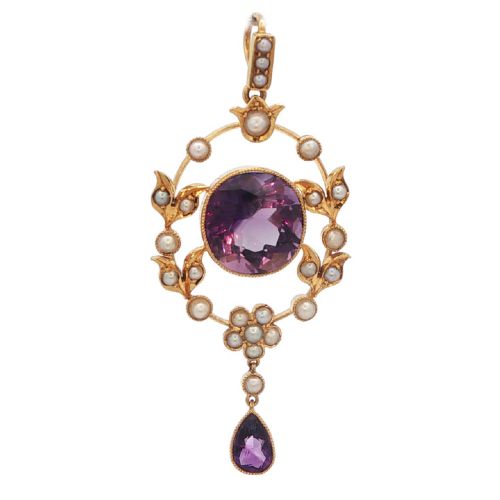
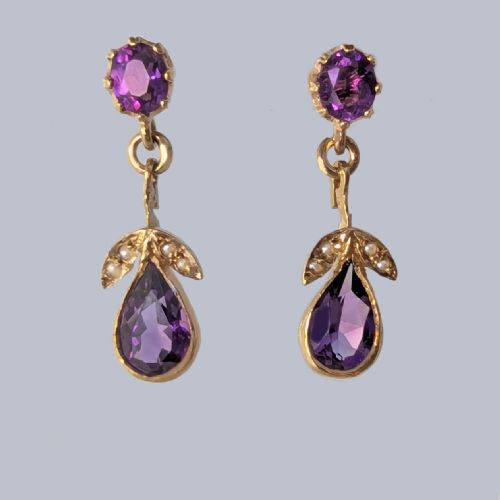
Beyond standard neckwear, the selection includes related drops, charms, and convertible brooch-pendants that demonstrate the versatility of Victorian and Edwardian jewellers. Each item reflects a tradition of combining deep purple quartz with luminous pearls to create high contrast and balanced colour.
How they were made
The construction relies heavily on cut amethysts - ranging from large emerald and oval cuts to delicate paste stones - securely mounted in claw or bezel settings of nine, fifteen, or eighteen-carat gold, and occasionally silver. Seed pearls are frequently drilled and wired or glued in tight halo clusters around the central purple stone.
Edwardian and Art Nouveau pieces utilise intricate openwork wire scrollings, guilloche enamel, and millegrain edges to soften the metal and frame the violet gem. Soldering and hand-piercing techniques allow goldsmiths to create lightweight lavaliers and drop necklaces that move fluidly when worn.
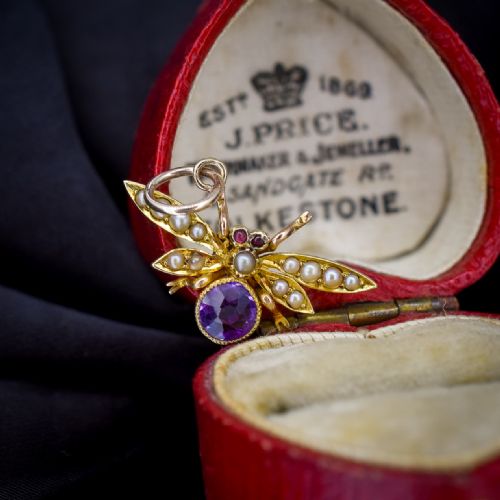
Victorian makers occasionally turned purple amethysts into winged insects, letting beetles and flies dangle from gold chains.
What varies in quality
Quality in these jewels rests on the saturation and clarity of the central amethyst, where deeper, evenly distributed purple tones command more visual weight than pale or heavily included quartz. The precision of the surrounding pearl work and the structural integrity of the gold or silver mount also separate standard production from finer workshop output.
The sophistication of the metalwork, such as hand-carved details in Art Nouveau whiplash curves or crisp millegrain bead work around old-cut diamonds, indicates the tier of the maker. Original clasps, matched seed pearls, and documented maker marks elevate the piece above unmarked, simpler commercial items from the same period.
S. Blanckensee & Son·Hamilton & Co·Argy Rousseau
The Antique Purple Pendant Glossary
- Lavalier
- A necklace featuring a central suspended drop or pendant, popular during the Edwardian period. These pieces often hang from a fine gold chain with secondary stones set along the length.
- Seed pearl
- A very small, naturally occurring or early cultured pearl, often un-drilled or half-drilled for mounting. They appear closely clustered around amethysts in Victorian and Edwardian designs.
- Guilloche enamel
- A decorative technique where a precise pattern is mechanically engraved beneath a translucent layer of coloured enamel. This method adds depth and texture to the surface of the metal.
- Paste
- A heavy, highly transparent lead glass that is hand-cut and polished to imitate gemstones. Antique paste pieces possess their own historical charm and distinct facet reflections.
- Millegrain
- A jewelling technique involving a row of small, raised metal beads along the edge of a setting. It softens the transition between metal and stone with a delicate texture.
Antique Purple Pendant: Frequently Asked Questions
How do I care for an antique amethyst pendant?
Amethyst is a durable quartz, but it can fade or scratch if exposed to harsh chemicals, ultrasonic cleaners, or prolonged direct sunlight. Clean the stone gently using warm soapy water and a soft brush, ensuring any seed pearls are not soaked excessively.
Store the pendant in a fabric-lined box away from harder gems to prevent scratching the gold settings or chipping the facets of the purple stone.
Were these pendants always worn on necklaces?
Many Edwardian and Victorian pieces were designed with versatility in mind, functioning as both brooches and pendants. A hidden hinge and pin mechanism on the reverse allowed the owner to pin the jewel to a bodice or hang it from a chain.
When evaluating a piece, check the back for a removable bale or a secure pin to see if it was built to serve a dual purpose.
What is the difference between Victorian and Edwardian styles?
Victorian jewels tend to be bolder, heavier, and frequently incorporate symbolic motifs like hearts, closed backs, and deep rich gold tones. They often focus on substantial amethysts surrounded by prominent pearl halos.
Edwardian pieces shift toward lighter platinum and yellow gold frameworks, utilising openwork lace patterns, lavalier drops, and Art Nouveau influences that emphasise flowing botanical lines.
How can I tell if the amethyst is natural?
Natural amethysts often show subtle colour zoning and internal inclusions under magnification, unlike synthetic stones or glass paste. Examining the cut and the surrounding metalwork can also provide clues about the age and authenticity of the materials.
Consulting a specialist or checking for period hallmark stamps on the gold mount helps confirm whether the piece originates from the nineteenth or early twentieth century.