
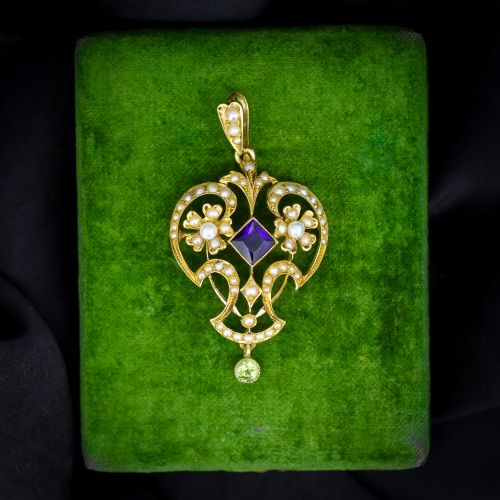
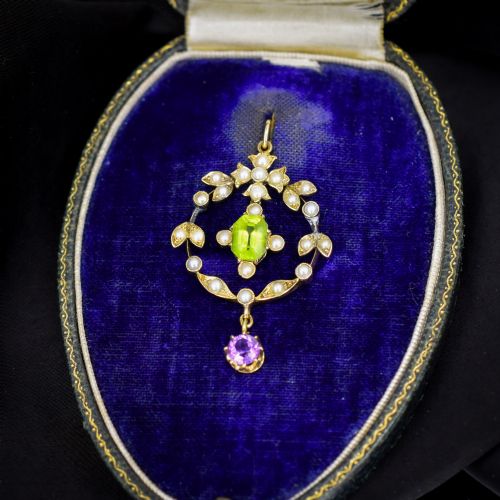
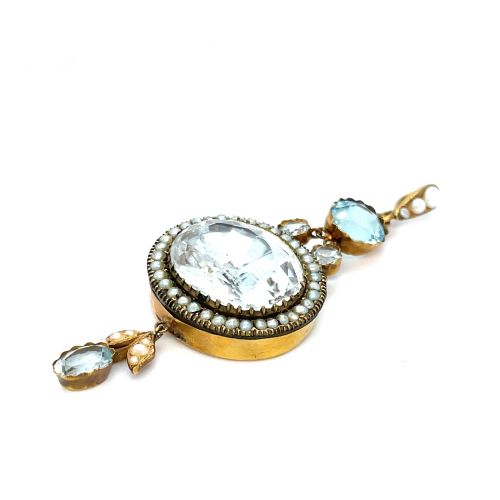
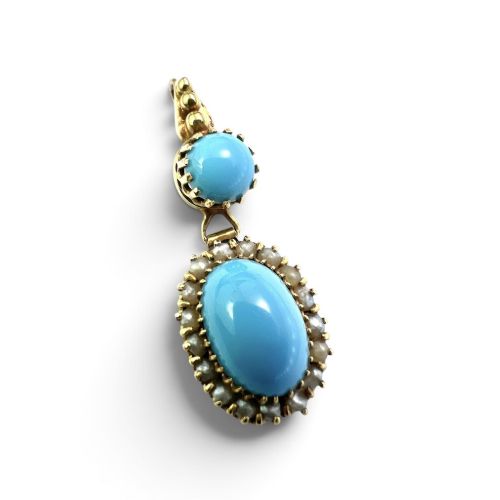
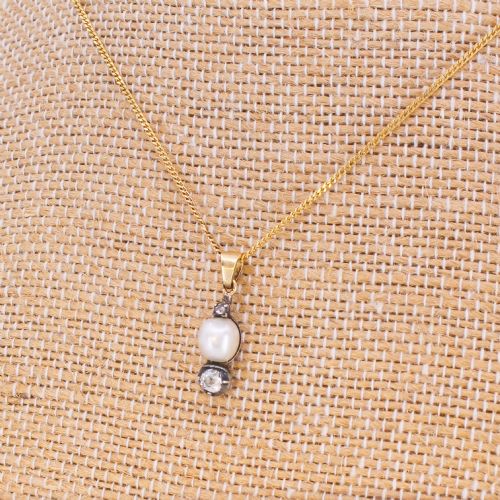
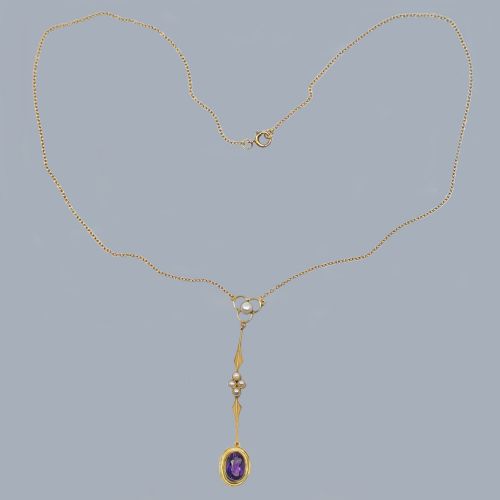
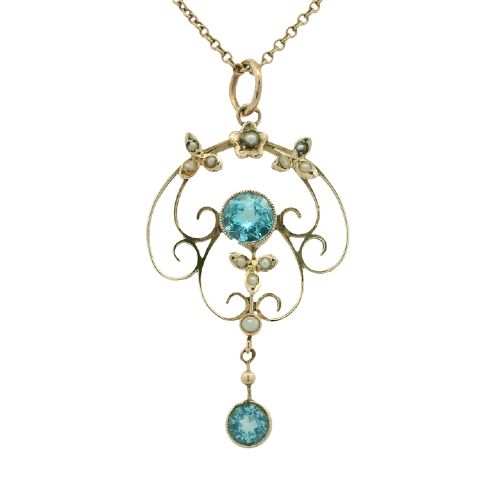
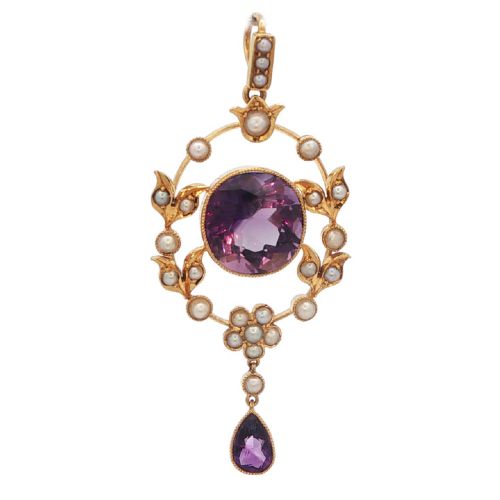
Gold Pearl Drop Necklace
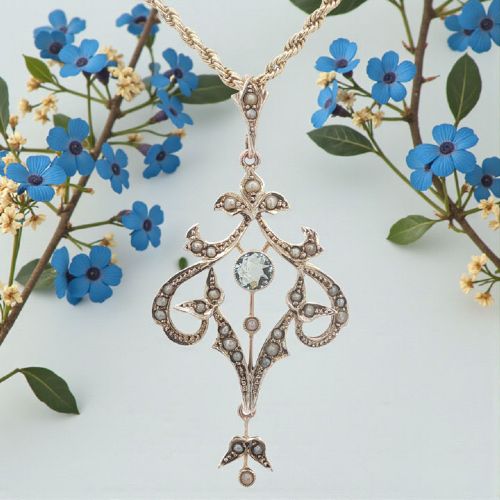
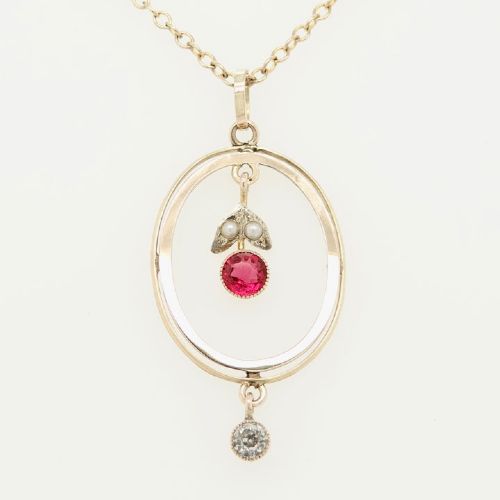
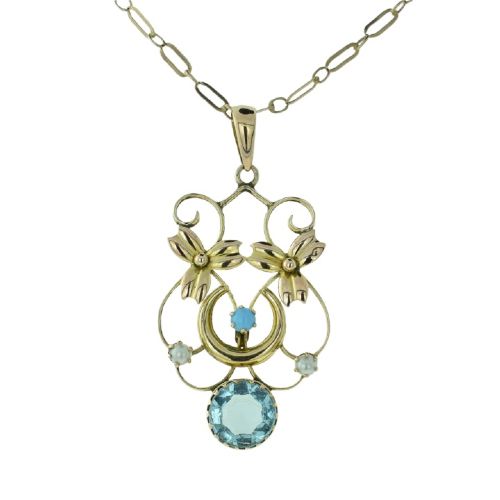
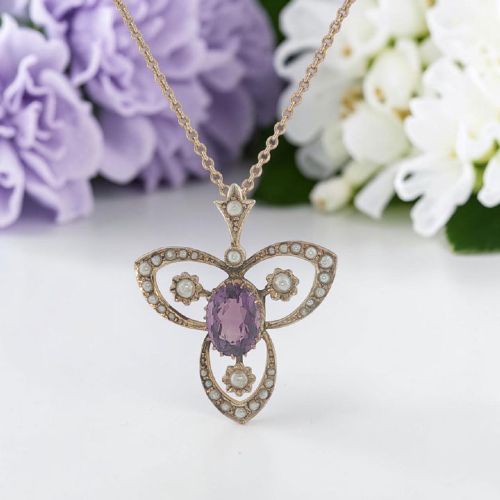
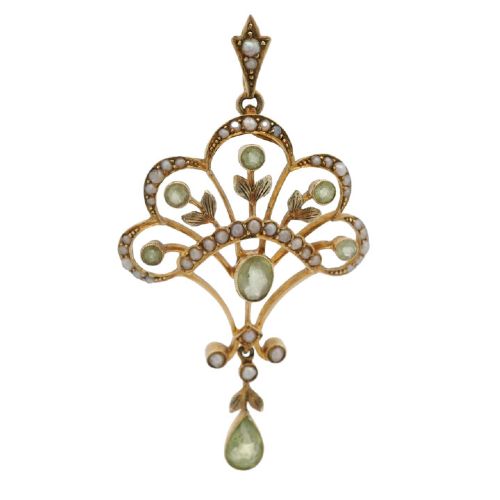
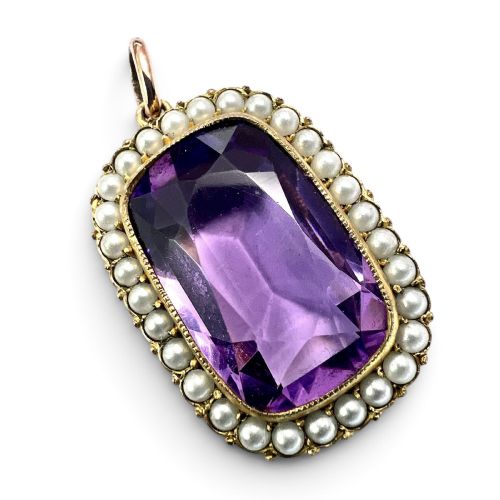
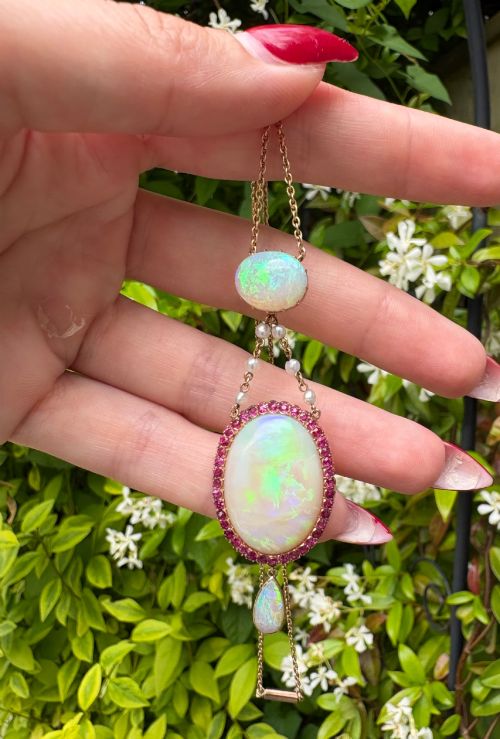
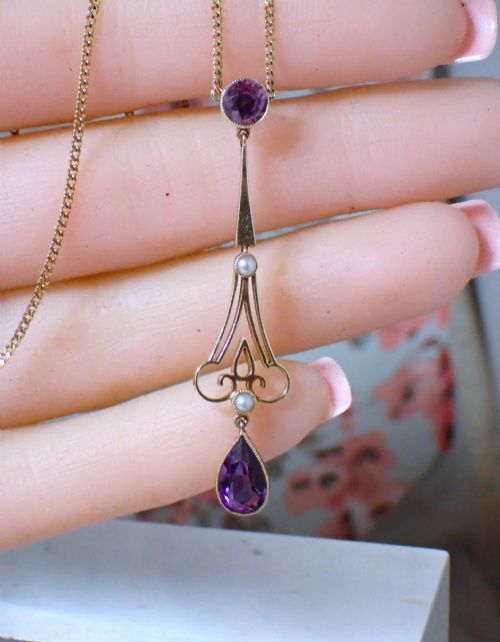
A gold pearl drop necklace brings together warm precious metals and lustrous gems to create a striking piece of antique jewellery that sits elegantly at the collar.
Understanding the Gold Pearl Drop Necklace
A gold pearl drop necklace combines fine metalwork with pearls and coloured stones, suspended to create a distinct pendant effect. These pieces appear across several distinct historical eras, including the Victorian, Edwardian, and Art Deco periods, showcasing the evolving tastes of makers over decades.
The most common examples encountered on this page date from the late nineteenth century through to the nineteen-twenties. Buyers frequently find designs incorporating seed pearls alongside aquamarines, opals, amethysts, and garnets, mounted in nine-carat, fifteen-carat, or eighteen-carat gold.
Makers of these necklaces utilised various configurations, ranging from delicate lavalieres to heart-shaped drops and bow motifs. Each piece reflects the characteristic design language of its era, whether the flowing curves of Art Nouveau or the symmetrical geometry of later decades.
Materials and Construction
Goldsmiths worked with varying purities of gold, including nine-carat, fourteen-carat, fifteen-carat, and eighteen-carat varieties, sometimes employing distinct yellow or rose shades. This metal forms the delicate chains, bezels, and intricate wirework that secures the central stones.
Pearls, seed pearls, and natural saltwater pearls are paired with precious gems such as diamonds, sapphires, aquamarines, opals, amethysts, and garnets. Settings rely on fine claw work, closed backs in earlier pieces, and meticulous bezel mounting to hold each element securely.
Retail Price Guide 2026
Typical UK retail prices for gold pearl drop necklace, calculated from the Sellingantiques database of over a million retail prices indexed since 2003. This retail price guide relies exclusively on Sellingantiques data; no external sources or auction records are used, so the figures do not describe the wider market.
Victorian romantic sentiment lives on in these pieces, where tiny seed pearls were laboriously sewn onto silk threads before modern adhesives existed.
Assessing Quality and Design
The standard of a piece rests heavily on the fineness of the gold alloy and the matching of the pearls. Higher-grade examples feature uniform, lustrous pearls and clean gemstone facets without inclusions visible to the naked eye.
Artisanal execution distinguishes superior work, visible in the delicacy of the pierced metalwork and the originality of the design. Pieces that retain their original chain and secure clasps command greater interest from collectors.
The Gold Pearl Drop Necklace Glossary
- Seed Pearl
- Very small, naturally formed pearls often used in clusters or strung closely together in historic jewellery. They provide delicate texture and a soft white lustre that contrasts with yellow gold.
- Lavaliere
- A pendant necklace featuring a central dangling drop, popular during the Edwardian and Art Nouveau periods. This form allows the primary stone or pearl to swing freely below the main neckline.
- Bezel Setting
- A method of holding a gemstone in place using a narrow metal rim that encircles the stone. This technique offers a smooth outline and secure protection for softer gems.
- Old Cut Diamond
- A diamond cut by hand before modern machinery, typically featuring a small table and high crown. These stones exhibit a softer, candlelit sparkle distinct from modern brilliant cuts.
Frequently Asked Questions
How do I wear an antique gold pearl drop necklace?
These necklaces suit both formal wear and everyday outfits, sitting neatly at the collarbone or slightly lower depending on the chain length.
Pair them with simple necklines to let the drop pendant and central stones remain the focal point of your attire.
Are these pearls natural?
Many pieces feature natural saltwater pearls or fine seed pearls characteristic of the Victorian and Edwardian eras. Certification accompanies specific high-value examples to verify their origin.
Examining the surface under magnification reveals the authentic organic texture typical of antique pearls.
How do I date my necklace?
Dating relies on stylistic clues such as the flowing asymmetrical lines of Art Nouveau or the structured motifs of the Victorian period. Gold purity marks and maker stamps also provide reliable chronological markers.
Comparing the setting techniques and gemstone combinations against known historical periods helps narrow down the exact decade of manufacture.
How should I clean my necklace?
Pearls require gentle care and should be wiped with a soft, damp cloth after wearing to remove oils and cosmetics. Avoid harsh chemical cleaners, ultrasonic baths, and prolonged immersion in water.
Store the necklace flat in a lined box to prevent the chain from tangling and to protect the softer stones from scratching.