


1910s Gold Pendant
A 1910s gold pendant brings the distinct lightness of the Edwardian era and Art Nouveau styling straight to the neckline.
1910s Gold Pendant
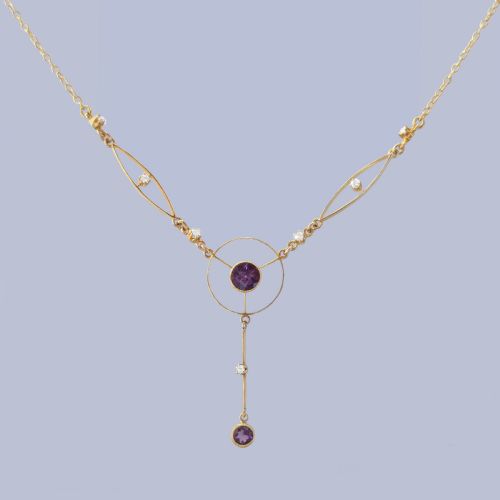
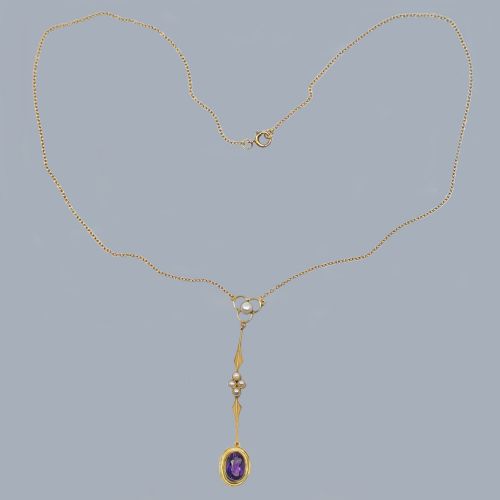
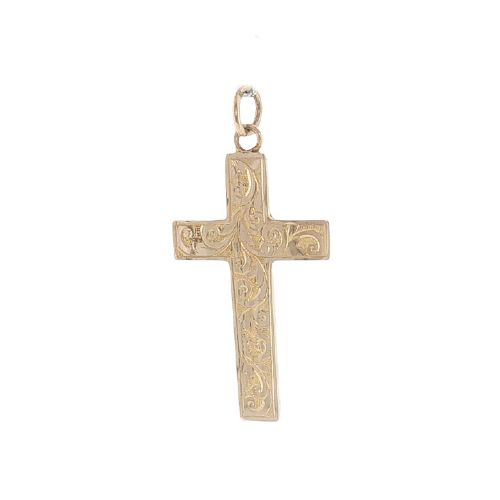
A 1910s gold pendant represents the delicate jewellery produced during the Edwardian period and the early years of the twentieth century. These pieces take the form of drop pendants, lavalier necklaces, crosses, and convertible pendant brooches designed to be worn close to the skin.
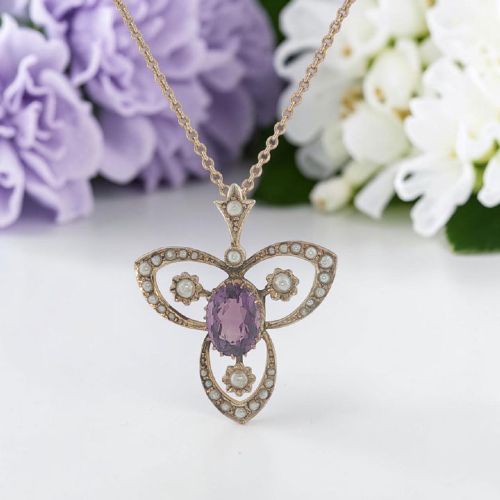
The version most commonly met on this page combines a 9ct or 15ct yellow gold setting with seed pearls and amethysts, often suspended from a fine chain. Alongside these, examples executed in platinum or 18ct gold carry larger diamonds, aquamarines, or black opals.
Makers of this era favoured graceful vertical lines, openwork frames, and floral motifs that reflect the prevailing aesthetic of the 1910s. Such pieces bridge the gap between classical revival work and the flowing curves of Art Nouveau.
How they were made
The construction of these pendants relies on traditional goldsmithing techniques applied to 9ct, 12ct, 14ct, 15ct, and 18ct gold, alongside emerging uses of platinum and white gold. Jewellers pierced and engraved the metal sheets by hand to create intricate, lightweight frames that could hold central stones without feeling heavy.
Gems such as diamonds, amethysts, aquamarines, sapphires, garnets, and black opals were hand-cut and secured using fine claw or bezel settings. Seed pearls were meticulously drilled and threaded or pegged onto tiny pins, a hallmark of fine Edwardian assembly.
Many Edwardian ladies cleverly converted their favourite necklaces into hair ornaments for evening dances using small hidden loops.
What varies in quality
The calibre of a 1910s gold pendant rests on the harmony of its design and the quality of its components. Superior pieces display crisp hand-engraving, well-matched seed pearls, and clean gemstone faceting that maximises the play of light within the openwork frame.
The 1910s Gold Pendant Glossary
- Lavalier necklace
- A drop necklace featuring a central suspended ornament, highly fashionable during the Edwardian era. This form often incorporates swinging stones that catch the light with every movement.
- Seed pearl
- A very small, naturally occurring or early cultured pearl used extensively in clusters and borders on 1910s jewellery. Their uniform tiny scale requires precise hand-drilling.
- Old cut diamond
- A diamond cut with a small table, high crown, and open culet, typical of the period before modern brilliant cutting standards were established. These stones possess a softer, warmer scintillation under candlelight.
- Pendant brooch
- A versatile jewel fitted with both a loop for a chain and a pin mechanism on the reverse. This dual function allowed the owner to wear the piece pinned to clothing or suspended from the neck.
1910s Gold Pendant: Frequently Asked Questions
How do I wear a 1910s gold pendant?
These pendants look best suspended from a fine, period-appropriate gold chain that allows the piece to rest centrally on the collarbone. Because many were originally made as versatile pendant brooches, they can also be pinned directly to a lapel or silk scarf.
When styling everyday wear, pairing a lightweight Edwardian lavalier with simple clothing lets the delicate goldwork and seed pearls stand out without competing textures.
How can I tell if a pendant is from the 1910s?
Examine the materials and mounting techniques for hallmarks of the Edwardian style, such as platinum-topped gold, millegrain edging, and openwork garland motifs. Amethysts, seed pearls, and old cut diamonds set in 9ct or 15ct yellow gold point firmly toward this decade.
Official assay office marks and date letters stamped on the reverse provide definitive confirmation of the exact year and city of manufacture, such as Birmingham hallmarks from 1911.
What is the difference between Edwardian and Art Nouveau pendants?
Edwardian pendants lean towards symmetrical garlands, ribbons, bows, and neoclassical elegance executed in platinum and yellow gold. They frequently employ millegrain decoration alongside diamonds and seed pearls.
Art Nouveau pendants embrace asymmetrical, whiplash curves inspired by organic natural forms, often featuring enamelling and cabochon amethysts or opals. Both styles overlap closely around the 1910s.