

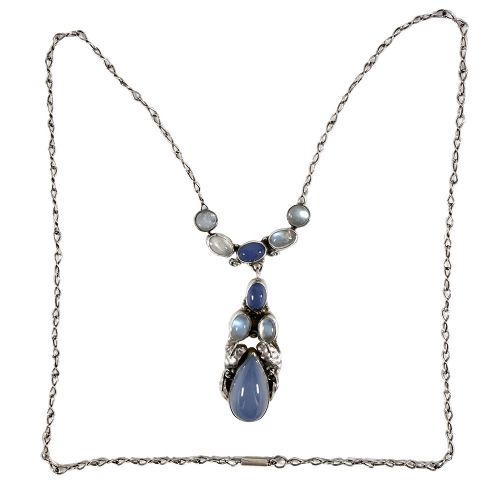


Arts Crafts Silver Pendant
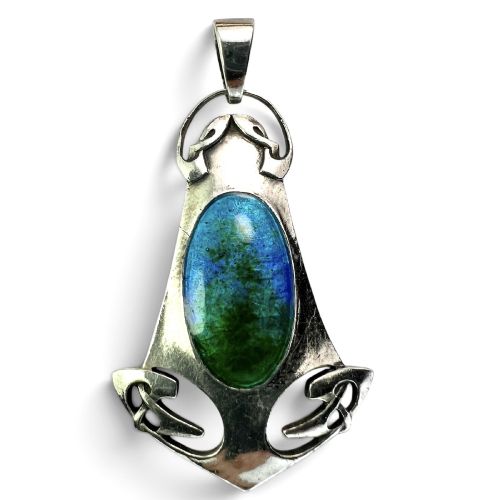
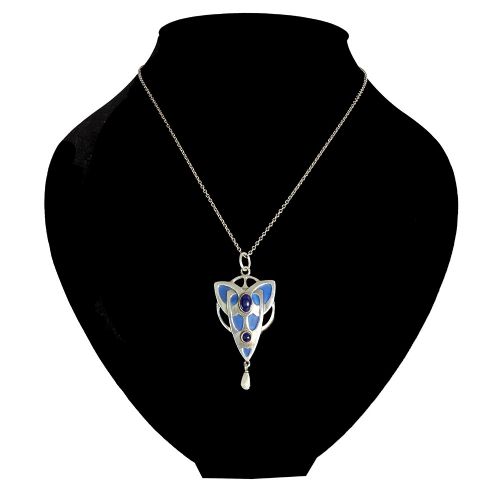
An arts crafts silver pendant brings together the hand-hammered metals and vibrant natural stones characteristic of early twentieth-century design.
Arts Crafts Silver Pendant
When you search for an arts crafts silver pendant, you encounter jewels created during the movement that spanned the late nineteenth century into the nineteen-thirties. The pieces on this page take the form of necklaces, pendants, and occasionally related items such as drops and crosses.
Most examples date from the nineteen hundreds through the nineteen twenties, overlapping with the Art Nouveau and Edwardian periods. Makers combined silver with materials like enamel, moonstone, amethyst, and pearl to produce distinct wearable items.
Materials and construction methods
Craftsmen utilised sterling silver and silver gilt as the primary framework for these jewels, often shaping the metal by hand. Surface textures frequently show gentle hammer marks rather than machine-polished perfection.
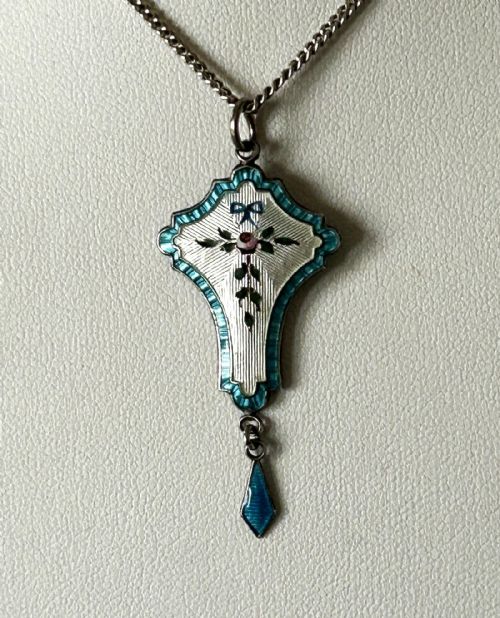
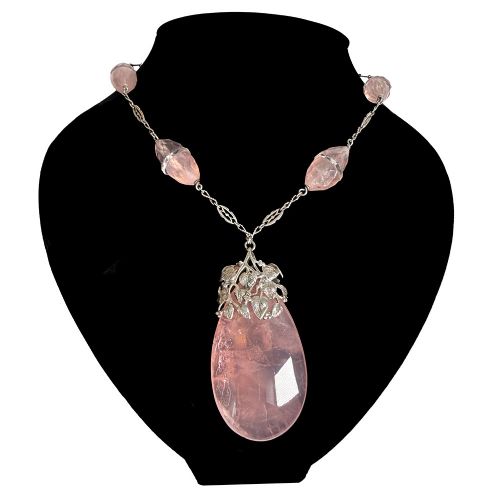
Vitreous enamel and plique a jour enamel introduce colour, complemented by cabochon-cut gemstones including opal, turquoise, rock crystal, and chalcedony. Pearls, blister pearls, and mother of pearl are frequently suspended as drops beneath the main setting.
Arts Crafts Silver Pendant Retail Price Guide 2026
Typical asking prices for arts crafts silver pendant among the pieces listed under this phrase on Sellingantiques today, from the lower quarter to the upper quarter. They describe what is for sale here now, not the wider market.
One resourceful maker turned a humble silver vesta case into an arts and crafts pendant.
Distinguishing quality in period work
Quality rests in the precision of the metalwork and the integration of stones within the design. Skilled workshops managed complex enamel techniques like plique a jour with great clarity and controlled firing.
Murrle Bennett·Archibald Knox·Liberty and Co·Amy Sandheim·The Gaskins·Mary Thew·Wilhelm Fuhner·WH Haseler·Dorrie Nossiter·George Hunt·Marius Hammer·Omar Ramsden·Alwyn Carr·John Paul Cooper·Levinger and Bissinger·Otto Prutscher·Charles Horner·Ludwig Knupfer·Theodor Fahrner
The Arts Crafts Silver Pendant Glossary
- Plique a jour
- An enamelling technique where the enamel is applied within a cellular framework without a backing, allowing light to shine through like stained glass.
- Cabochon
- A gemstone shaped and polished with a smooth convex surface rather than faceted edges.
- Blister pearl
- A pearl that has formed attached to the inside shell of an oyster, resulting in a domed shape with a hollow or flat back.
- Silver gilt
- Silver that has been coated with a thin layer of gold on its surface.
- Parure
- A set of matching jewellery designed to be worn together, such as earrings, a ring, and a necklace.
Arts Crafts Silver Pendant: Frequently Asked Questions
What is an arts crafts silver pendant?
These items are handcrafted wearable ornaments made predominantly in silver during the early twentieth century. They reflect design philosophies that valued artisan skill over industrial manufacture.
Such pieces typically incorporate natural gemstones and enamels, arranged in motifs drawn from nature or geometric abstraction.
How were these pendants worn historically?
Wearers suspended them from long silver chains, ribbons, or collars made of matching links. They served as prominent focal points for fashionable outfits of the Edwardian era and subsequent decades.
Some examples also functioned as brooches or formed parts of larger parures that included matching rings and earrings.
How should I care for an antique silver pendant?
Keep the piece away from harsh chemical dips that can damage delicate enamel work or soften organic stones like pearls and opals. Gentle cleaning with a soft cloth helps preserve the natural patina on the silver.
Store the item separately in a lined box to prevent scratching against other jewellery.
How can I tell the period of a pendant?
Examining the closure mechanisms, chain types, and hallmarks provides reliable clues regarding the date of manufacture. Stylistic indicators, such as whiplash lines for Art Nouveau or geometric restraint for later periods, also help determine the era.
Attributions to specific workshops often rely on known maker marks stamped onto the reverse of the silver frame.