


Art Nouveau Silver Pendant
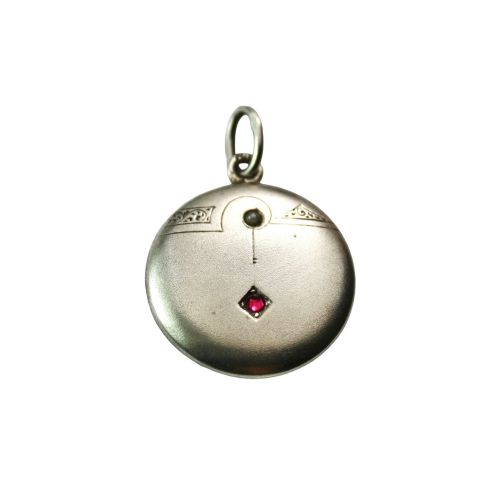
An art nouveau silver pendant brings flowing organic lines and luminous gems together into wearable miniature sculpture from the turn of the twentieth century.
Defining an art nouveau silver pendant
When you search for an art nouveau silver pendant, you enter a world of fluid botanical motifs, whiplash curves, and delicate metalwork produced across the late nineteenth and early twentieth centuries. These ornaments translate the organic philosophies of the design movement into wearable pieces, combining chased metalwork with natural stones.
The examples you will encounter most frequently on this page span the years from eighteen ninety to nineteen thirty, taking the form of pendants, necklaces, and medallions. They bridge the aesthetic boundary between the flowing continental Art Nouveau style and the disciplined handcraft ethos of the British Arts and Crafts movement.
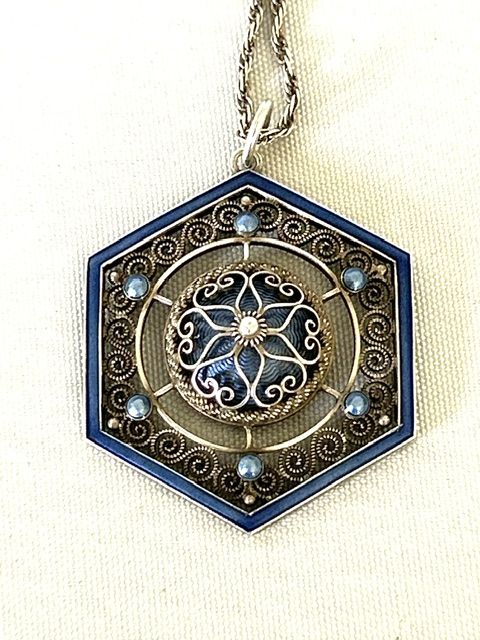
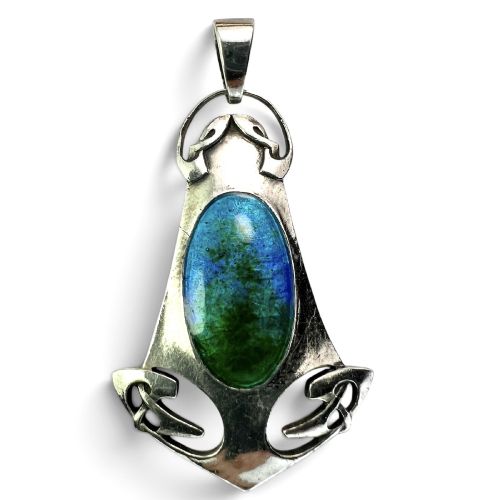
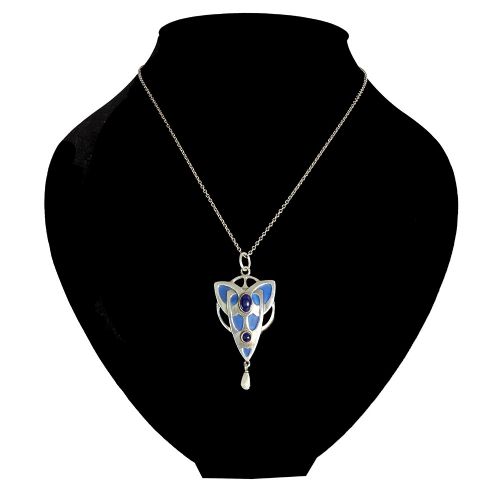
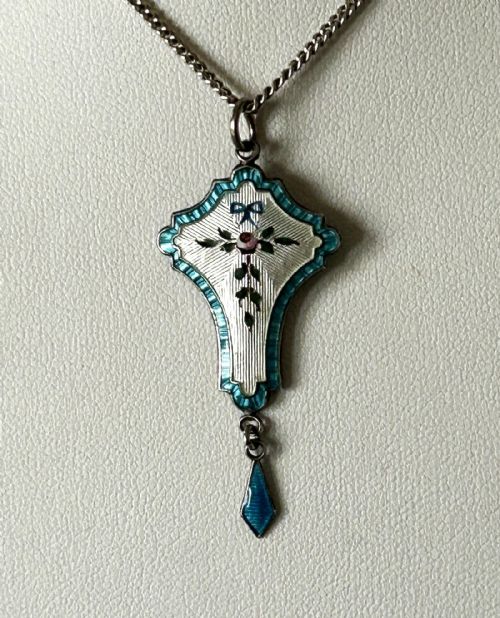
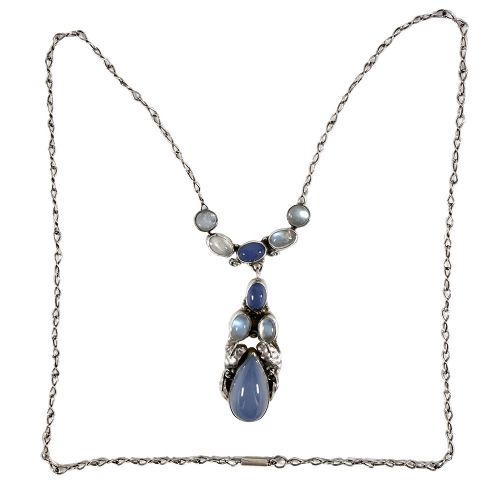
Many of these jewels incorporate bezel-set gems or vitreous enamel drops suspended on original chains. Makers utilised silver as a primary medium to mount moonstones, chalcedony, turquoise, rock crystal, and blister pearls, creating harmonious compositions of pale stones and polished metal.
Distinguishing quality in period jewellery
The distinction between standard commercial output and exceptional studio work lies in the crispness of the hand-formed silver and the depth of the enamel. Superior pieces show deliberate hand-working in every leaf and tendril rather than cast repetition, with secure stone settings and well-balanced proportions.
Provenance and materials also elevate a piece, as does the survival of original chains and components. Work by documented designers and silversmiths demonstrates a mastery of proportion and colour harmony that separates master workshop production from anonymous manufacturing.
Retail Price Guide 2026
Typical UK retail prices for art nouveau silver pendant, calculated from the Sellingantiques database of over a million retail prices indexed since 2003. This retail price guide relies exclusively on Sellingantiques data; no external sources or auction records are used, so the figures do not describe the wider market.
Listings feature silver pendants combining guilloche enamel, moonstone, chalcedony, and turquoise across the decades from eighteen ninety to nineteen thirty.
Marius Hammer·Mary Thew·Archibald Knox·Liberty and Co·Murrle Bennett·Amy Sandheim·Meyle and Mayer·George Jensen·Cymric·Charles Horner
The Art Nouveau Silver Pendant Glossary
- Guilloche enamel
- Decorative enamelling technique where a transparent enamel is laid over a mechanically engraved metal background. This method produces intricate, repeating geometric patterns beneath the glossy coloured glass surface.
- Whiplash curve
- Characteristic asymmetric, undulating line that defines the Art Nouveau aesthetic. It mimics the natural growth patterns of plant stems and climbing vines.
- Cabochon
- Gemstone cut with a smooth, rounded, convex top rather than faceted faces. This style is frequently used for moonstones, chalcedony, and turquoise to showcase their natural internal glow.
- Filigree
- Delicate ornamental work made from fine silver wire twisted and soldered together. It creates openwork designs that resemble lace within the frame of the pendant.
Frequently Asked Questions
Are these pendants supplied with their original chains?
Some pieces retain their period chains, while others are paired with complementary contemporary or later vintage chains to suit modern wear. Listings note when a chain is original to the pendant.
Inspecting the jump rings and clasp style helps determine whether a chain shares the age of the pendant. Many collectors enjoy matching period pendants with period-appropriate silver chains.
What is the difference between Art Nouveau and Arts and Crafts pieces?
Art Nouveau design emphasises asymmetrical, flowing lines derived from plant forms and natural movement. Arts and Crafts pieces tend to stress visible handcraftsmanship, simple structural integrity, and native materials.
Because many workshops produced items that blended both philosophies, you will frequently see overlapping design elements in turn-of-the-century silver jewellery.
How can I tell a genuine period piece from a later reproduction?
Examine the construction of the settings, the tool marks on the reverse, and the chemical composition or hallmarks on the silver. Period pieces from nineteen hundred often display hand-finished details and patination consistent with age.
Modern reproductions typically exhibit cast uniformity and lack the subtle irregularities of hand-forged silver and hand-cut stones.