
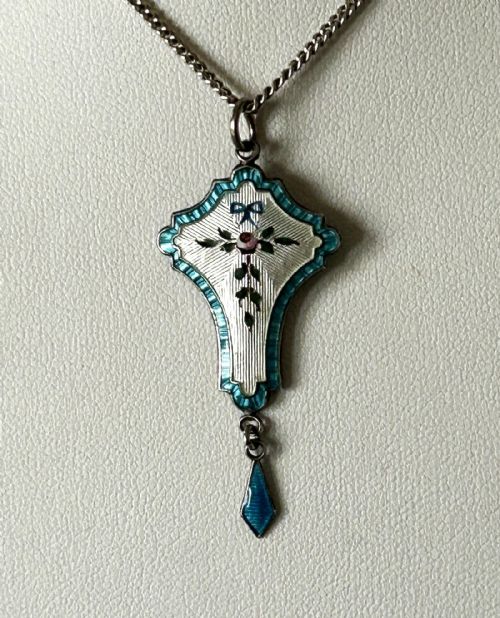


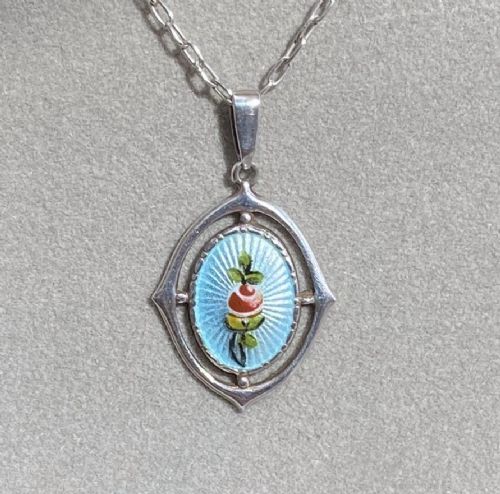


Blue Enamel Silver Necklace
A blue enamel silver necklace brings together vibrant vitreous colour and precious metal work across Victorian, Edwardian, and Art Deco designs.
Blue Enamel Silver Necklace
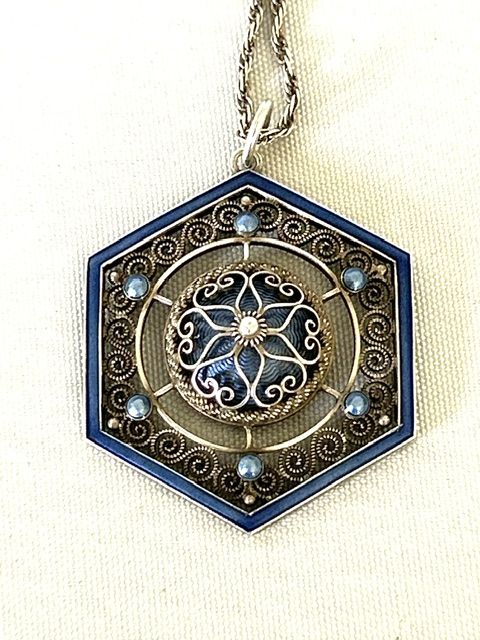
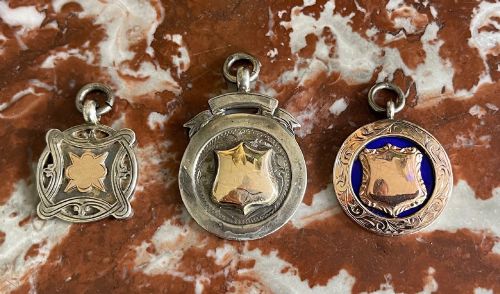
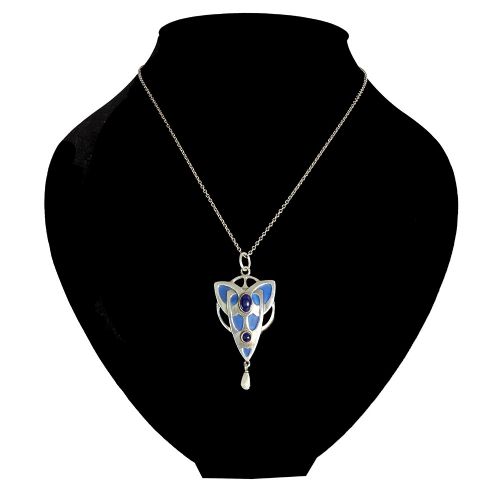
A blue enamel silver necklace encompasses pendants, chatelaine watch fobs, and collarette necklaces created across the nineteenth and twentieth centuries. These ornaments emerge from distinct periods including the Edwardian era and the 1930s, taking the form of shield shapes, egg charms, and delicate drop designs.
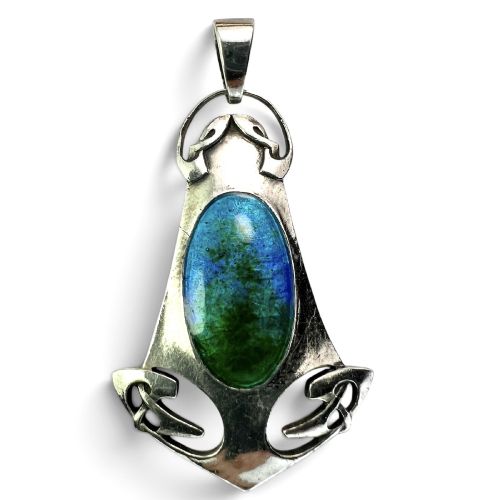
The aesthetic vocabulary spans Victorian traditionalism, organic Art Nouveau lines, and the geometric precision of Art Deco and Arts and Crafts movements. Many examples combine silver or sterling silver mountings with pearl, chalcedony, or complex vitreous enamel work.
Pieces frequently reflect the output of celebrated workshops and independent designers from Britain and Scandinavia. Buyers encounter both substantial pendant necklaces and smaller decorative charms designed for everyday wear.
How they were made
Craftsmen shape the primary structure from silver and sterling silver, constructing settings to hold vitreous enamel, guilloche enamel, or cloisonne enamel. Metalsmiths incorporate supplementary elements such as gold highlights, pearls, and chalcedony stones into the framework.
Techniques involve fusing powdered glass to metal surfaces under high heat to achieve rich blue tones, often over engine-turned guilloche patterns. Artisans employ hand-hammered silverwork and delicate wire framing characteristic of early twentieth-century metal workshops.
Listings include silver, sterling silver, gold, pearl, chalcedony, and multiple forms of enamel across Edwardian, Art Deco, and nineteenth-century periods.
What varies in quality
Quality rests in the precision of the enamel work, the complexity of the silver mounting, and the clarity of the design style. Superior examples display flawless vitreous surfaces and intricate hand-finished metal details that define the Arts and Crafts or Art Nouveau aesthetics.
The reputation of the maker and the preservation of original chains or settings influence the standing of a piece within the field. Work from documented workshops generally exhibits higher refinement in stone setting and enamel clarity.
Marius Hammer·Murrle Bennett·Archibald Knox·Liberty and Co·Wilhelm Fuhner·Charles Horner·Jakob Bengel·David Andersen
The Blue Enamel Silver Necklace Glossary
- Guilloche enamel
- Glass enamel applied over a metal surface that has been mechanically engraved with a repetitive geometric pattern. This technique creates a shimmering effect beneath translucent blue tones.
- Vitreous enamel
- Glass fused to metal through high-temperature firing to produce a durable, glossy coloured surface. It forms the primary decorative medium in these silver necklaces.
- Cloisonne enamel
- Enamel work created by soldering flat metal wires onto a metal base to form compartments for coloured pastes. The resulting design resembles a stained glass grid.
- Watch fob
- A short strap or chain attached to a pocket watch, frequently adapted into decorative pendants or collected as distinct silver ornaments. These items often feature enamel shields and hallmarks.
- Chalcedony
- A cryptocrystalline variety of quartz utilised as a cabochon accent in period jewellery. It adds natural stone texture to silver and enamel mountings.
Blue Enamel Silver Necklace: Frequently Asked Questions
What periods do these necklaces cover?
The selection spans the nineteenth century, the Edwardian era, and the 1920s and 1930s. Pieces align with Victorian, Arts and Crafts, Art Nouveau, and Art Deco movements.
Design characteristics shift from organic floral motifs in early pieces to geometric structures in later twentieth-century examples.
How do I care for silver and enamel?
Enamel consists of fused glass and requires gentle handling to prevent impact damage. Store necklaces separately to avoid scratching the vitreous surfaces.
Clean silver gently with a soft cloth while avoiding harsh chemical dips that can harm the enamel or stone settings.
What is guilloche enamel?
Guilloche involves engraving a precise geometric pattern onto metal before applying translucent enamel. The underlying pattern shows through the coloured glass.
This technique creates depth and a light-reflecting quality unique to period pieces.
Are original chains common?
Some pieces retain their period silver chains while others appear with later replacements. Match specifics are noted in individual descriptions.
Collarette necklaces and specific pendant designs often feature integrated chainwork characteristic of the maker.