


Hammered Silver Pendant
A hammered silver pendant brings the bold hand of early twentieth-century design straight to the collarbone.
Hammered Silver Pendant
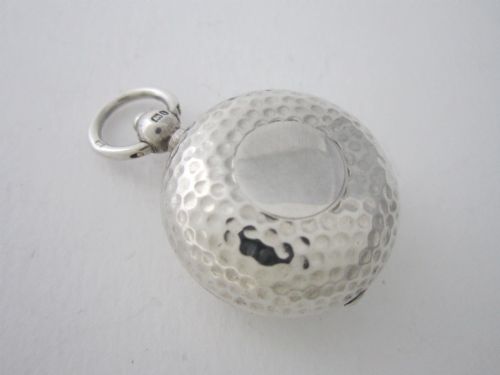
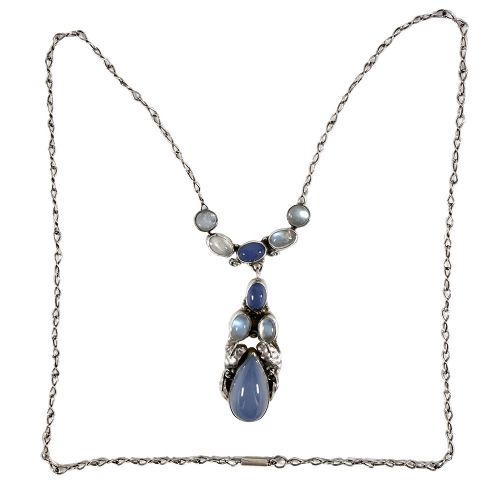
A hammered silver pendant is a piece of decorative jewellery typically formed during the Edwardian era, 1900s, 1910s, 1920s, and 1930s. These items range from simple drops to elaborate jewelled works created during the height of the Arts and Crafts and Art Nouveau movements.
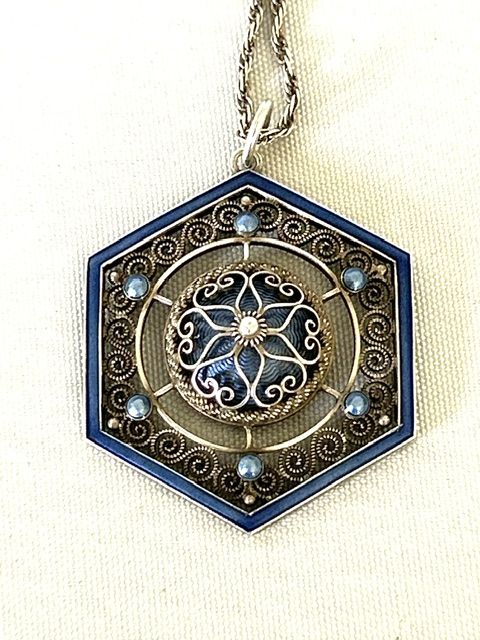
The versions most commonly met on this page combine sterling silver settings with coloured stones such as moonstone, chalcedony, pearl, garnet, and amethyst. Alongside standard pendants, related forms like sovereign cases, crosses, and pendant necklaces appear within the selection.
Makers working in these historical styles often integrated vitreous or guilloche enamel into the metalwork. Pieces frequently reflect distinct aesthetic periods, spanning from early twentieth-century British craft workshops to later modernist Art Deco designs.
How they were made
Silversmiths shaped these pendants by hand, beating sterling silver sheet to create textured, light-catching surfaces that define the hammered aesthetic. Stones were then bezel-set into the metalwork alongside applied elements of gold and enamel.
Craftsmen utilised techniques such as guilloche enamel and vitreous enamelling to add rich colour behind or alongside the silver frames. Pearls, moonstones, and chalcedony were selected to complement the organic motifs characteristic of the period.
One listed sovereign case spent its early days quietly safeguarding gold coins before finding a second life as a pendant.
What varies in quality
Quality rests upon the skill of the handwork in the silver hammering and the finesse of the stone setting. Pieces bearing documented attributions to notable silversmiths or established firms generally command greater attention from collectors.
The complexity of the design and the choice of embellishments, such as integrated gold work, high-grade moonstones, or intricate enamel, separate standard production items from exceptional workshop examples.
Marius Hammer·Mary Thew·Knox for Liberty·Murrle Bennett·Omar Ramsden and Alwyn Carr·John Paul Cooper
The Hammered Silver Pendant Glossary
- Arts and Crafts
- A design movement spanning the late nineteenth and early twentieth centuries that prioritised hand-craftsmanship and traditional silversmithing techniques over industrial mass production.
- Guilloche Enamel
- A decorative technique where translucent enamel is layered over mechanically engraved metal, creating repeating geometric patterns beneath the glossy surface.
- Sovereign Case
- A small pocket container designed to hold gold sovereign coins, often fitted with a loop to be worn on a chain as a pendant.
- Vitreous Enamel
- A material made by fusing powdered glass to a metal substrate at high temperatures, resulting in a durable and brightly coloured decorative finish.
- Moonstone
- A feldspar mineral prized for its adularescence, displaying a milky, bluish sheen that made it a favourite stone for early twentieth-century craft jewellers.
Hammered Silver Pendant: Frequently Asked Questions
How do I date a hammered silver pendant?
Dating relies on stylistic markers from the Arts and Crafts, Art Nouveau, and Art Deco periods, alongside any visible hallmarks on the silver.
Assay marks and maker stamps provide precise years when present, while the choice of stones and enamel techniques help narrow the timeframe.
Are these pendants handmade?
Many pieces from this era reflect individual workshop production where silversmiths hammered and shaped the metal by hand.
Maker attributions and distinctive tool marks often indicate whether a piece came from a notable studio or a larger commercial maker.
What stones are typically found in these pieces?
Common stones include moonstone, chalcedony, garnet, amethyst, and pearl, often chosen for their natural colours.
Designers of the early twentieth century favoured these cabochon and seed stones to complement organic silver settings.
How should I care for antique silver jewellery?
Antique silver benefits from gentle cleaning with a soft cloth to preserve the original patina and hammered texture.
Enamel and softer stones like moonstone and pearl require protection from harsh chemical dips and ultrasonic cleaners.