



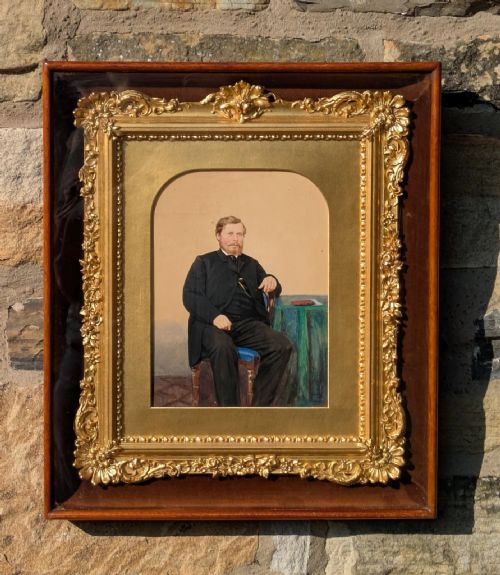


Antique Portrait Box
An antique portrait box holds a likeness under glass or paint, combining utility with miniature art.
Antique Portrait Box
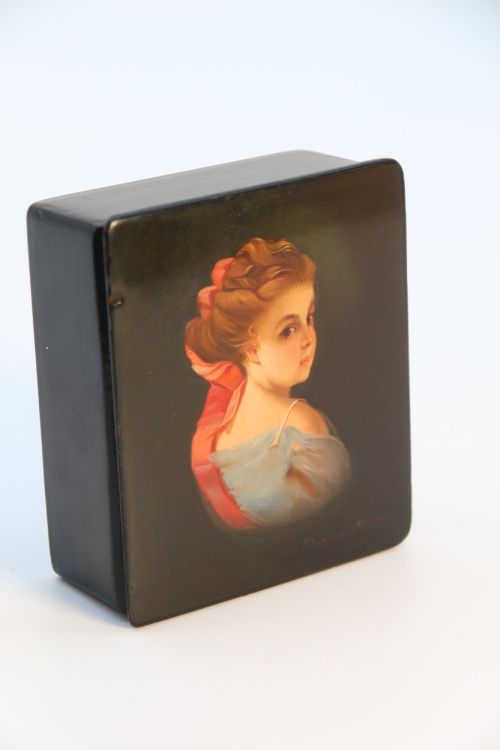
An antique portrait box serves as a personal container, typically taking the form of a snuff box, trinket box, or small jewellery casket featuring a painted or carved likeness. These pieces span the Georgian, Victorian, and Edwardian eras, reflecting changing tastes in intimate miniature portraiture.
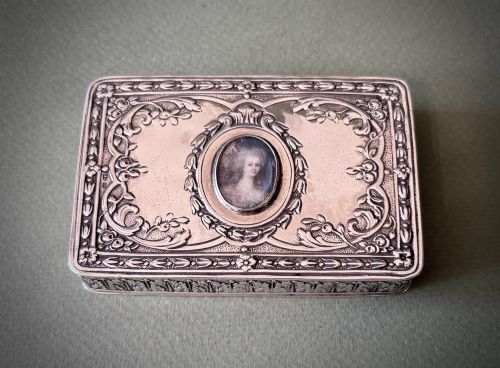
The most common examples on this page are small circular or rectangular boxes rendered in papier-mâché, lacquered wood, porcelain, or metal, often set with hand-painted miniatures under glass. Many incorporate decorative frames of gilt bronze, brass, or silver around the central portrait.
Continental and English workshops produced these pieces for personal use, travel, or grand tour souvenirs, combining functional storage with detailed artistic depictions of notable figures or anonymous sitters.
Materials and construction
Makers utilised papier-mâché, wood, and metals like brass and silver to form the body of the container, frequently applying black or dark lacquer finishes to the exterior surfaces. Coquilla nut and treen also appear among the natural materials shaped by carvers.
Portraits themselves were hand-painted in watercolour, enamel, or oil on porcelain, ivory, or paper, then protected beneath fitted glass lenses or bezels. Gilt bronze and brass mounts, hinges, and bezels were cast and chased to secure the miniature elements firmly to the lid.
Antique Portrait Box Retail Price Guide 2026
Typical asking prices for portrait box among the pieces listed under this phrase on Sellingantiques today, from the lower quarter to the upper quarter. They describe what is for sale here now, not the wider market.
Listings feature items spanning the Georgian, Victorian, and Edwardian periods, constructed in lacquer, papier-mâché, silver, and wood.
Evaluating quality and execution
The finesse of the painted portrait distinguishes finer examples, where brushwork remains crisp, facial expressions read clearly, and proportions stay correct at a miniature scale. Softer, hurried painting diminishes the overall artistic merit of the piece.
Engineering and materials dictate durability, seen in how smoothly lids close, how tightly bezels hold the glass, and whether precious metals or high-grade gilt bronze were employed in the mountings. Hand-carved detailing on organic materials like coquilla nut or ivory further separates standard production from superior work.
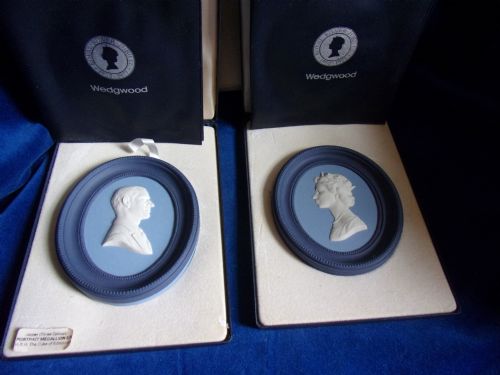
Stobwasser·Jean-Baptiste Isabey·Wedgwood
The Antique Portrait Box Glossary
- Miniature
- A small-scale portrait painting executed with fine detail, typically on ivory, vellum, or porcelain, designed to fit inside a lid or frame.
- Papier-mâché
- A composite material made from paper pulp or reinforced paper sheets mixed with glue, moulded and dried to form lightweight, rigid boxes.
- Bezel
- A metal collar or rim holding the glass pane that protects a portrait set into the lid of a box.
- Vesta case
- A small pocket container designed to hold matches, occasionally shaped as a figural or portrait novelty.
- Grand tour
- A cultural journey undertaken by wealthy Europeans in the eighteenth and nineteenth centuries, yielding souvenir plaques and carved mementoes.
Antique Portrait Box: Frequently Asked Questions
What were antique portrait boxes used for?
These containers held dry snuff, tobacco, small trinkets, or personal keepsakes, keeping valuable personal items secure and portable.
Their lids displayed likenesses of loved ones, historical figures, or artistic subjects as a sign of sentiment or status.
How do I date an antique portrait box?
Dating relies on materials, painting style, metal hallmarks, and construction techniques characteristic of Georgian, Victorian, or Edwardian manufacturing.
Clothing styles and hair ornamentation depicted in the portrait can also narrow down the era of creation.
Are portrait boxes fragile?
The glass covers and delicate painted surfaces require careful handling to prevent scratching, cracking, or moisture damage to the miniature.
Stored away from direct sunlight and humidity, the lacquer, metal, and papier-mâché components remain stable over time.
How are these boxes displayed at home?
Collectors often place them on small stands, tabletops, or within display cabinets where the lid details can be examined closely.
Lighting should remain indirect to protect pigments from fading while highlighting the gilt mounts and carved surfaces.