

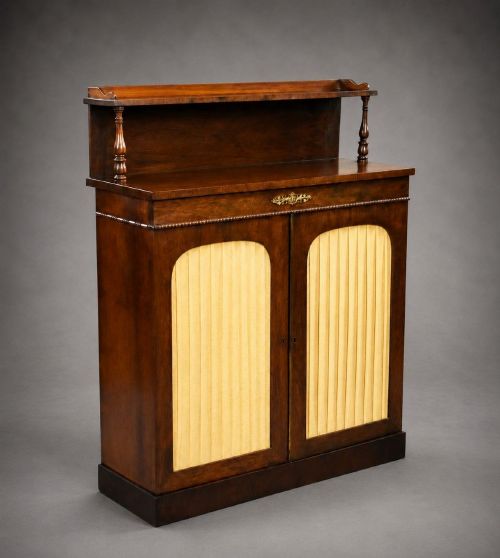


Antique Pleated Fabric Cabinet
These antique pleated fabric cabinet pieces offer sophisticated storage, bringing nineteenth-century elegance to a room through finely figured timbers and textile-backed door panels.
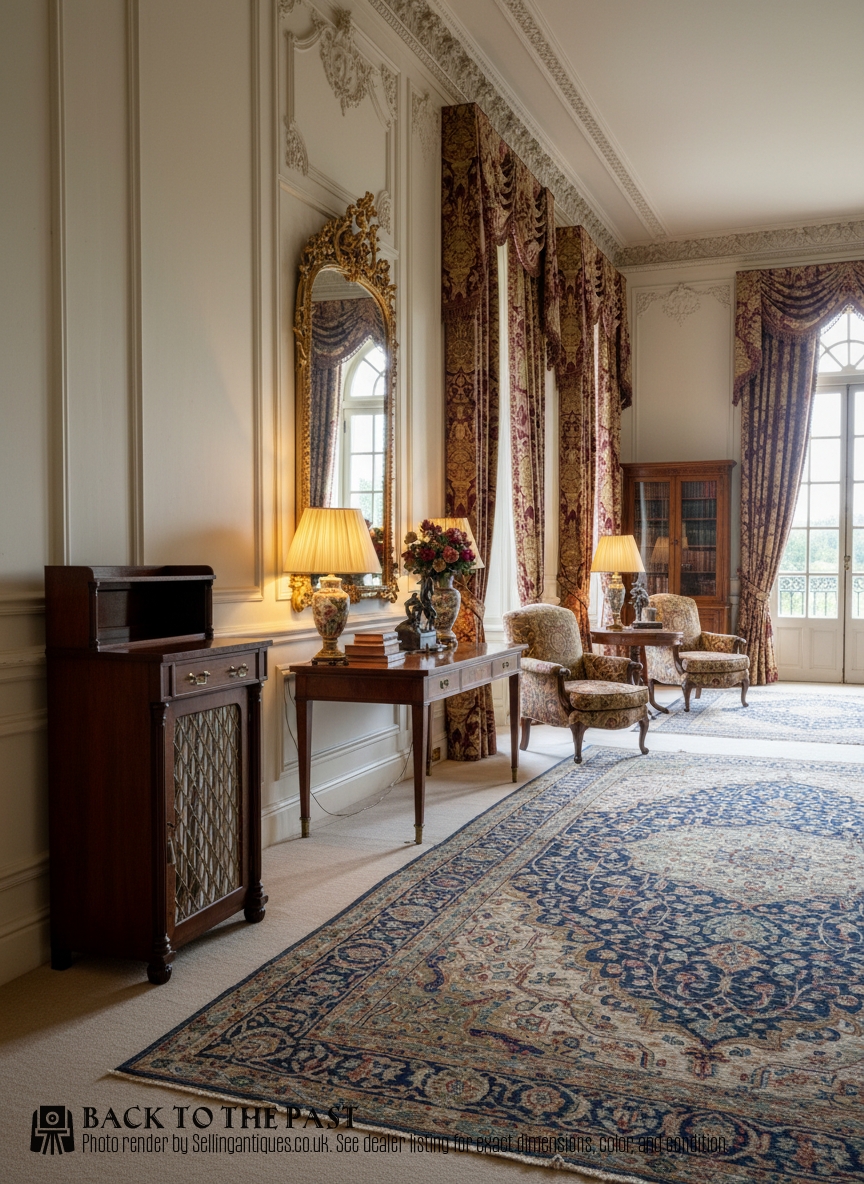
Antique Pleated Fabric Cabinet
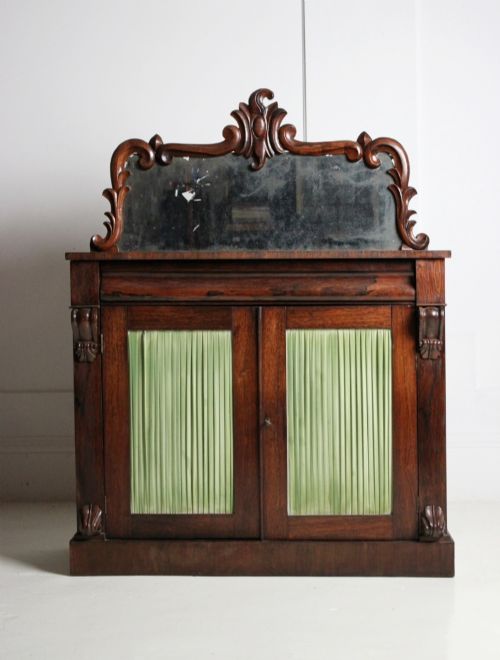
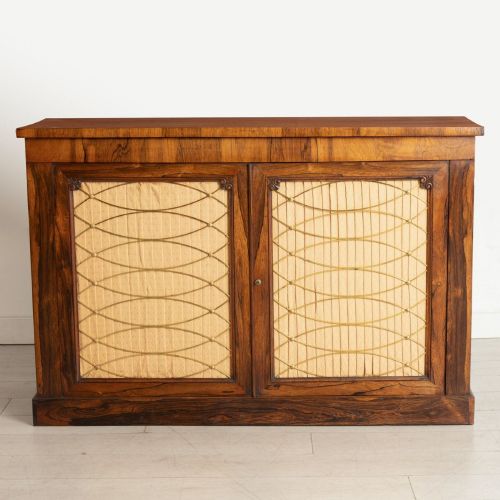
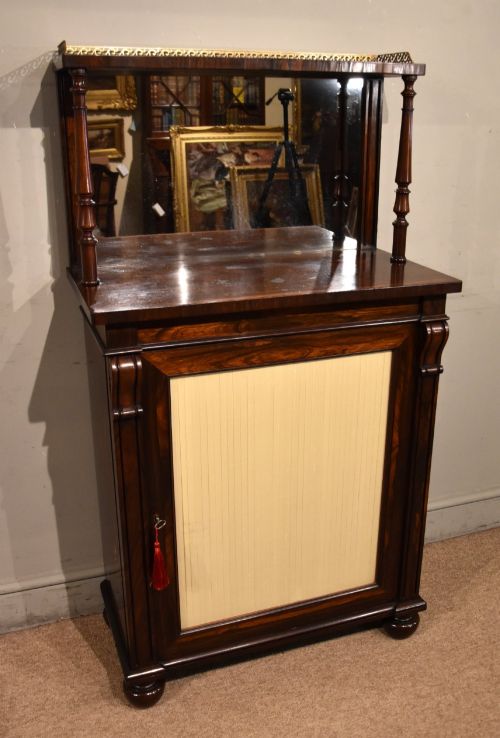
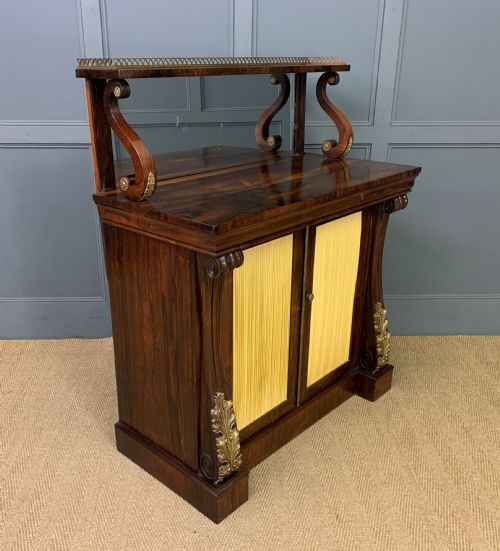
An antique pleated fabric cabinet usually takes the form of a chiffonier or side cabinet originating from the Regency, George IV, or Victorian eras. These items serve as functional storage units, often featuring shelving or enclosed compartments beneath a flat top surface.
The version most commonly met on this page is the rosewood chiffonier, frequently dated to the Regency period and distinguished by fabric panels set into the doors. Buyers frequently encounter variations in mahogany, simulated rosewood, and goncalo alves alongside the more traditional timber choices.
Makers and craftsmen of the nineteenth century designed these cabinets to display porcelain, books, or decorative objects while concealing less ornamental items behind pleated silk or fabric screens. The scale ranges from neat, compact side cabinets to larger serpentine credenzas and breakfront bookcases.

Assessing quality in cabinet work
The fineness of the timber grain and the precision of the veneer matching dictate the visual hierarchy of these cabinets. Highly figured rosewood and carefully selected mahogany command greater appreciation than simpler painted or simulated surfaces.
The execution of brass mounts, structural joinery, and the delicacy of the carved or turned elements distinguish workshop output. Attributions to known firms or superior cabinet makers elevate the standing of a piece within the broader nineteenth-century repertoire.
Antique Pleated Fabric Cabinet Retail Price Guide 2026
Typical asking prices for pleated fabric cabinet among the pieces listed under this phrase on Sellingantiques today, from the lower quarter to the upper quarter. They describe what is for sale here now, not the wider market.
Listings feature rosewood, mahogany, goncalo alves, and simulated rosewood surfaces across Regency, George IV, and Victorian periods.
Gillows
The Antique Pleated Fabric Cabinet Glossary
- Chiffonier
- A low nineteenth-century sideboard or cabinet, typically featuring shelves and enclosed cupboards below. This form frequently incorporates the pleated fabric panels characteristic of the Regency style.
- Goncalo alves
- A dense exotic hardwood prized for its striking contrasting grain patterns, sometimes called zebrawood. Nineteenth-century cabinet makers utilised it for high-status side cabinets.
- Breakfront
- A cabinet design where the central section projects forward from the flanking outer wings. This architectural arrangement adds depth and visual interest to sideboards and larger storage pieces.
- Credenza
- A grand Victorian or Regency display cabinet, often featuring serpentine fronts and mirror glass backs. These pieces were designed to showcase valuable porcelain and decorative objects in principal rooms.
- Simulated rosewood
- A painted or grained finish applied to a less expensive timber to imitate the appearance of genuine rosewood. Craftsmen used this technique during the Regency era to achieve a luxurious look affordably.
Antique Pleated Fabric Cabinet: Frequently Asked Questions
How were these cabinets used originally?
In nineteenth-century drawing rooms and parlours, these cabinets served to store books, papers, or collection items while providing a surface for displaying lamps and ornaments. The fabric panels softened the overall appearance of the furniture.
The enclosed lower cupboards kept household items out of sight, fulfilling the domestic requirements of Regency and Victorian households.
How do I distinguish Regency from Victorian pieces?
Regency and George IV pieces generally display restrained classical proportions, delicate brass inlay, and refined turned supports. The timbers tend to feature subtle, elegant figures.
Victorian examples often present heavier proportions, more exuberant carving, and larger serpentine or breakfront forms, reflecting the changing tastes of the later nineteenth century.
How do I live with an antique cabinet today?
These cabinets integrate well into modern living spaces as hallway consoles, dining room storage, or living room media units. Their modest depths make them practical for contemporary room dimensions.
Protection from direct sunlight and extreme humidity changes helps preserve the delicate rosewood veneers and historic fabric panels over time.