

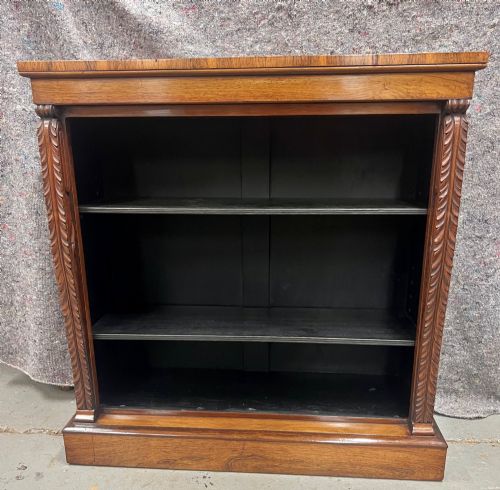


Rosewood Low Cabinet
A rosewood low cabinet brings dense timber and polished brass into a room, serving books and display with quiet authority.

Rosewood Low Cabinet
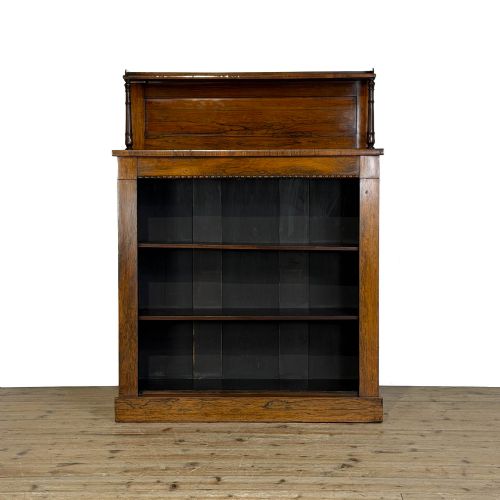
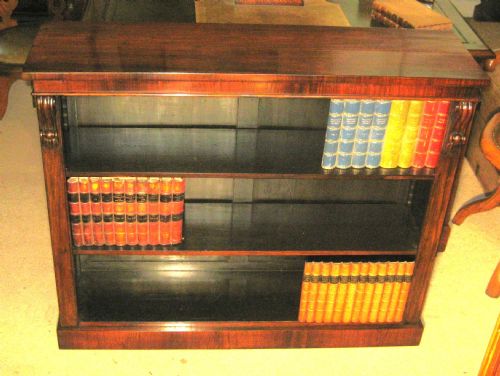
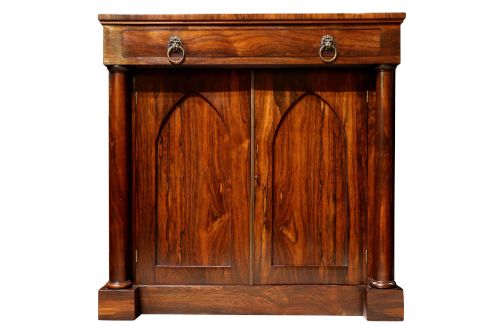
When you search for a rosewood low cabinet, you encounter low-slung bookcases, side cabinets, chiffoniers, and pier cabinets spanning the Regency, William IV, and Victorian periods. These pieces sit low against a wall, often beneath a mirror or window, offering surface display alongside shelved storage for books and ornaments.
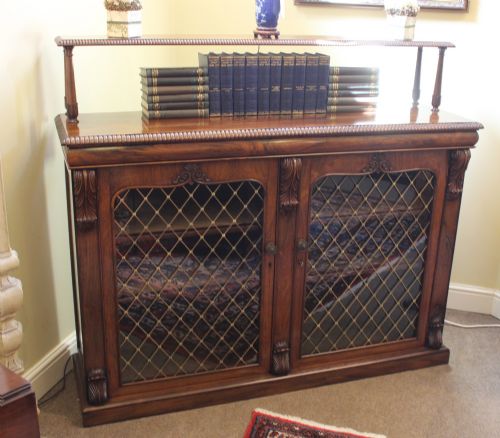
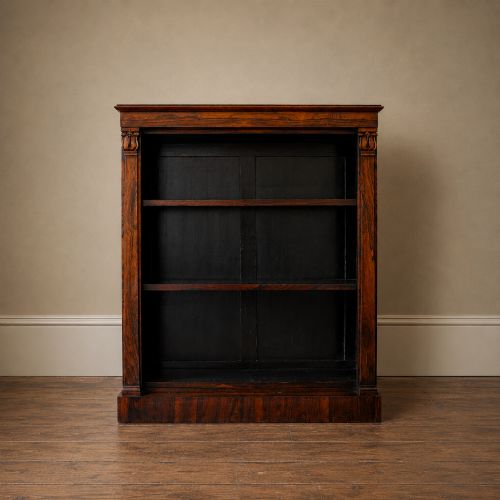
The version you meet most often on this page is the Regency or nineteenth-century open bookcase or side cabinet, frequently fitted with adjustable shelves or enclosed by panelled or glazed doors. Formats range from neat, single-door proportions to large breakfront configurations designed for formal libraries and drawing rooms.
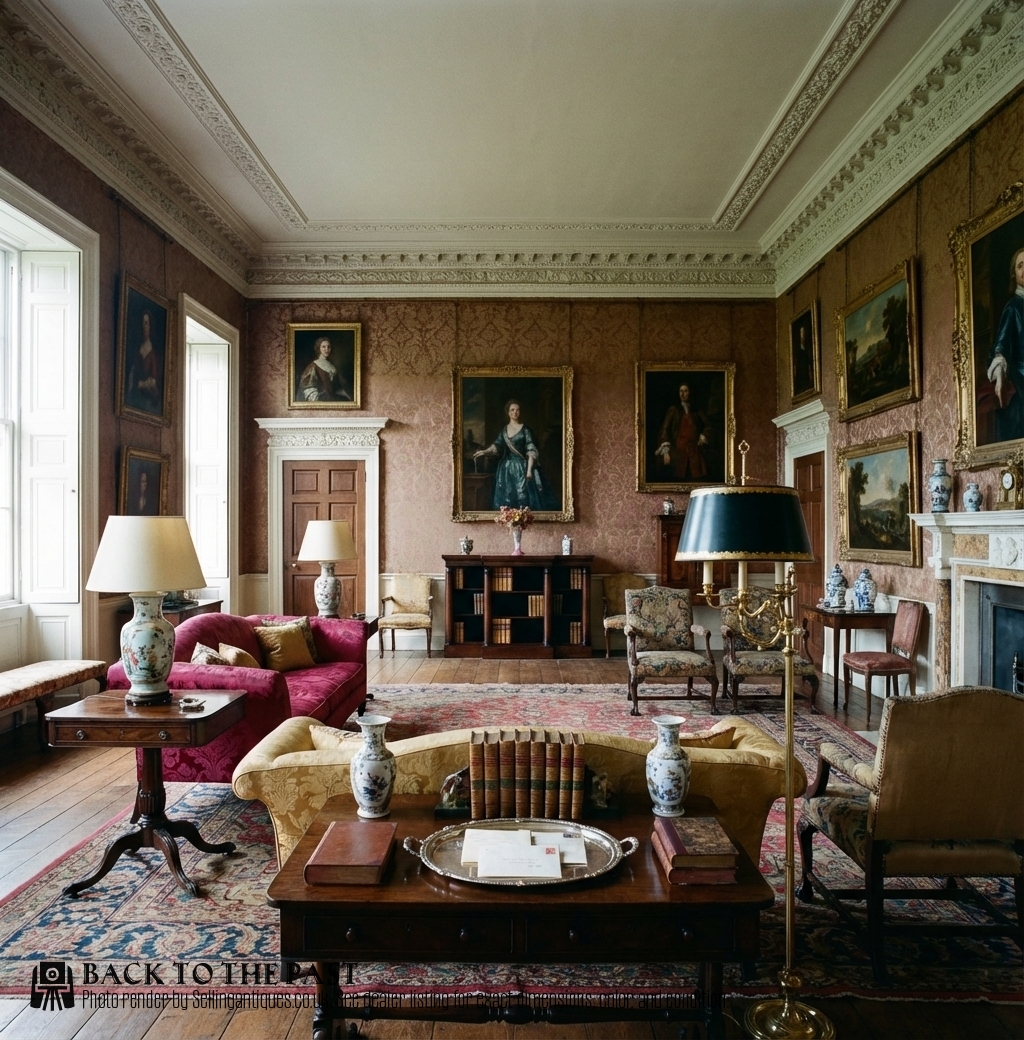
Materials and construction
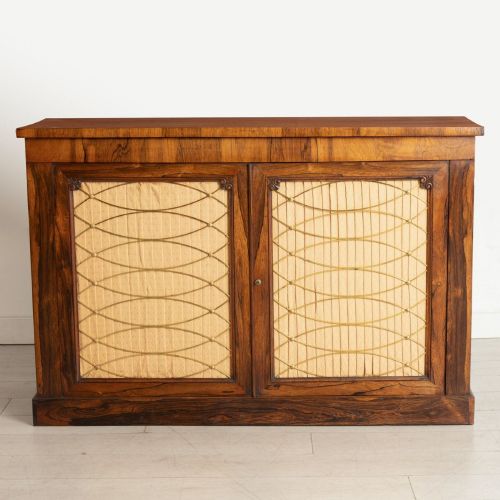
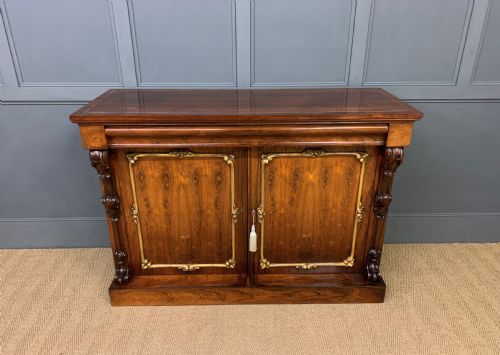
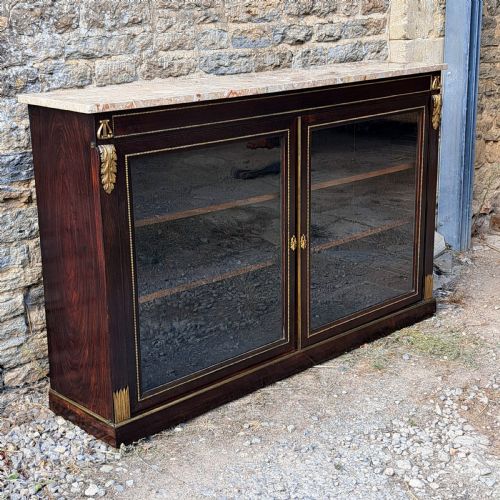
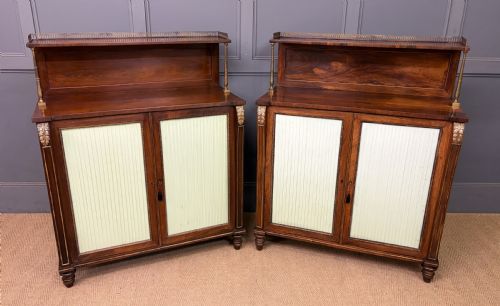
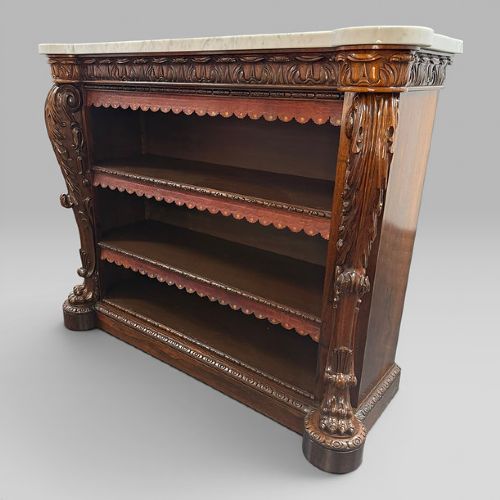
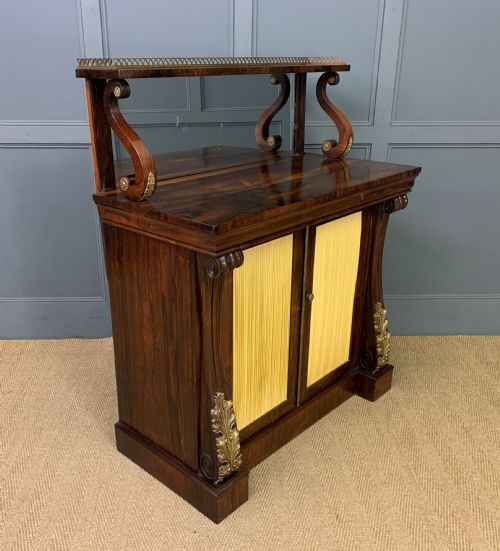
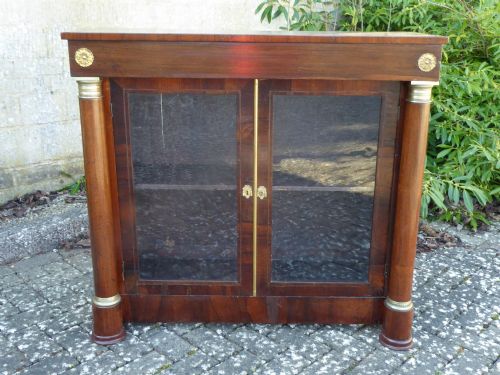
Cabinet makers built these pieces using rosewood veneers laid over secondary timbers such as pine and oak, taking advantage of the rich, dark grain patterns of the primary wood. Brass mounts, fine brass inlay, and gilded details frequently accent the timber surfaces, while some variations incorporate marble tops or glazed and mirrored doors.
Internal elements often include adjustable wooden shelving and soft fabric panels behind glass or grille doors. Structural execution relies on traditional joinery methods suited to the nineteenth-century workshop, accommodating the natural movement of veneered carcases over secondary pine and oak framing.
Rosewood Low Cabinet Retail Price Guide 2026
Typical asking prices for rosewood low cabinet among the pieces listed under this phrase on Sellingantiques today, from the lower quarter to the upper quarter. They describe what is for sale here now, not the wider market.
Some nineteenth-century readers insisted on brass grilles behind glass doors to keep stray bookworms from escaping into the parlour.
Evaluating the pieces
Quality rests in the selection of the rosewood veneer and the precision of the brass inlay or mounts integrated into the carcase. Pieces demonstrating superior craftsmanship show careful grain matching across doors and drawer fronts, alongside balanced proportions that maintain structural harmony.
The presence of original materials, such as patinated marble tops, pleated fabric panels, and functioning brass hardware, distinguishes standard production from finer cabinet work. Sustained integrity in the timber and joinery reflects the original workshop standards without relying on later restorations.
Gillows
The Rosewood Low Cabinet Glossary
- Chiffonier
- A low sideboard or cabinet, typically featuring enclosed storage below and sometimes a shelf or mirrored superstructure above. They became popular during the Regency and Victorian periods for drawing rooms.
- Breakfront
- A piece of furniture where the central section projects forward from the flanking wings. This configuration adds architectural depth to large bookcases and side cabinets.
- Goncalo Alves
- A dense exotic hardwood with striking contrasting grain, sometimes utilised in place of rosewood during the Regency period. It shares similar weight and finishing qualities.
- Pier Cabinet
- A narrow cabinet designed specifically to fit the wall space between windows. They often feature glazed doors and delicate ebony or brass details.
- Veneer
- A thin layer of figured rosewood applied over a stable secondary timber like pine or oak. This technique allowed makers to display elaborate grain patterns across broad surfaces.
Rosewood Low Cabinet: Frequently Asked Questions
What is a rosewood low cabinet?
A rosewood low cabinet is a nineteenth-century storage piece, such as a dwarf bookcase, chiffonier, or side cabinet, designed to sit low against a wall. These cabinets combine shelf space with enclosed cupboards for books and decorative objects.
They reflect the formal interior styles of the Regency and Victorian eras, utilising dark tropical timbers and brass detailing to anchor a room's decor.
How do I identify a Regency period cabinet?
Regency cabinets typically display classical restraint, clean architectural proportions, and fine brass inlay or gilt mounts. They date roughly from the early nineteenth century up to the reign of William IV.
Look for symmetrical arrangement, precise brass stringing, and woods like rosewood or goncalo Alves that exhibit strong, dark grain patterns characteristic of the period.
Where were these cabinets placed in a home?
Original placement usually focused on principal reception rooms, libraries, and drawing rooms where books and curiosities needed accessible storage. Low proportions ensured they fit beneath windows or large wall mirrors.
Today, they serve similar functions in modern interiors, acting as low bookcases, media consoles, or display surfaces in living spaces and hallways.
How do I care for nineteenth-century rosewood?
Maintain rosewood furniture by keeping it away from direct sunlight and steady sources of artificial heat to prevent the veneer from drying or splitting. Dust regularly with a soft, dry cloth.
Apply a microcrystalline wax sparingly when the timber appears dry, avoiding silicone-based polishes that can degrade the historic finish over time.