

Antique Piecrust Table
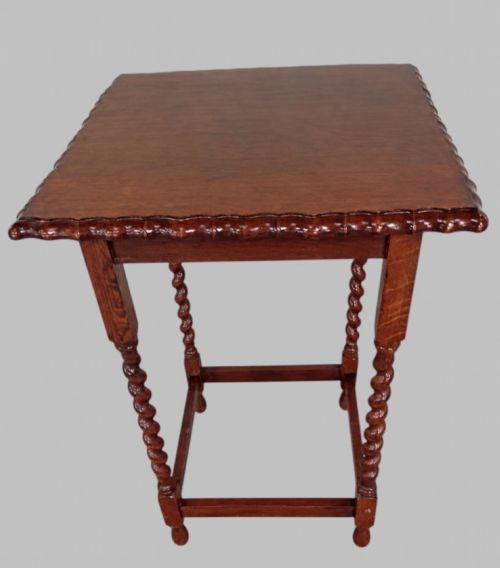
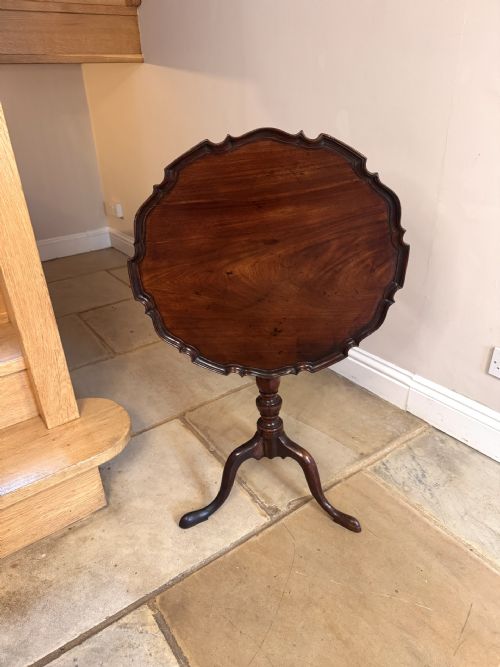
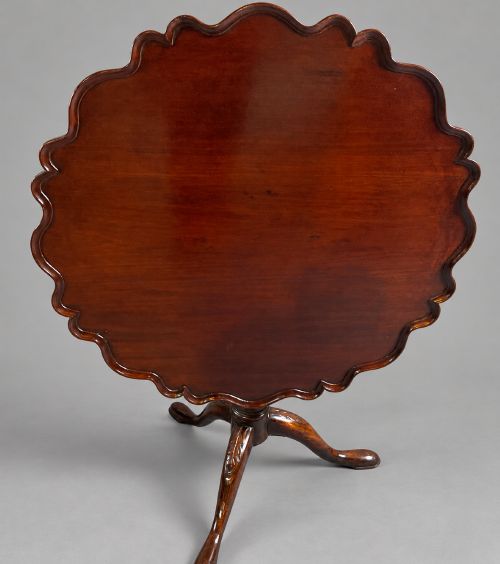
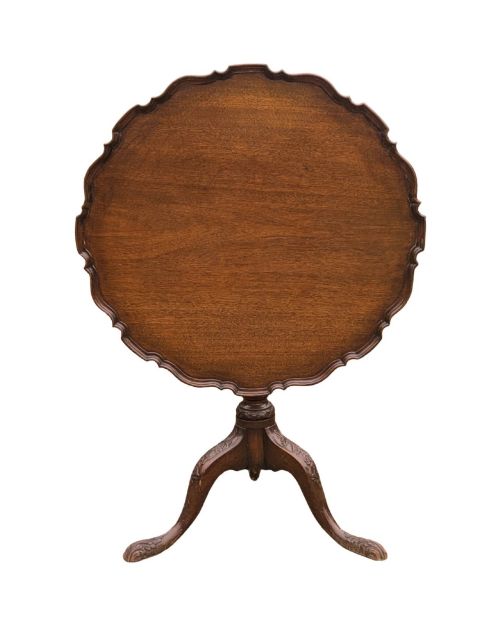
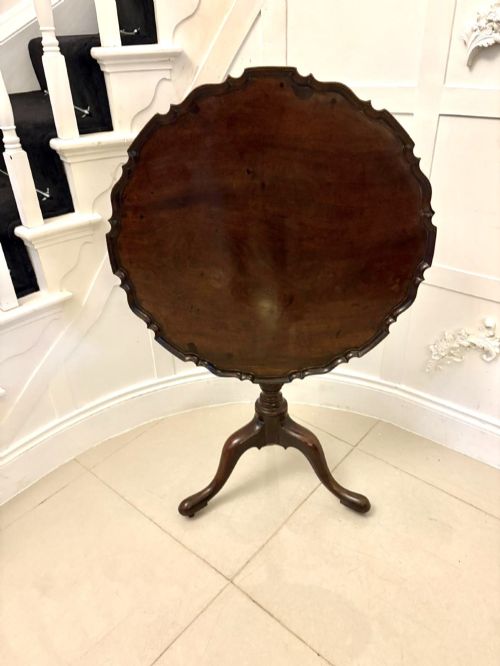
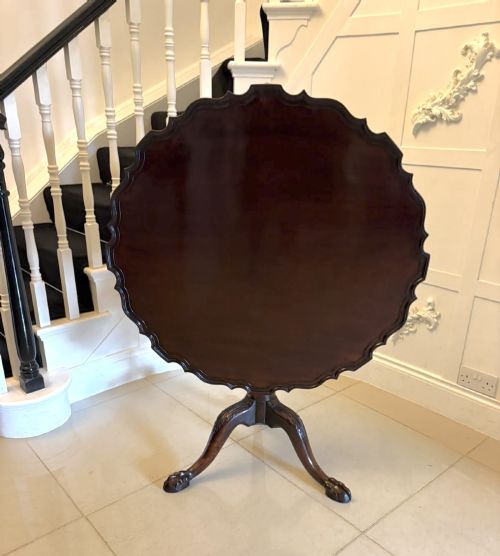
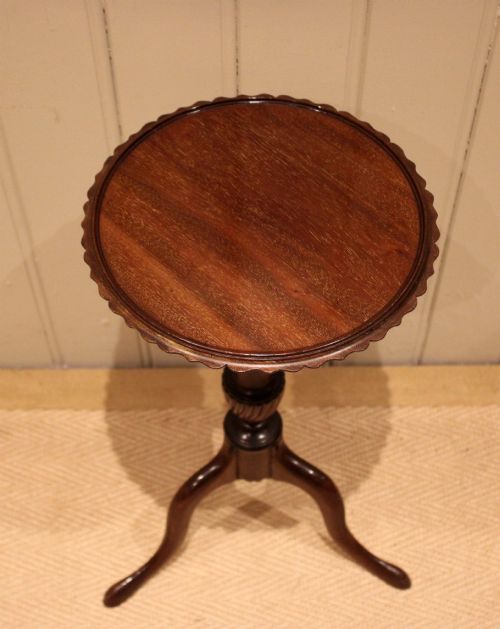
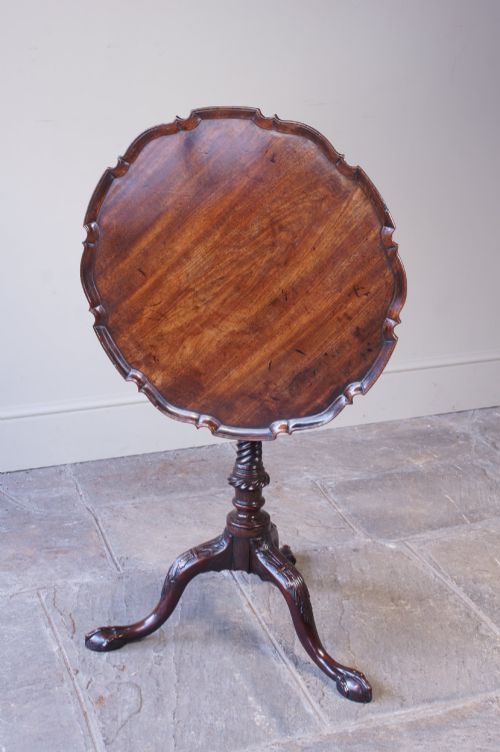
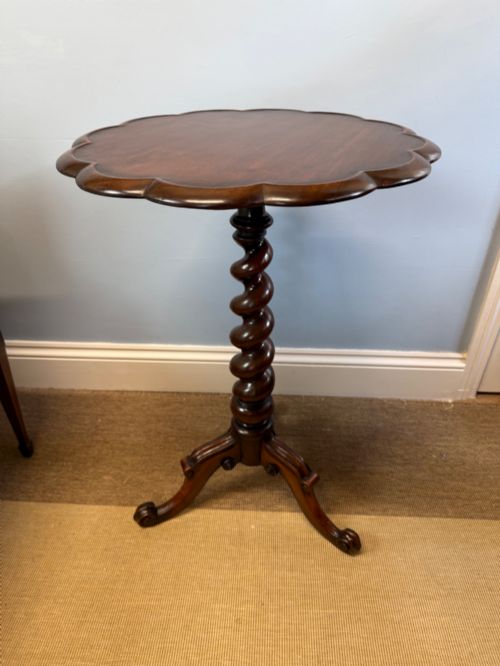
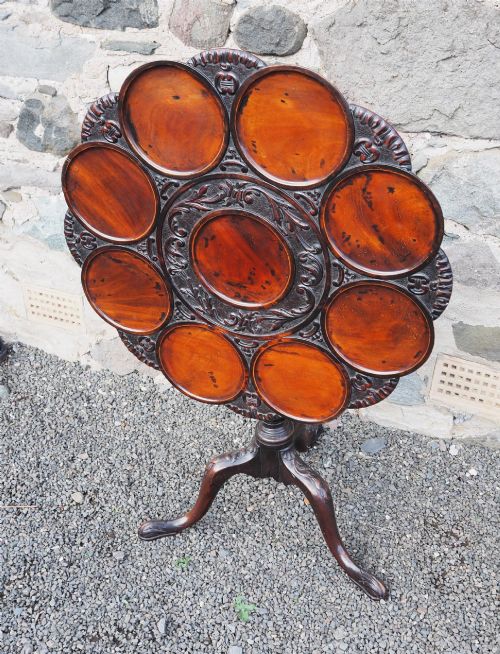
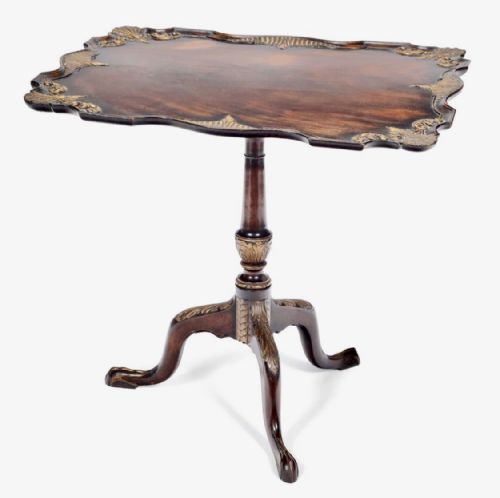
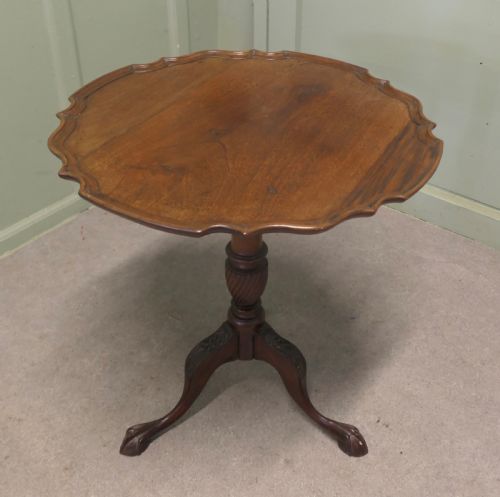
An antique piecrust table offers a raised, scalloped rim that gives the timber top the literal appearance of pastry crust.
Antique Piecrust Table
An antique piecrust table stands as a traditional small-scale surface designed for holding drinks, books, or decorative objects. When you search for an antique piecrust table, you encounter diverse forms ranging from compact wine tables and occasional tables to larger tilt-top dining and centre pieces.
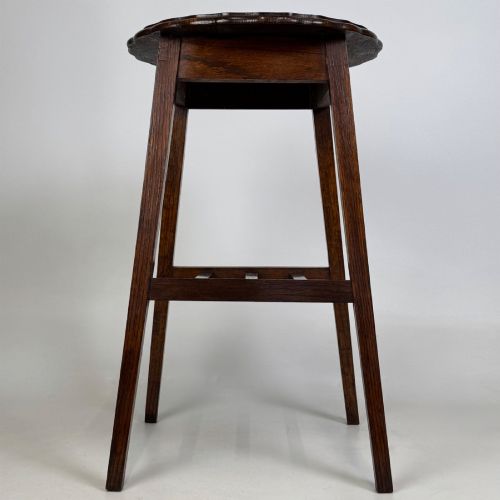
The pieces on this page span several centuries and revival movements, notably George III iterations alongside Edwardian and Georgian Revival interpretations. Mahogany dominates the examples, though burr walnut and oak also appear across occasional and side table formats.
Materials and construction
Cabinetmakers constructed these surfaces primarily using solid mahogany, burr walnut, and oak, frequently incorporating timber veneers for decorative tops. The distinctive raised rim involved carving the shaped edge directly from a thick solid board of wood rather than attaching a separate moulding.
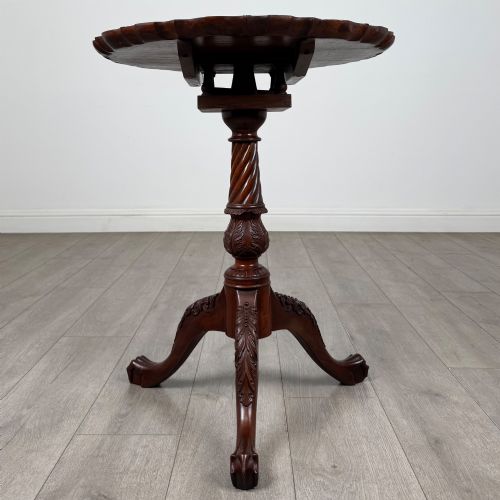
Many historical examples incorporate a birdcage mechanism beneath the top, allowing the surface to tilt vertically and rotate on a central tripod base supported by three legs.
Antique Piecrust Table Retail Price Guide 2026
Typical asking prices for piecrust table among the pieces listed under this phrase on Sellingantiques today, from the lower quarter to the upper quarter. They describe what is for sale here now, not the wider market.
Listings feature items spanning the eighteenth century through the Edwardian era and 1930s, constructed mainly from mahogany and walnut.
Assessing quality and craftsmanship
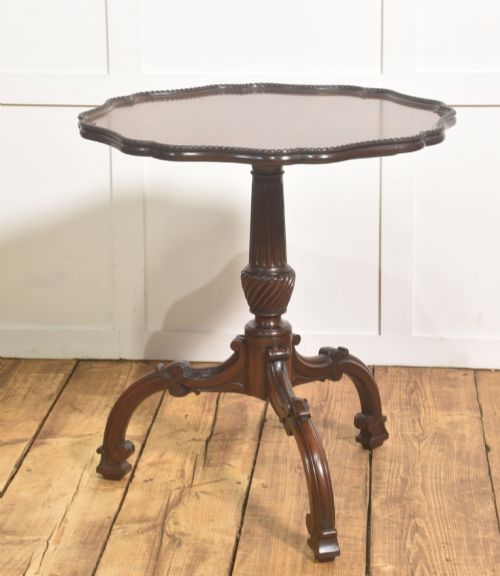
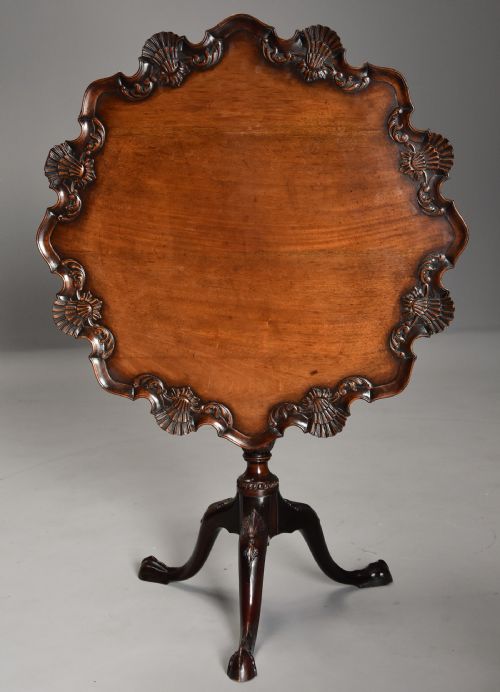
The distinction between standard examples and finer pieces lies in the crispness of the carved rim and the proportion of the tripod base. Superior pieces display fluid, hand-carved scalloping on the piecrust edge and elegant cabriole legs ending in well-defined feet.
The richness of the timber grain and the depth of the original surface finish heavily influence the character of the piece, with untouched patination preferred over heavily refinished wood.
Shapland and Petter
The Antique Piecrust Table Glossary
- Piecrust edge
- A raised, carved circular rim featuring alternating curves and points resembling pastry work. This decorative border prevents items from sliding off the top.
- Tilt top
- A hinged mechanism allowing the table surface to pivot upright when not in use. This design enabled centuries-old households to store furniture flat against a wall.
- Tripod base
- A central pillar supported by three radiating legs, typically terminating in pad, claw-and-ball, or spade feet. This configuration provides stability on uneven historical floors.
- Birdcage
- A wooden framework beneath the tabletop containing rotating spindles. This mechanism permits both tilting and 360-degree rotation of the surface.
Antique Piecrust Table: Frequently Asked Questions
What is an antique piecrust table used for?
Historical households utilised these small surfaces primarily as wine tables, lamp stands, or occasional tea tables in formal reception rooms.
Today, buyers place them beside seating areas or in hallways where a compact, decorative wooden surface is required.
What is a birdcage mechanism?
The birdcage refers to a small box-like wooden construction situated at the top of the central column, consisting of four small pillars and horizontal plates.
This assembly enables the tabletop to rotate independently of the column in addition to tilting backward.
How can I tell the difference between periods?
Eighteenth-century examples typically exhibit dense, heavy mahogany with hand-carved tripod bases and patinated surfaces developed over generations of use.
Later Edwardian and revival pieces often display lighter timber tones, cleaner factory-finished joinery, and occasional use of lighter secondary woods.