
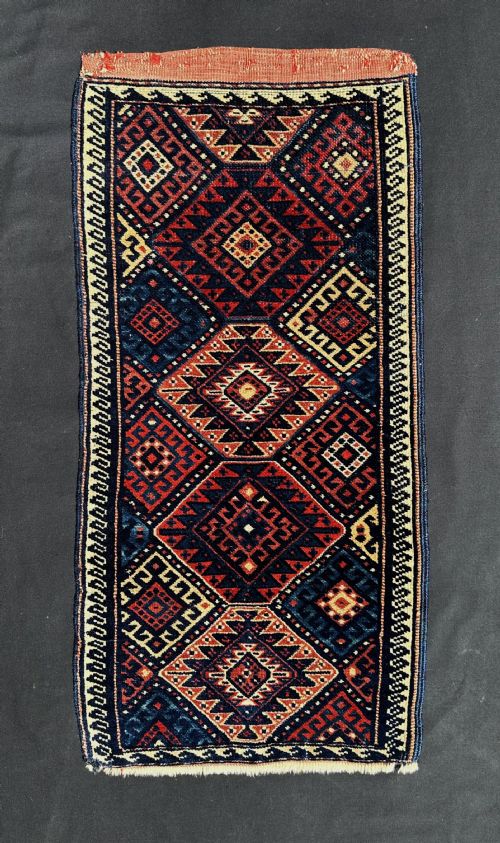
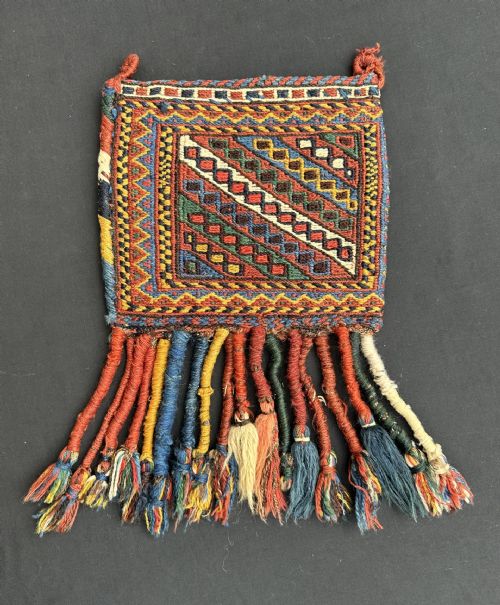


Antique Persian Textile Fragment
An antique persian textile fragment brings centuries of nomadic artistry into your home as a concentrated burst of geometric pattern and rich vegetable dye colour.
Antique Persian Textile Fragment
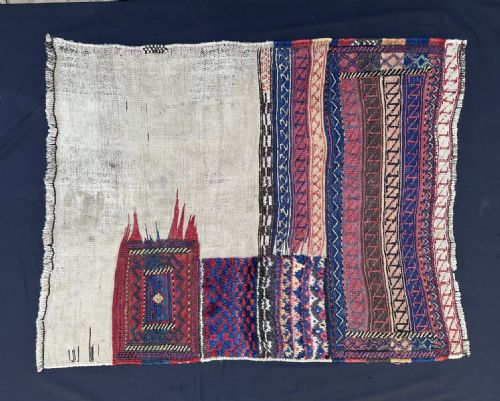
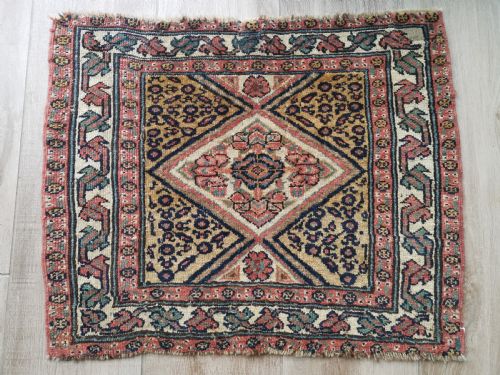
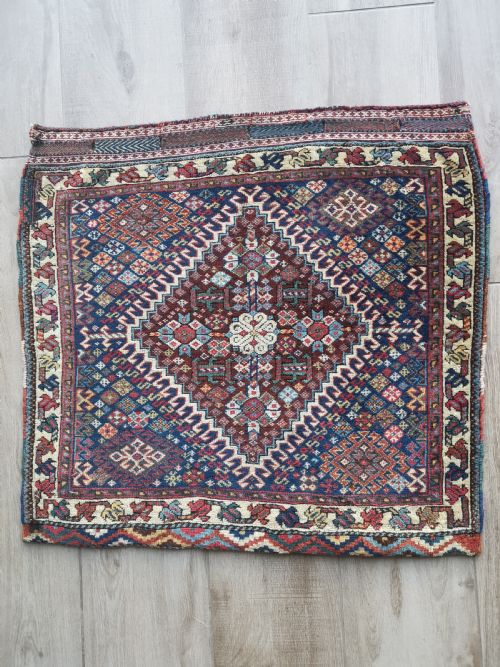
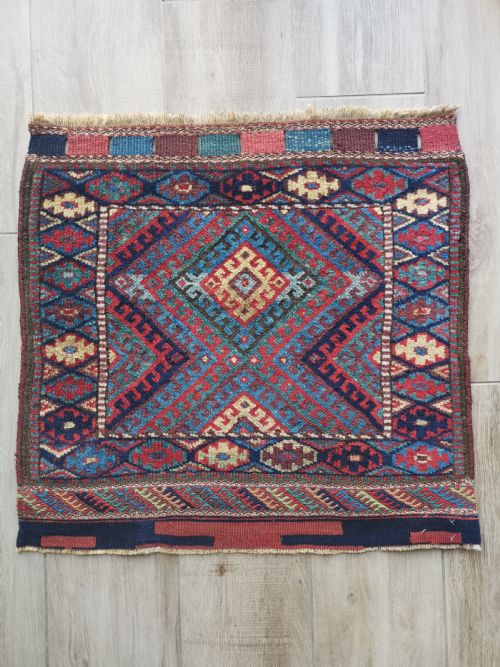
An antique persian textile fragment typically originates as the face of a nomad's functional storage piece, such as a saddle bag, wheat sack, or pillow bag. These smaller survivals come from regional groups including the Afshar, Qashqai, Shahsavan, and Bakhtiari tribes across nineteenth and early twentieth century Persia.
The most common formats on this page are bag faces and rug fragments, which preserve the intricate central medallions, boteh motifs, and tile designs of larger woven works. Each item represents a distinct tribal identity and localized weaving tradition rooted in daily nomadic life.
How they were made
Weavers utilised hand-spun wool and occasional silk foundations, paired with natural vegetable dyes derived from regional plants and minerals. These organic colorants yield deep, varied hues that develop character and subtle abrash variations over decades of use.
Construction techniques range from fine hand-knotted pile to flatwoven soumak work, depending on the specific tribal origin and the intended utility of the original storage piece.
Several nomadic weavers tucked tiny zoomorphic symbols and hidden birds into their geometric bag faces just to keep watch over the grain.
What varies in quality
Quality rests upon the handled handle of the wool and the depth achieved by natural dyes, where lustrous, luminous fibres separate finer tribal weaving from ordinary work. Tighter knot density and precision in complex geometric drawing also distinguish exceptional pieces.
The completeness and integrity of the surviving design field dictate desirability, as well as the crispness of secondary borders and the vibrancy of the primary palette.
The Antique Persian Textile Fragment Glossary
- Bagface
- The decorative front panel of a nomadic storage sack, preserved after the plain back wear away. This surface usually displays the primary tribal motifs and design symmetry.
- Soumak
- A flatweaving technique that wraps supplementary weft threads around warp threads to create a textured, durable surface. Shahsavan weavers frequently employed this method for intricate geometric patterns.
- Boteh
- A recurring teardrop or almond-shaped motif with a curved upper end, symbolizing life and eternity in Persian textiles. Afshar and other tribal weavers often arranged these in repeating rows.
- Abrash
- Subtle tonal variations within a single field of colour caused by changes in dye batches or hand-spun wool lots. This natural characteristic signals traditional vegetable dyeing.
- Khorjin
- The Persian term for a double saddlebag used by nomadic tribes for transport and domestic storage. Surviving fragments typically represent one half of these original paired pouches.
Antique Persian Textile Fragment: Frequently Asked Questions
How were antique persian textile fragments used?
Nomadic tribes utilised these woven pieces as functional storage containers for household goods, bedding, and grain during seasonal migrations. Families mounted them on pack animals or hung them inside tents to organise possessions.
Over time, wear and tear reduced complete bags to surviving faces and fragments. These remnants now function primarily as small decorative wall hangings or collector's display items.
How do I care for a textile fragment?
Protect fragile wool and natural dyes by keeping fragments out of direct sunlight to prevent fading. Gentle vacuuming through a mesh screen removes surface dust without damaging the weave.
Mounting the textile onto a supportive backing helps distribute weight evenly if hung on a wall. Avoid using water or chemical cleaners on antique dyes.
How do I identify tribal origins?
Specific geometric structures, colour palettes, and knotting styles point directly to particular tribal groups like the Afshar, Qashqai, or Shahsavan. Certain border motifs and wool textures remain distinct to specific regions in Persia.
Comparing structural details such as soumak work or pile density helps narrow down the probable provenance. Each tribe maintained traditional design vocabularies passed down through generations.