




Antique Pedestal Vase
An antique pedestal vase raises a floral arrangement or anchors a room with classical dignity, spanning materials from delicate porcelain to heavy cast iron.
Antique Pedestal Vase
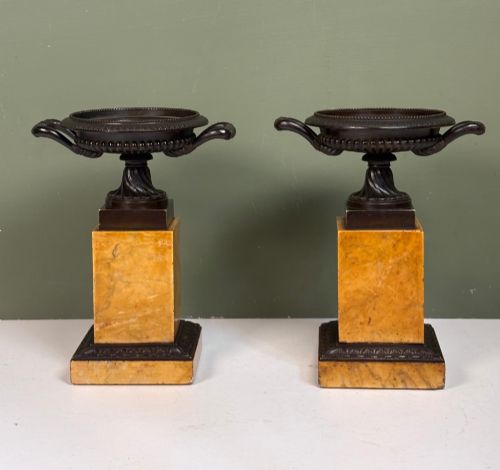
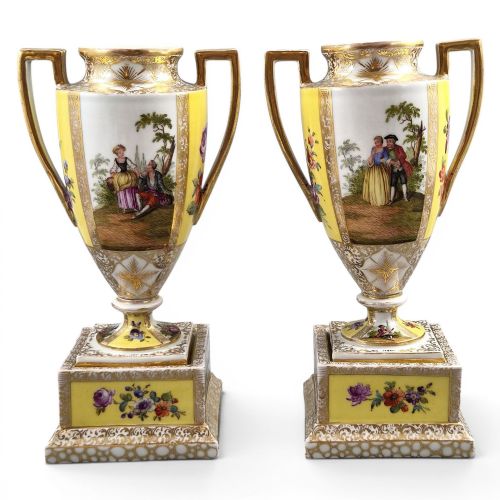
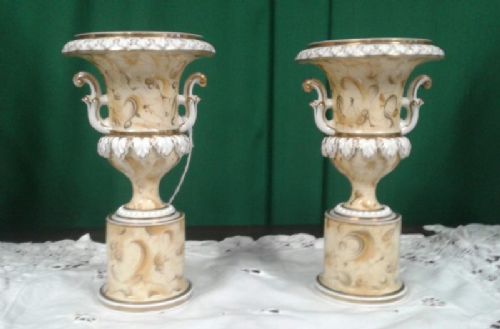
An antique pedestal vase combines a vessel with a raised foot, plinth, or dedicated stand to create vertical presence. The selection here leans heavily towards nineteenth-century production, encompassing Victorian decorative urns, grand tour bronzes, and porcelain pairs.
Buyers frequently encounter campana shapes modelled on ancient pottery alongside columnar plant stands and jardiniere supports. These pieces served both decorative display and functional botanical housing in period interiors.
Materials and Method
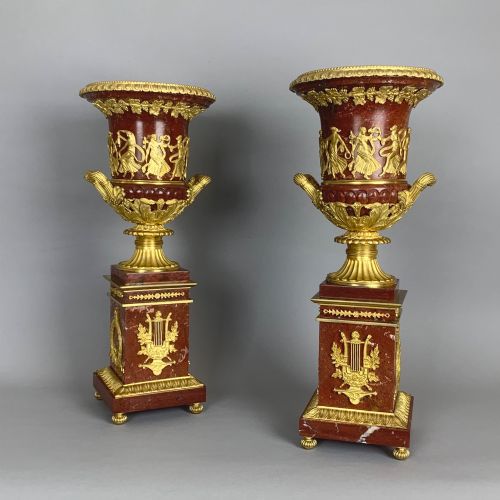
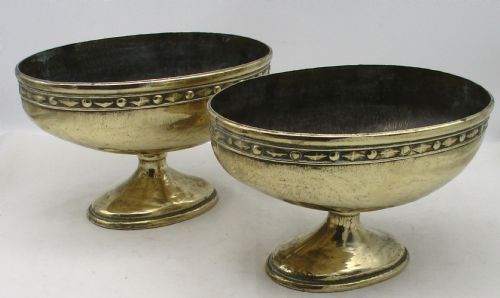
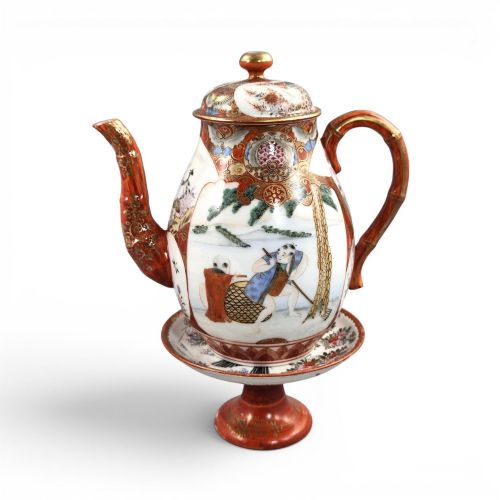
Potteries utilised porcelain, earthenware, and jasperware, often finished with hand-painted motifs, enamel, or gilding. Metalworkers cast bronze, brass, spelter, and iron, frequently pairing them with marble bases or applied ormolu mounts.
Makers achieved classical profiles through lathe-turning for hardwoods and detailed mould-casting for metals and ceramics. Surface decoration combined transfer printing with meticulous hand-finishing by specialised studio artists.
Listings feature items from the Georgian era through the Edwardian period, executed in porcelain, bronze, marble, and cast iron.
Assessing the Standard
Quality rests upon the crispness of the casting or the delicacy of the ceramic body and the precision of its hand-painted details. Superior examples exhibit balanced proportions between the vessel and its supporting pedestal or base.
The integrity of the materials dictates longevity, separating mass-produced utility wares from artist-signed cabinet pieces created by prominent porcelain manufactories.
W&R Carlton Ware·Coalbrookdale·Helena Wolfsohn·Meissen·Ulisse Cantagalli·Doulton Burslem·Royal Worcester·Coalport
The Antique Pedestal Vase Glossary
- Campana urn
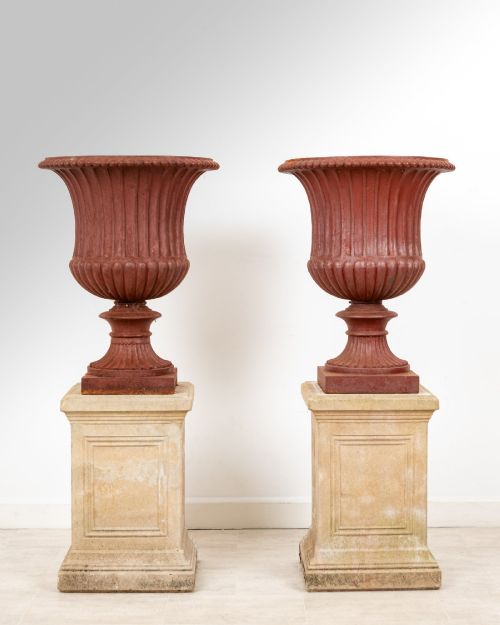
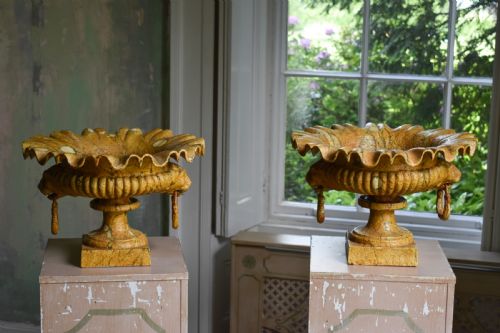
- A bell-shaped vessel with an everted rim and a tapered body originating in classical antiquity. This silhouette is frequently found in nineteenth-century cast iron and porcelain.
- Blush ivory
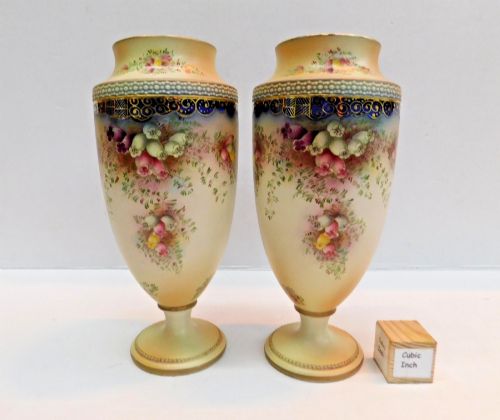
- A soft cream-coloured ceramic ground developed by Victorian potteries, typically ornamented with tinted floral sprays and gilt highlights.
- Grand tour
- Souvenirs purchased by wealthy travellers in Europe during the eighteenth and nineteenth centuries, often comprising miniature bronzes and marble architectural models.
- Bas-relief
- A sculptural technique where figures project slightly from a flat background. This method defines the contrasting white ornamentation on jasperware pieces.
- Jardiniere stand
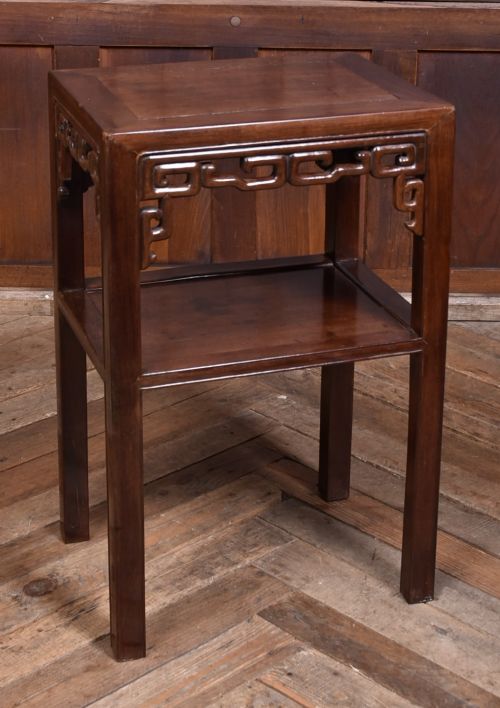
- A tall furniture form designed to elevate potted plants or decorative vases. Examples in the listings incorporate hardwood frames and inset marble tops.
Antique Pedestal Vase: Frequently Asked Questions
What were antique pedestal vases used for?
These vessels held cut flowers, displayed botanical specimens, or stood empty as sculptural mantel and sideboard ornaments. Larger versions served as garden urns or architectural plant supports.
Interior placement depended on scale, with monumental pairs flanking doorways and smaller porcelain cabinet pieces showcased within glass-fronted furniture.
How do I identify a Victorian pedestal vase?
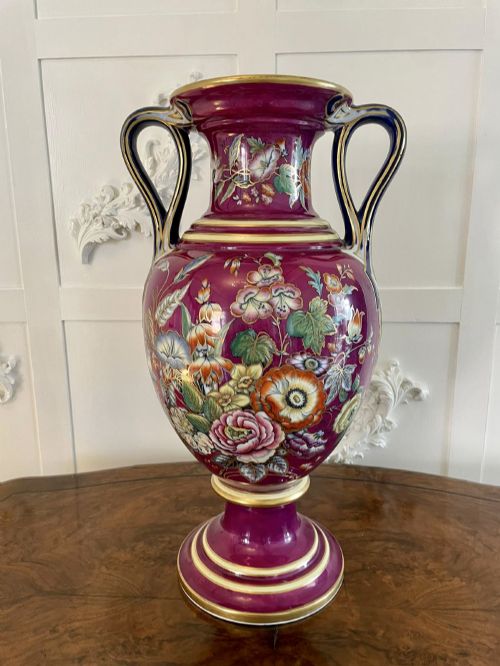
Victorian examples frequently display eclectic revival styles, including Renaissance motifs, Neoclassical shapes, and floral enamel decoration on porcelain or cast iron. Manufacturers often utilised distinct glaze types like blush ivory or applied raised reliefs.
Examining the underside for impressed factory marks, registration numbers, or painter ciphers helps narrow the date of manufacture within the nineteenth century.
Where should I place a heavy cast iron urn?
Cast iron campana urns suit outdoor garden placement, conservatories, or robust interior entryways when mounted on stone plinths. Their weight demands stable, level ground to prevent tipping.
Protecting the metal from prolonged moisture exposure preserves painted or patinated surfaces over successive seasons.