

Antique Pearl Necklace Clasp
An antique pearl necklace clasp secures the strands with gold, platinum, diamonds, and coloured stones across Georgian, Edwardian, Art Deco, and mid-century designs.
Antique Pearl Necklace Clasp
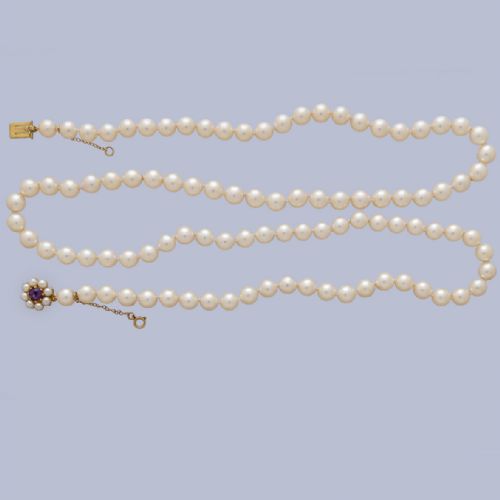
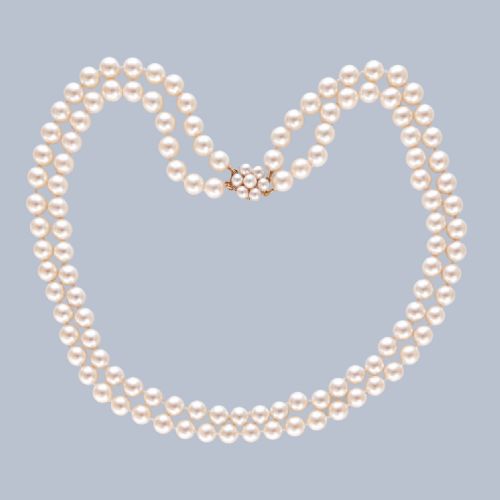
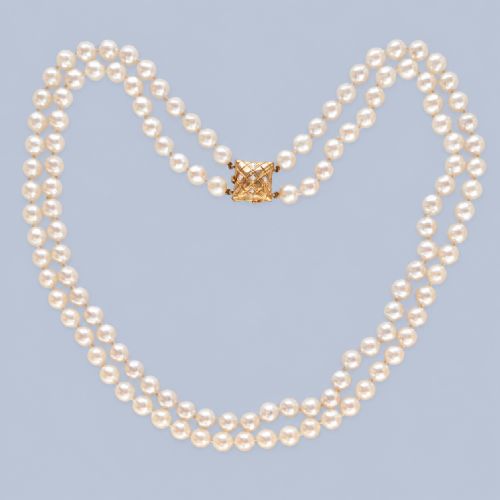
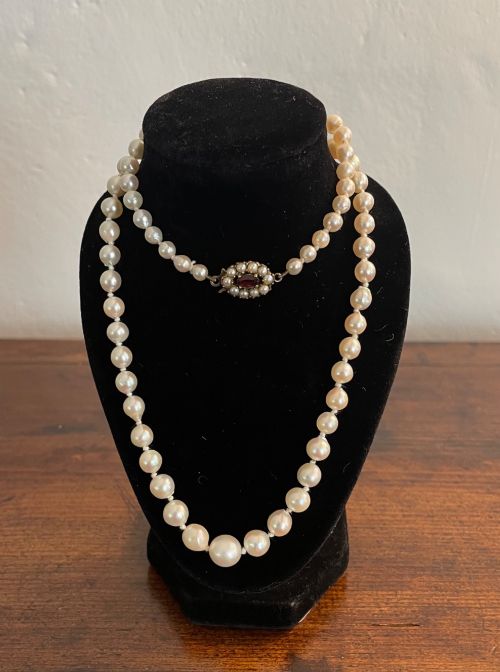
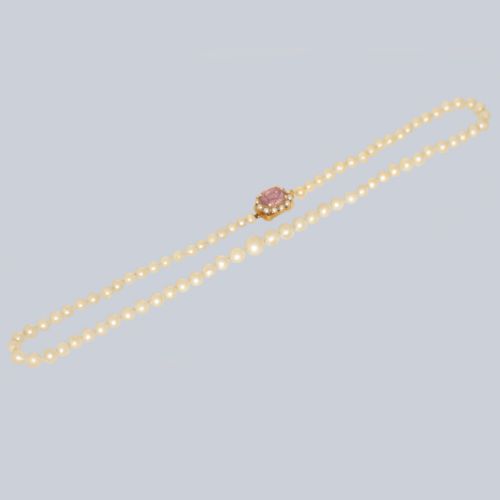
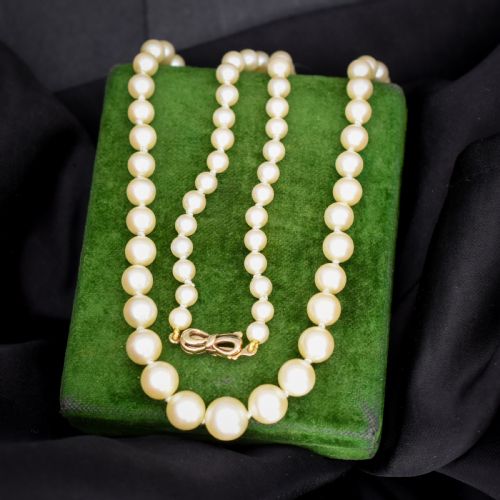
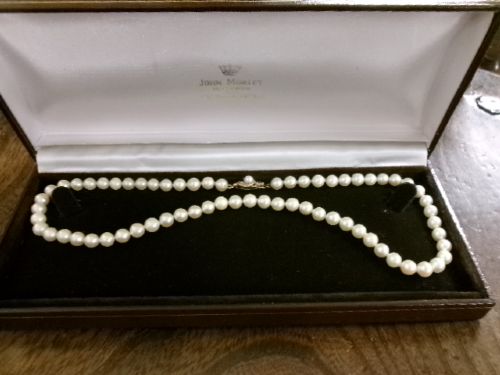
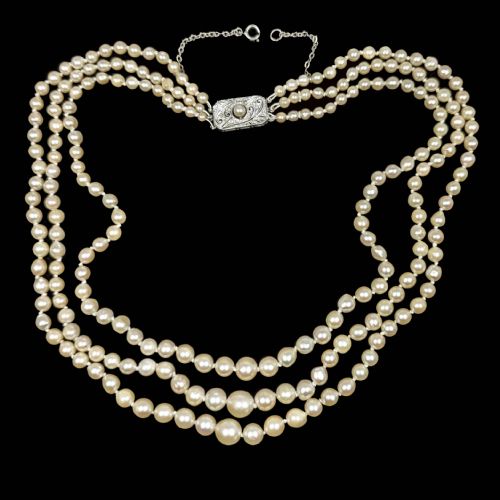
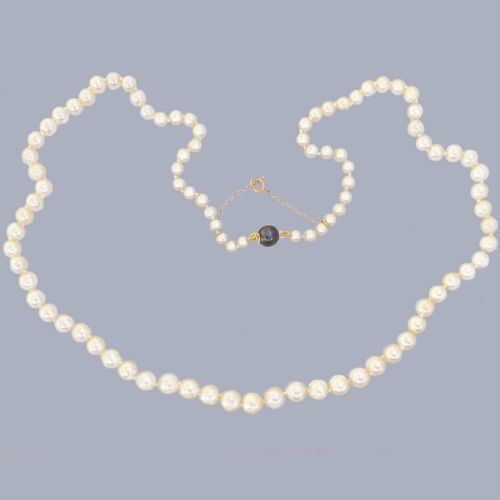
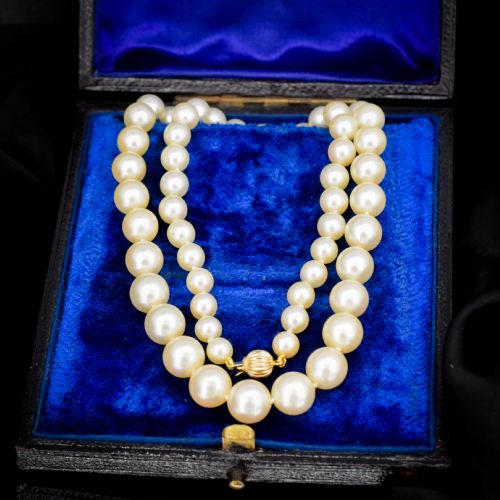
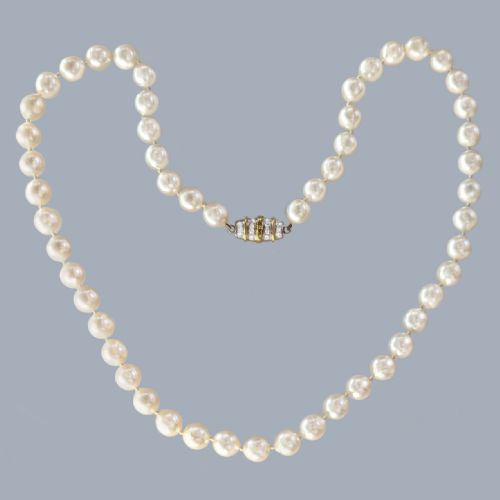
When you search for an antique pearl necklace clasp, you encounter fastenings that range from simple gold barrel forms to intricate gemstone-set centrepieces. The pieces recorded here span single, double, and multi-strand necklaces from the Georgian period through to the 1960s, showing how the method of securing a strand evolved alongside prevailing fashions.
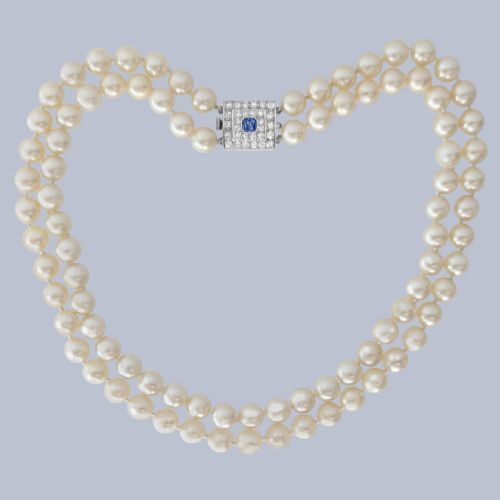
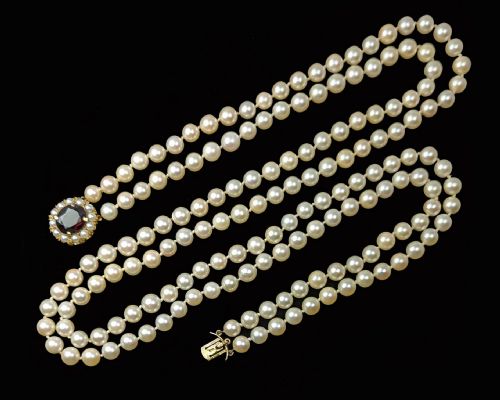
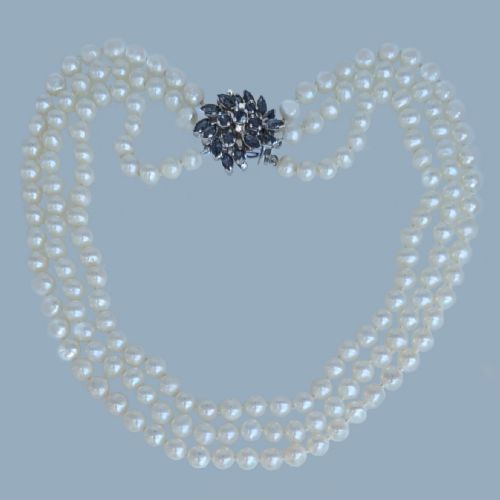
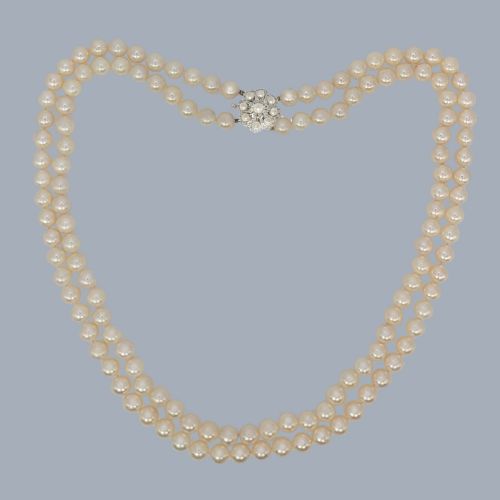
Edwardian and Art Deco examples frequently feature platinum or white gold set with diamonds, sapphires, emeralds, and jadeite, designed to be worn at the front as a decorative element rather than hidden at the nape of the neck. Mid-century and later vintage pieces often utilise 9ct or 18ct yellow gold paired with garnets, rubies, or seed pearls, reflecting the enduring popularity of layered strands.
Natural saltwater pearls and cultured pearls appear across the eras, with many pieces retaining certificates from gemological laboratories to verify their origin. The fastenings themselves act as miniature jewels, incorporating floral motifs, geometric lines, and secure box or lock mechanisms.
Materials and construction methods
Goldsmiths and jewellers utilised precious metals such as platinum, 18ct white gold, 18ct yellow gold, and 9ct gold to fabricate the structural mounts for these clasps. These metals were worked into delicate millegrain settings, geometric Art Deco frames, and robust box hinges designed to withstand the tension of multiple pearl strands.
Diamonds cut in old mine, rose, or modern brilliant styles were flush-set or claw-set alongside natural gemstones including sapphires, rubies, emeralds, turquoise, topaz, and jadeite. The pearls themselves - whether natural saltwater or cultured - were threaded onto silk or specialised cord, often terminating securely in gold or platinum barrels, rings, and box clasps.
Antique Pearl Necklace Clasp Retail Price Guide 2026
Typical asking prices for pearl necklace clasp among the pieces listed under this phrase on Sellingantiques today, from the lower quarter to the upper quarter. They describe what is for sale here now, not the wider market.
Listings feature pearl necklace clasps mounted in platinum, 9ct gold, and 18ct white or yellow gold across Edwardian, Art Deco, and 1950s eras.
Evaluating craftsmanship and materials
The distinction between standard examples and the finest pieces lies in the integration of the fastening with the pearl strands. Superior items feature bespoke clasps where the geometry of the platinum or gold mount matches the grading and number of the pearl rows, often incorporating high-colour diamonds and clean rubies, sapphires, or emeralds.
The choice of materials also dictates the standing of a piece, with natural saltwater pearls and certified gemstones paired with heavy platinum or 18ct gold settings occupying the upper tier. Furthermore, evidence of recent professional restrutting and the inclusion of formal gemological laboratory reports indicate careful preservation of the necklace structure.
Mikimoto
The Antique Pearl Necklace Clasp Glossary
- Clasp
- The mechanical fastening device positioned at the back or front of a necklace to secure the ends together. In antique pearl jewellery, these often double as decorative brooches or gemstone plaques.
- Graduated pearls
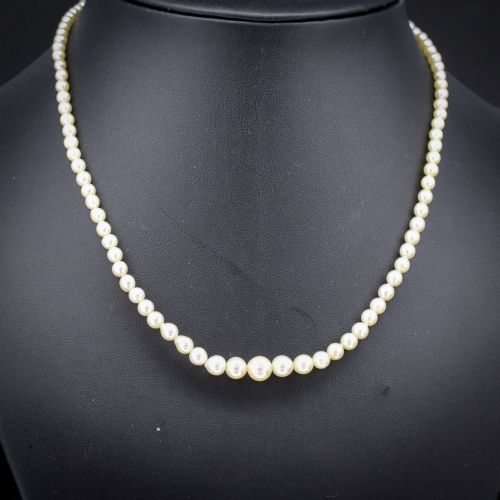
- Pearls selected and arranged in decreasing order of size from the centre front to the clasp at the back. This method ensures a balanced drape around the neck.
- Millegrain
- A jewelling technique involving a line of tiny beaded metal grains along the edges of a setting. It creates a soft, textured border typical of Edwardian and Art Deco platinum work.
- Cultured pearl
- Pearls formed with human assistance by inserting a nucleus into an oyster or mollusc. They appear widely alongside natural saltwater varieties in 20th-century pieces.
- Box clasp
- A secure fastening type where a wedge-shaped tongue clicks into a hollow box, frequently released by pressing a small side lever. It provides safety for multi-strand heavy necklaces.
Antique Pearl Necklace Clasp: Frequently Asked Questions
How do I wear an antique pearl necklace clasp?
Many Art Deco and Edwardian fastenings are designed to be worn visibly at the collarbone as a decorative gemstone focal point rather than hidden at the back of the neck.
Position the clasp intentionally to showcase the platinum, diamond, or sapphire work while letting the pearl strands drape naturally.
What is the difference between natural and cultured pearls here?
Natural saltwater pearls formed entirely without human intervention inside oysters, appearing frequently in older Georgian and Edwardian pieces.
Cultured pearls involve a human-inserted irritant and become more common in 1920s, Art Deco, and mid-century pieces listed across these collections.
How can I tell the period of a pearl clasp?
Edwardian and Art Deco pieces typically feature platinum or white gold set with calibrated sapphires, emeralds, and old-cut diamonds in geometric or floral motifs.
Mid-century and later vintage pieces often employ 9ct or 18ct yellow gold combined with garnets, rubies, or barrel mechanisms.
Should an antique pearl necklace be restrung?
Many listed pieces note that they have been recently restrung to ensure the silk cord remains secure and strong under the weight of the pearls.
Regular checking prevents the cord from stretching or snapping near the connection points with the metal clasp.