
Gold Pearl Strand Necklace
A gold pearl strand necklace brings together lustrous organic pearls and precious metal clasps, offering classic elegance from Edwardian and mid-century origins.
Gold Pearl Strand Necklace
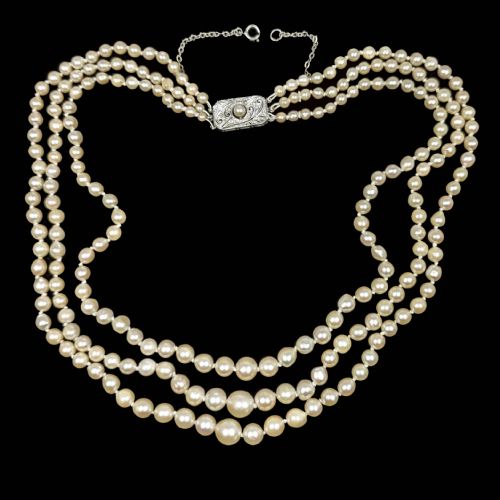
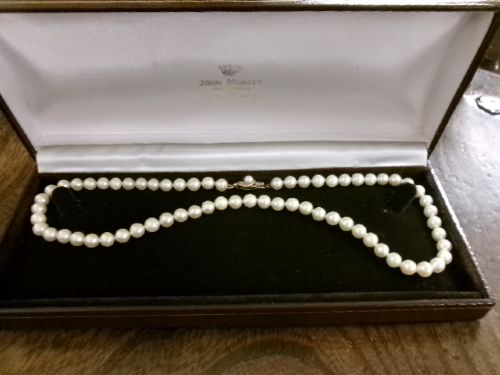
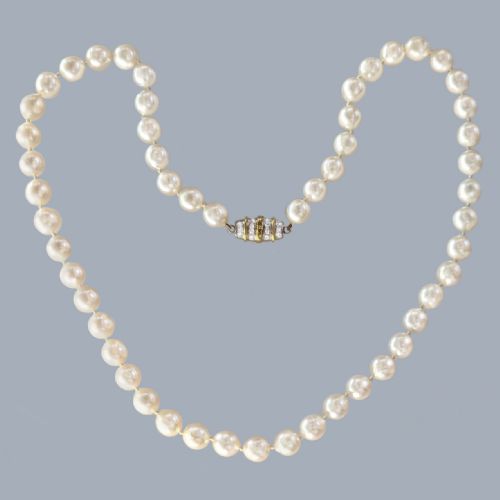
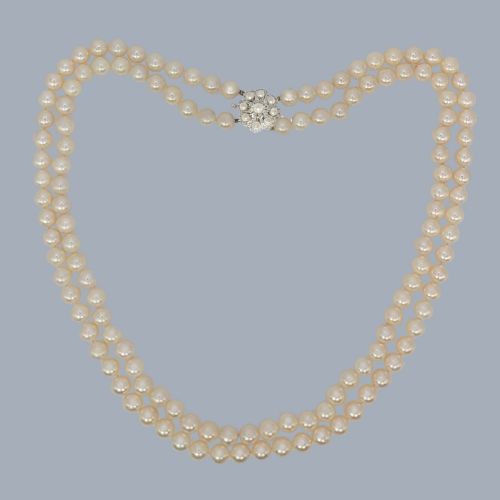
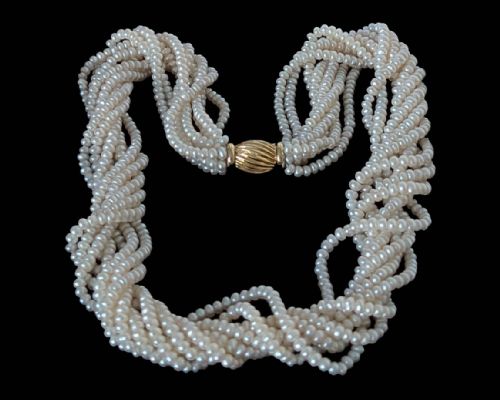
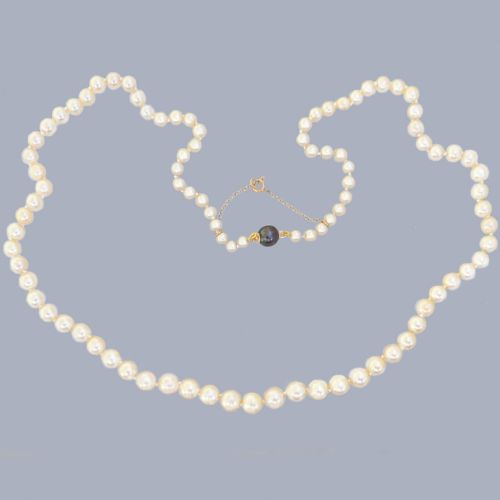
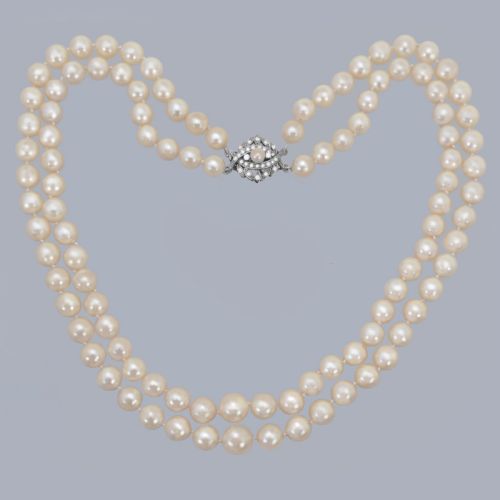
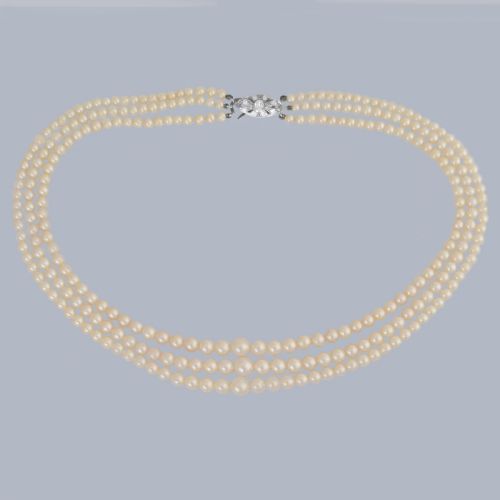
When searching for a gold pearl strand necklace, buyers encounter single, double, triple, and multi-strand arrangements featuring cultured, freshwater, or saltwater pearls. These pieces frequently date from the 1920s Art Deco era through the 1950s and 1960s, showcasing traditional craftsmanship alongside clasp fastenings in yellow or white gold.
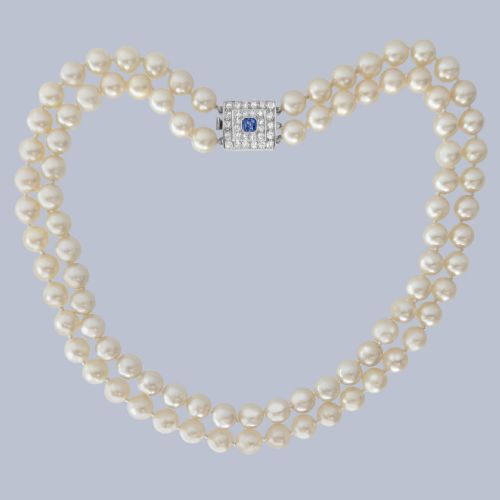
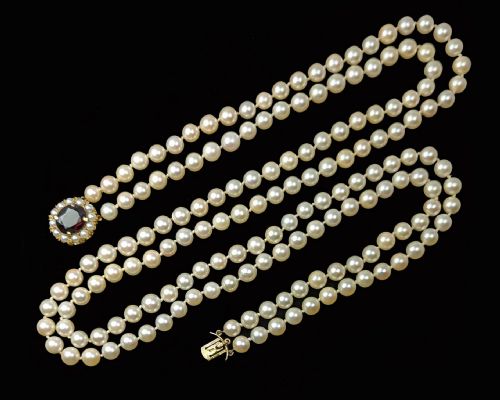
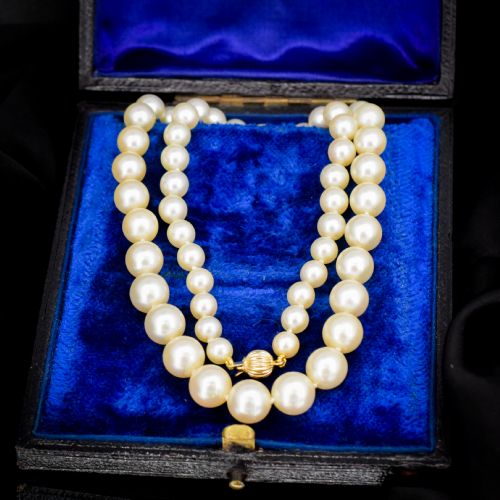
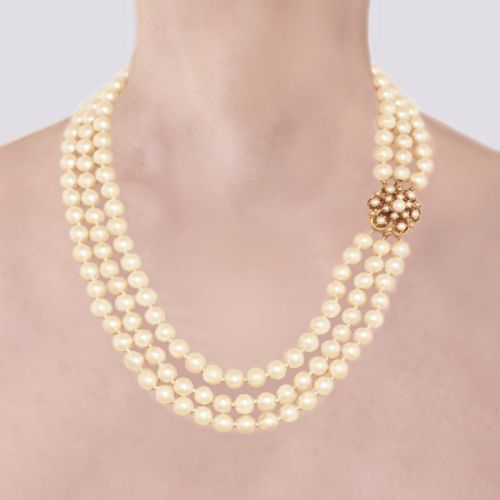
The most common examples on this page are mid-century double and triple strand necklaces secured with nine-carat yellow or white gold clasps. These often incorporate accent gemstones such as sapphires, garnets, diamonds, or amethysts directly into the clasp mechanism.
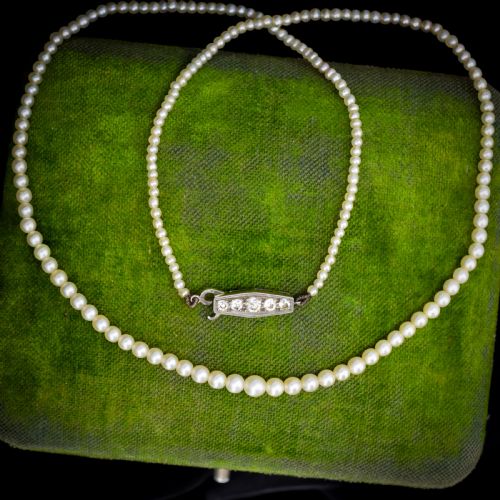
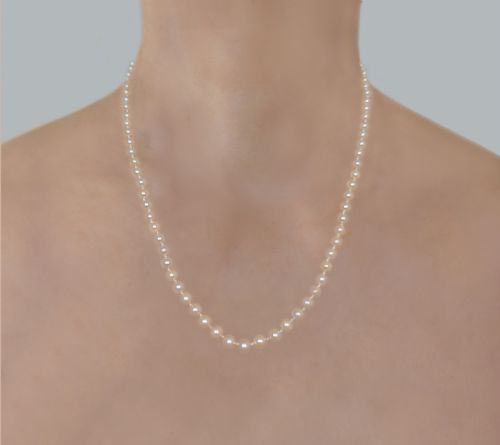
Earlier Edwardian and 1920s pieces also appear, offering finer platinum and eighteen-carat gold settings paired with certified natural or saltwater pearls. Lengths vary from short choker styles to long multi-row necklaces extending past fifty inches.
How They Were Made
The construction of these pieces relies on durable silk or synthetic threads passed through drilled pearls, traditionally secured with hand knots between each individual bead to protect the surface and maintain spacing. Clasps are cast and fabricated in nine-carat, fourteen-carat, or eighteen-carat gold, frequently incorporating platinum settings for secure gemstone mounting.
Gemstones including old-cut and rose-cut diamonds, rubies, emeralds, sapphires, and tourmalines are flush-set, bezel-set, or claw-set into the gold clasps. Many strands are professionally restrung to ensure structural integrity while retaining their original period clasps and hallmarks.
Listings feature nine-carat and eighteen-carat gold clasps paired with cultured, freshwater, and saltwater pearls across Edwardian and mid-century periods.
What Varies in Quality
Quality differences stem from the origin and lustre of the pearls, distinguishing uniform saltwater cultured varieties from freshwater seed pearls or larger South Sea specimens. The complexity and gemstone weight of the gold clasp also dictate the tier of the piece, with multi-stone diamond and sapphire clusters marking higher craftsmanship.
The condition of the stringing tension and the presence of independent gemological laboratory reports or original maker hallmarks further separate standard vintage costume items from fine mid-century jewellery workshops.
Chaumet·Cropp and Farr
The Gold Pearl Strand Necklace Glossary
- Cultured Pearl
- Pearls formed through the introduction of an irritant into an oyster or mollusc by human intervention. These form the majority of mid-century pieces.
- Graduated
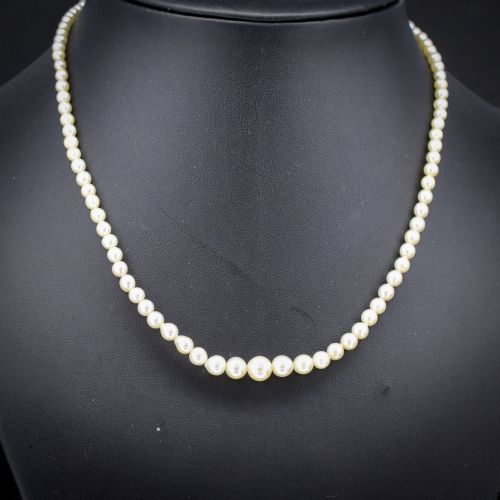
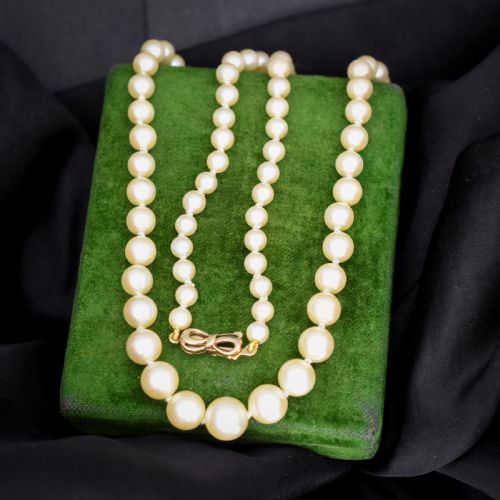
- Pearls arranged by size along the strand, increasing from smaller beads near the clasp to the largest pearl at the centre. This technique requires careful sorting for uniformity.
- Hand Knotted
- Individual knots tied in the thread between every pearl to prevent loss if the strand breaks and to stop pearls rubbing together. Fine necklaces use this method exclusively.
- Saltwater Pearl
- Pearls grown in marine pearl oysters, typically featuring higher lustre and thicker nacre than freshwater alternatives. These include prized varieties from specific oceanic regions.
- Seed Pearl
- Very small, naturally occurring or cultured pearls often used in multi-strand configurations or intricate Edwardian floral cluster clasps.
Gold Pearl Strand Necklace: Frequently Asked Questions
How do I care for my pearl necklace?
Pearls are organic gems sensitive to acids, cosmetics, and perfumes, requiring them to be put on last when dressing and wiped with a soft cloth after wearing.
Store them flat in a lined box away from hard jewellery to prevent scratching the delicate nacre surfaces.
What is the difference between single and multi-strand necklaces?
Single strand necklaces feature one continuous line of pearls, offering a minimalist profile suitable for daily wear.
Multi-strand versions use two or more parallel rows connected to an elaborate clasp, providing greater visual weight and a formal mid-century appearance.
How can I date my pearl necklace?
Dating relies on metal hallmarks stamped on the gold clasp, clasp style architecture such as Art Deco geometric motifs, and independent certification reports.
Additionally, manufacturing techniques like hand-knotting consistency and pearl sizing trends help place pieces within specific decades.
Can pearl necklaces be shortened or lengthened?
Professional jewellers can alter the length of a strand by removing or adding matching pearls during the restringing process.
This requires careful matching of size, lustre, and colour to maintain the uniformity of the original piece.