





Vintage Turquoise Pearl Jewellery
Vintage turquoise pearl jewellery brings together vibrant blue stones and lustrous pearls in gold and silver settings that span the Victorian, Edwardian, and mid-century eras.
Vintage Turquoise Pearl Jewellery
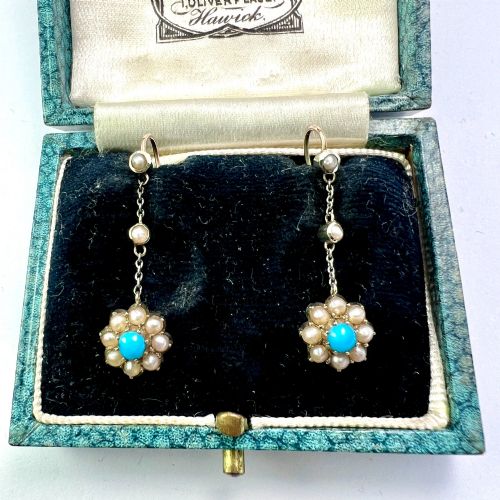
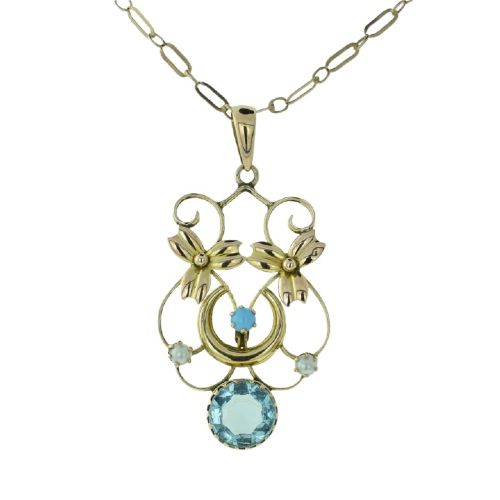
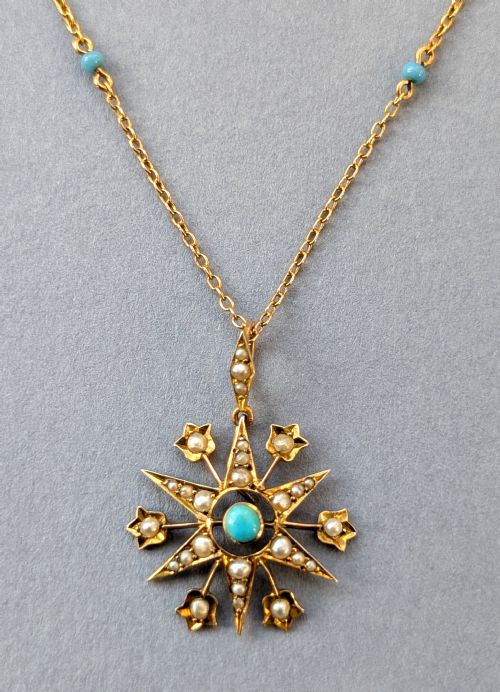
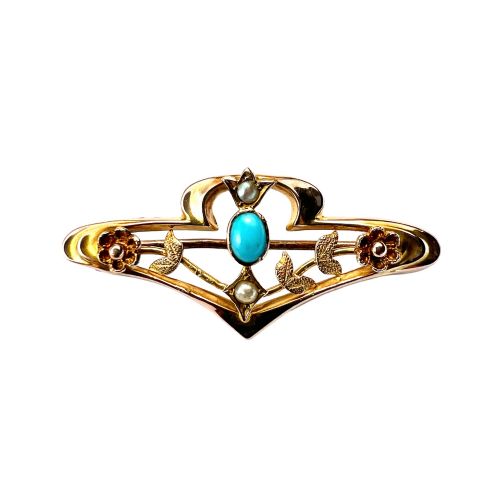
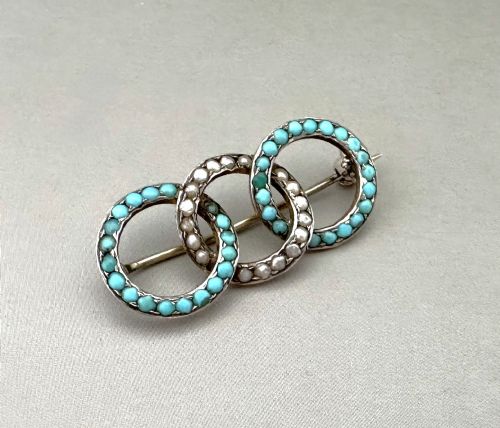
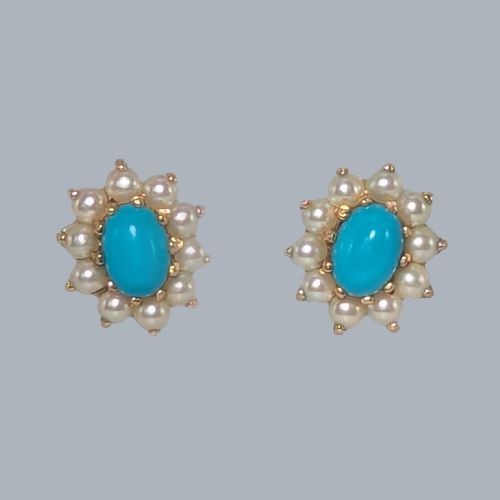
Vintage turquoise pearl jewellery encompasses rings, necklaces, pendants, bracelets, earrings, and brooches set with pearls and turquoise stones. These ornaments range from delicate Edwardian floral drop earrings and longuard chains to substantial Victorian star pendants and stacking rings.
Forms vary from intricate double photo lockets and buckle rings to twin bangles and evil eye rings, capturing diverse stylistic movements across the decades.
Materials and Construction
Goldsmiths constructed these pieces primarily in 9ct, 15ct, and 18ct gold, alongside silver and rolled gold settings. Metalwork techniques included delicate wirework for cluster earrings, hinged construction for bangles, and secure bezel or prong settings to hold turquoise stones and split pearls.
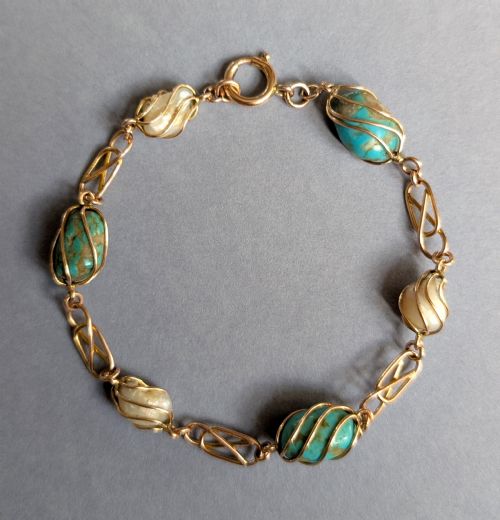
Makers integrated natural pearls, seed pearls, cultured pearls, and blister pearls alongside turquoise matrices and blue topaz or diamonds. Enamel accents and silver gilt finishes frequently complemented the central stones in Arts and Crafts and Victorian items.
Vintage Turquoise Pearl Jewellery Retail Price Guide 2026
Typical asking prices for vintage turquoise pearl jewellery among the pieces listed under this phrase on Sellingantiques today, from the lower quarter to the upper quarter. They describe what is for sale here now, not the wider market.
An antique evil eye ring from the Edwardian era watches over your finger with turquoise and pearl vigilance.
Determinants of Quality
Quality in these ornaments rests on the uniformity of the pearls, the saturation and matrix of the turquoise, and the weight of the gold or silver. Superior examples feature well-matched seed or cultured pearls paired with stable, vibrant turquoise stones that retain their original colour.
The finesse of the metalwork also distinguishes finer pieces, evident in crisp floral chasing, secure gemstone settings, and well-preserved hallmarks that confirm the gold purity and assay office origin.
Liberty and Co
The Vintage Turquoise Pearl Jewellery Glossary
- Split pearl
- A pearl that has been sliced in half to allow flat mounting in jewellery settings. These are commonly found in Victorian and Edwardian cluster rings and brooches.
- Seed pearl
- Very small natural pearls used in delicate arrangements or threaded into multi-strand necklaces. They often accent floral or star motifs in antique designs.
- Longuard chain
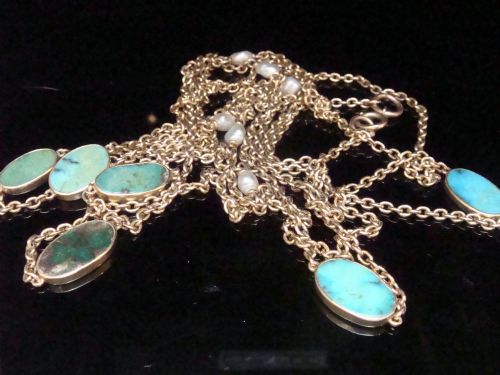
- A long necklace designed to be doubled around the neck or attached to a watch or locket. Edwardian examples often incorporate gold links with turquoise and pearl stations.
- Silver gilt
- Sterling silver that has been coated with a thin layer of gold. This technique provided the appearance of solid gold while utilising a silver base.
- Turquoise matrix
- Turquoise that retains portions of the host rock, creating web-like patterns across the stone. This variety appears in specific Arts and Crafts designs.
Vintage Turquoise Pearl Jewellery: Frequently Asked Questions
How do I date vintage turquoise pearl jewellery?
Dating relies on hallmarks, metal purity standards like 9ct or 15ct gold, and stylistic markers such as Edwardian filigree or Victorian star motifs. Examining the construction methods and fastener types also helps determine the era.
Assay marks and maker stamps on the metal components provide precise decade or year indicators when legible.
Are turquoise and pearls delicate to wear?
Turquoise is a softer stone that can absorb oils and alter in colour if exposed to harsh chemicals, cosmetics, or excessive moisture. Pearls are similarly organic and sensitive to acids and abrasives.
Owners should put on these pieces after applying perfumes or lotions and store them separately to prevent scratching.
How were longuard chains originally used?
Longuard chains served as functional accessories in the Victorian and Edwardian periods, frequently suspending pocket watches, lorgnettes, or decorative lockets. Women wore them draped long or doubled over the torso.
Today, they are typically worn as long necklaces or layered pendants without their original timepieces.
What is the difference between split pearls and cultured pearls?
Split pearls are halved natural pearls glued flush into closed-back settings typical of Victorian and Edwardian jewellery. Cultured pearls are whole pearls grown with human intervention and appear as spherical or baroque elements in later pieces.
Cluster rings and flat brooches heavily favour split pearls for their low profile.