




Antique Paisley Runner
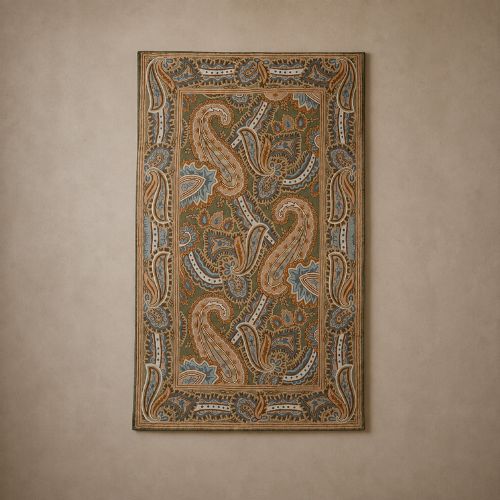
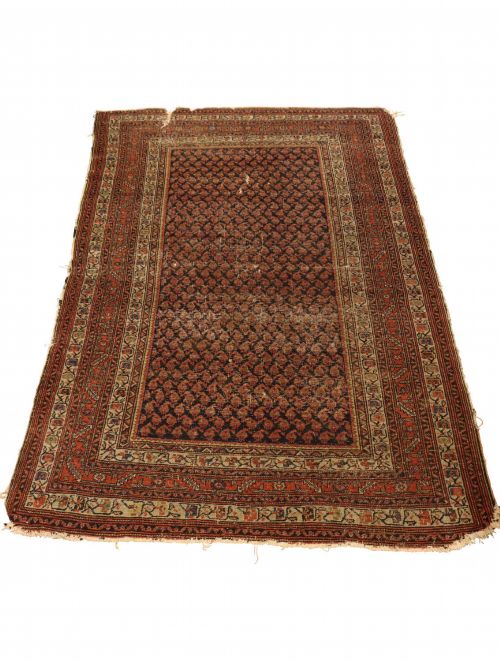
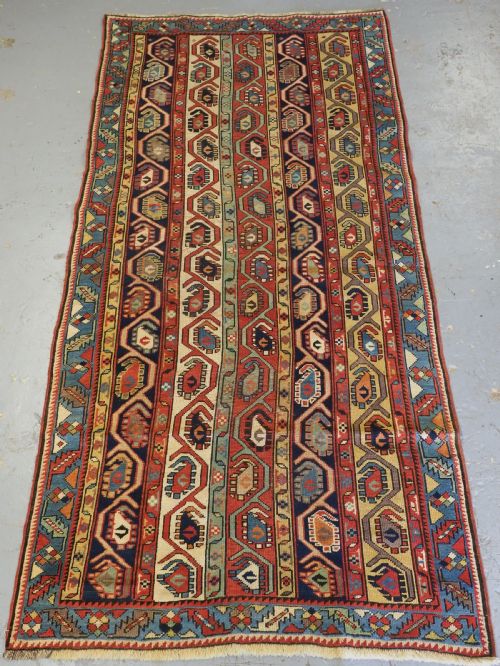
An antique paisley runner brings centuries of woven design into a hallway, dominated by the characteristic boteh motif.
Antique Paisley Runner
When searching for an antique paisley runner, buyers encounter textiles and long carpets characterised by the boteh motif, spanning the nineteenth century up to 1920. These pieces originate from Persian weaving centres, the Caucasus, and India, reflecting traditional regional patterns.
Buyers are most likely to meet wool pile carpets alongside embroidered cotton, linen, silk, and velvet panels, showing the breadth of materials utilised for these runners and textiles.
Distinctions in Quality
Quality in these textiles depends upon the precision of the hand-knotting or embroidery and the clarity of the boteh design. Finer examples maintain crisp geometric or curved lines within the motifs, whether woven in wool or stitched in silk.
The depth and preservation of the dyed colours, from deep green velvet grounds to varied wool palettes, separate the standard pieces from the exceptional ones.
Listings span from the nineteenth century to 1920, incorporating wool, cotton, velvet, silk, and linen across rugs, runners, and embroidered wall hangings.
The Antique Paisley Runner Glossary
- Boteh
- A teardrop-shaped vegetable motif with a curved upper end, commonly called the paisley design.
- Hand-Knotted
- A method of carpet construction where individual lengths of yarn are tied to the warp threads by hand.
- Gallery Carpet
- A large format runner used traditionally in long corridors or reception rooms.
- Crewelwork
- A type of embroidery utilising wool thread on a plain foundation fabric.
- Pile
- The raised surface of a carpet formed by the ends of yarn woven or knotted through the foundation.
Antique Paisley Runner: Frequently Asked Questions
What is a boteh design?
The boteh is a traditional teardrop-shaped motif that forms the basis of paisley patterns. It appears repeatedly across Persian and Caucasian rugs.
Weavers rendered this shape in diagonal, striped, or all-over arrangements on runners and carpets dating from the nineteenth and early twentieth centuries.
Where were these runners made?
These textiles originate from Persia, the Caucasus, and India. Regional workshops and tribal groups produced both pile rugs and embroidered panels.
Specific origins include regions such as Karabagh, Serapi, Khorossan, and Delhi, each employing distinct local weaving or embroidery traditions.
How do I care for an antique wool runner?
Maintenance requires gentle vacuuming without a rotating brush and professional cleaning when necessary. Placing a proper underlay beneath the carpet prevents sliding and reduces friction.
Keeping the textile away from direct, harsh sunlight preserves the natural dyes used in the wool and silk pile.
What materials are used in these pieces?
The primary materials are wool, cotton, silk, linen, and velvet. Pile carpets typically combine wool and cotton foundations.
Wall hangings and decorative textiles frequently feature silk or wool embroidery stitched directly onto velvet, cotton, or linen grounds.